
Last updated November 17, 2026
 Hardwood
 Engineered hardwood
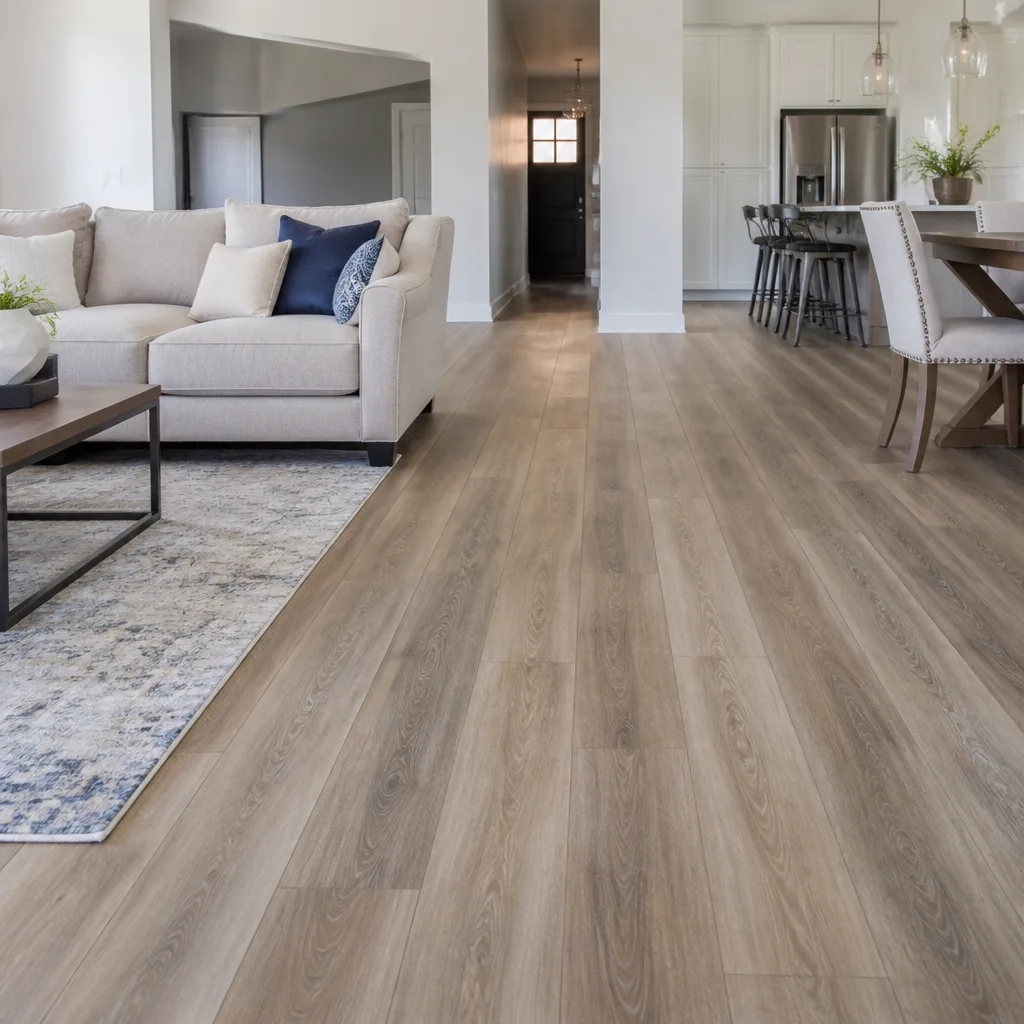 Luxury vinyl plank
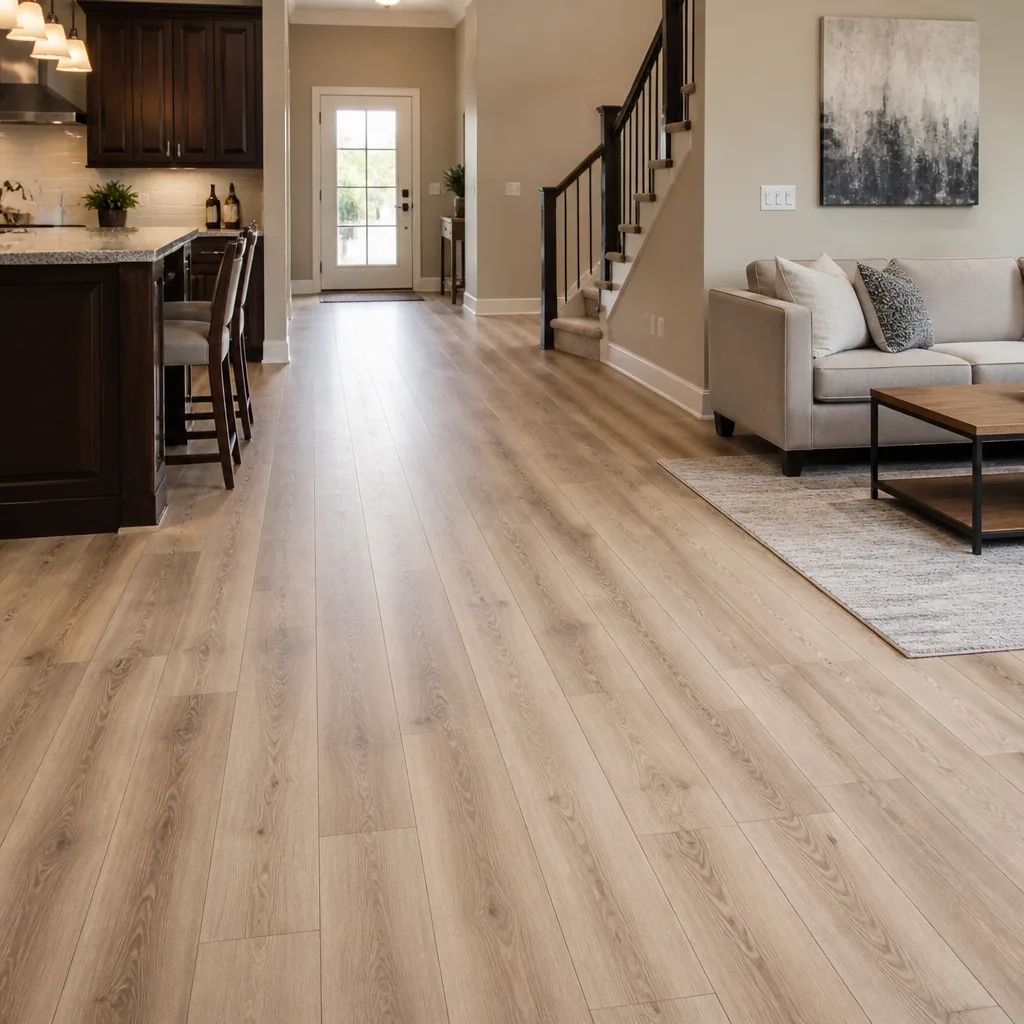 Laminate
 Porcelain tile
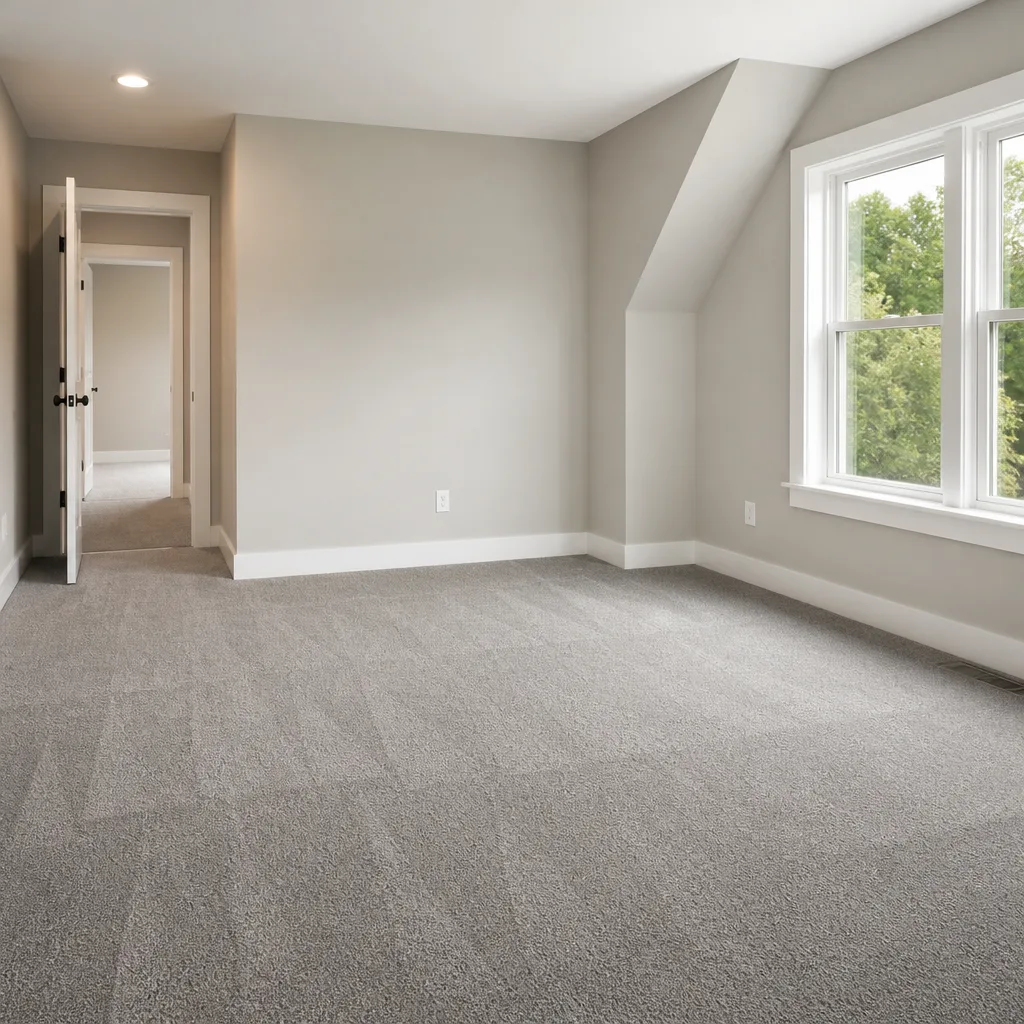 Carpet
 Shaw
 Mohawk
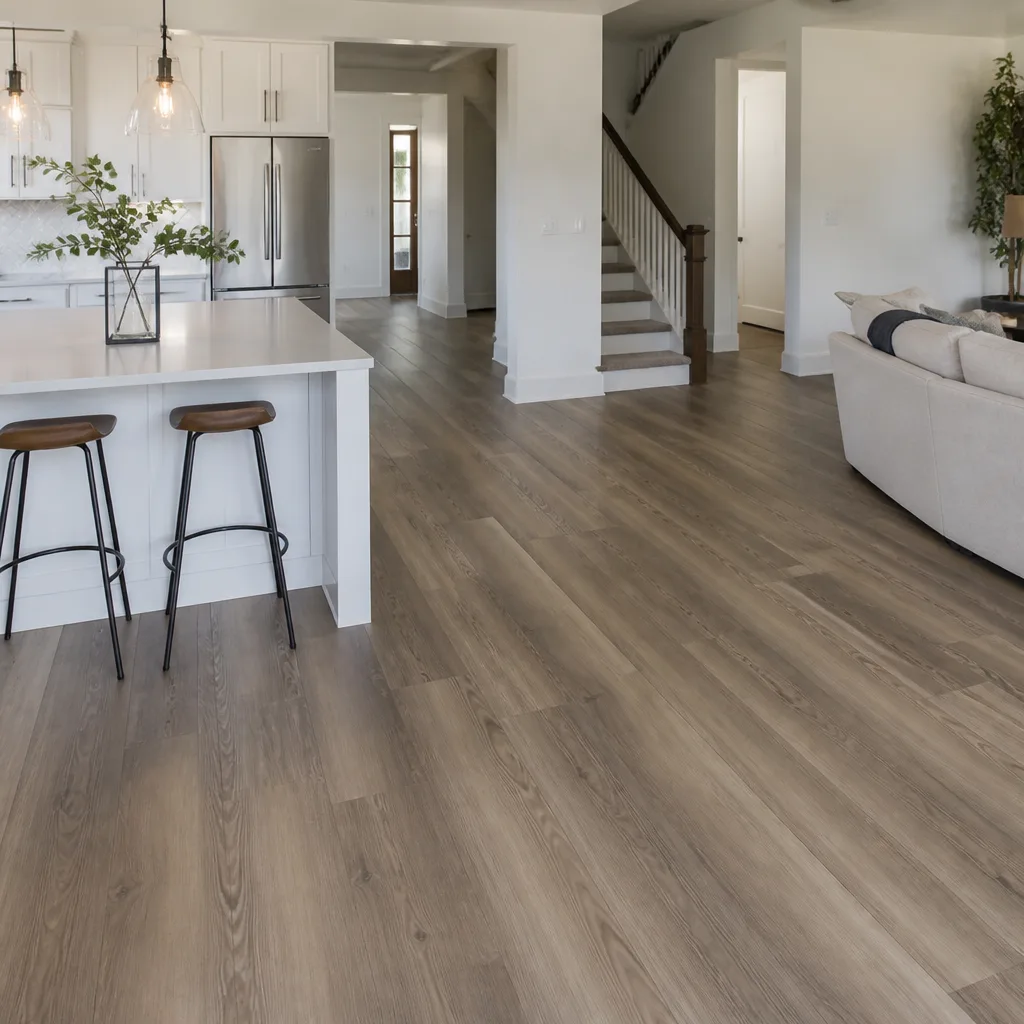 COREtec
 Pergo
Free in-home measure and written estimate: Shaw, Mohawk, COREtec and Pergo lines compared on your own rooms, with carpet, tile, vinyl plank, laminate and hardwood laid out side by side
Get your free estimateHow to Hire a Flooring Contractor in Spring Valley: A Step-by-Step Guide
Most Spring Valley homeowners vet a flooring contractor the way they’d vet a handyman: a few reviews, a couple of references, and the lowest number on the page. That’s the wrong test. Flooring is a trade with product-specific requirements, subfloor conditions that decide whether a job lasts, and a state licensing system that most people never check. Nevada requires a flooring contractor to hold an active C-16 license, and the busiest name in a local Facebook group may not have one, which leaves you with no recourse if the floor fails. This guide shows you how to check that license in under two minutes, what certifications actually mean, the five questions that separate specialists from generalists, and the contract terms that protect you in Spring Valley.
Quick Answer
To hire a flooring contractor in Spring Valley, verify an active Nevada C-16 license through the state contractor board’s online lookup, confirm the installer handles your specific floor type and brand, ask about subfloor moisture testing and substrate preparation, and get a written scope that names product lot numbers and what happens if the subfloor needs work. Price matters, but technical competence and accountability matter more. A free in-home estimate is the right first step, and the written quote should set the final price.
Styles & brands we work with
- Hardwood
- Engineered hardwood
- Luxury vinyl plank
- Laminate
- Porcelain tile
- Carpet
- Shaw
- Mohawk
- COREtec
- Pergo
Table of Contents
- How do you verify a flooring contractor’s license in Spring Valley?
- What do brand certifications actually mean?
- What are the five technical questions to ask during a quote?
- Why does the showroom-sells, stranger-installs model create problems?
- What contract terms protect you?
- Why does subfloor condition matter more than the product?
- What should Spring Valley homeowners know about local conditions?
- How do you handle a whole-home project without juggling trades?
How do you verify a flooring contractor’s license in Spring Valley?
You verify a flooring contractor in Spring Valley by looking up the license number in the Nevada State Contractors Board online database. The lookup takes about two minutes and tells you whether the license is active, what classification it carries, and whether there’s any disciplinary history attached to it. The classification you’re looking for is C-16, which is the Nevada license category for flooring work. If someone hands you a business card with no license number on it, that alone is worth a question.
Here’s the sequence that works:
- Ask for the license number before you ask for a price. A licensed contractor gives it without hesitation.
- Enter the number in the State Contractors Board lookup tool, not a third-party directory. Third-party sites lag and sometimes list expired licenses.
- Confirm the status reads active and the classification matches flooring work.
- Check that the name on the license matches the name on your contract and the name on the estimate.
- Look at the disciplinary record. A single old complaint isn’t disqualifying; a pattern of unresolved ones is.
What this protects you from isn’t abstract. In Nevada, a licensed contractor is held to a formal complaint process, and an unlicensed one isn’t. If a floor buckles in a year, the difference between those two situations is the difference between a process and a shrug. It also matters for permits: most municipalities require a permit for structural floor work, and a contractor who can’t pull one usually isn’t licensed to.
One more local note. Spring Valley sits in unincorporated Clark County, so permitting and inspection questions go to the county rather than a city hall. Ask any contractor you’re considering how they handle permits in unincorporated Clark County, and listen to whether the answer is specific.
What do brand certifications actually mean?
Brand installer certifications are real in some cases and marketing in others, and the way to tell them apart is to ask what the certification required. A legitimate manufacturer certification usually involves a training curriculum, an installation assessment, and periodic renewal. “Trained by the manufacturer” on a website can mean a sales rep did a one-hour product presentation. Those aren’t the same thing, and the difference shows up years later when a flooring product needs a warranty review and the installer has to document how it was installed.
Why does this matter more for flooring than for, say, painting? Because flooring products carry installation requirements that are specific to the product. Carpet stretch and seam placement work differently from tile setting, which works differently from how a laminate like Pergo or an LVP like COREtec is meant to be laid over a substrate. An installer who rotates across all three trades and all three substrates knows where the requirements diverge. A single-product installer doesn’t, and often guesses.
We install and service the floor the customer chooses, and we work across nine manufacturing brands rather than one. That breadth matters because recommendations are matched to the room and the use case, not steered toward whatever the shop has in stock. For a Spring Valley bedroom with kids, the right answer might be a mid-tier laminate like Pergo. For a laundry room, it might be a water-resistant LVP. For a kitchen with heavy foot traffic, it might be tile. Those are different products from different manufacturers, and the installer shouldn’t be penalized for telling you so.
Two questions worth asking about certification:
- What did your certification training actually cover, and when did you last renew it?
- For this specific product, which manufacturer requirements apply to my subfloor and my home?
If the answer to either question is vague, ask a competitor the same question and compare.
What are the five technical questions to ask during a quote?
The five questions are about subfloor moisture testing, substrate preparation, product acclimation, seam and layout plans, and who actually performs the work. Any one of them will separate a flooring specialist from a generalist. All five asked together, in one conversation, tells you whether the person quoting your job has actually thought about your specific home.
Here’s what to ask and what a competent answer sounds like:
- Will you test for subfloor moisture before installation? A specialist says yes and explains that the test method depends on the product and the subfloor type. A generalist says “it’s never been a problem here” or changes the subject.
- What substrate preparation is included in this price, and what would trigger extra work? Flooring almost always requires some prep. You want that scope in the written estimate, not in a phone call after demolition.
- What does the product require for acclimation in my home? The answer depends on the product and the room, and the manufacturer’s instructions and the written estimate set it. A specialist points to the product documentation; a generalist gives a number with no source.
- Where will the seams and layout lines fall, and why? A specialist can sketch it. A box-store install program usually can’t, because the installer and the salesperson aren’t the same person.
- Who actually does the work, and are they employed by you or subcontracted? This is the question that reveals accountability. If the answer is “whoever’s available,” you’ve learned something.
None of these questions should feel adversarial. A good flooring contractor answers them the way a mechanic answers questions about brake work: calmly, specifically, and without trying to sell you on the next tier up. The point isn’t to catch anyone. The point is to find out whether the person doing your Spring Valley install can describe how they’d handle the part of the job they can’t see yet, which is the subfloor and the moisture and the transitions.
Why does the showroom-sells, stranger-installs model create problems?
The showroom-sells, stranger-installs model breaks accountability the moment something goes wrong. You bought the floor from a store. Someone else showed up to install it. When the floor fails, the store points at the installer, the installer points at the product, and you’re in the middle holding a contract that names neither of them clearly. The problem isn’t that installers in that model are bad. The problem is that no single party owns the outcome.
Single-source installation fixes that by collapsing the responsibility line. If the person who recommended the product is also the person accountable for installing it, there’s no one to redirect you to. That’s why we describe ourselves as your installer, not just your seller. It’s also why we recommend the right floor for the room rather than the floor with the best margin, which a commission-driven showroom has a harder time doing.
Spring Valley homeowners usually feel this when they’re mixing floors. A whole-home project that runs carpet in bedrooms, tile in bathrooms, and a hard surface in living areas touches at least three different product categories. If each one comes from a separate vendor and a separate installer, you own the coordination. If they come through one contractor relationship, you don’t. That’s the practical version of “nine brands, one installer,” and it’s the reason a multi-room project tends to go smoother than three single-room projects scheduled back-to-back.
The same logic applies to landlords and property managers replacing floors across units. One accountability line per unit means one call when something needs a follow-up, not a spreadsheet of vendor numbers.
What contract terms protect you?
Three terms protect you more than any other: a written scope of subfloor work, documented product lot numbers, and a stated process for what happens if something fails. These aren’t exotic. They’re the basics, and they’re the first things missing from a verbal quote scribbled on the back of a business card.
What each term should look like:
- Subfloor scope: the written estimate should state what substrate preparation is included, what isn’t, and what the contractor will do if the subfloor turns out worse than expected once old flooring is removed. If that’s not addressed, the “extra work” conversation happens later, under time pressure, with your furniture already moved out.
- Product lot number: the lot number documents which manufacturing run your product came from. If a warranty question comes up months or years later, that number is the difference between a process that moves and one that stalls. Ask that it be written into the paperwork.
- Failure process: ask what happens, procedurally, if a plank lifts or a seam separates. You want to know who you call, what inspection looks like, and what triggers the formal warranty claim process. No one can promise a specific outcome; what they can do is describe the process.
Two more items worth checking before you sign. First, confirm the contract names the licensed entity, not just the brand on the truck. Second, confirm that the written estimate is the price you’ll pay absent a documented scope change, and that anything beyond that requires your approval in writing. If a contractor can’t put that in a sentence, that’s a signal.
The estimate itself should always be free, and the written quote should set the final price. If either of those isn’t true, keep asking.
Why does subfloor condition matter more than the product?
The subfloor decides whether the floor lasts, and it’s the part of the job most homeowners never see. You can buy the best product on the shelf, and if the subfloor isn’t flat, clean, and dry, that product fails anyway. In our experience the subfloor is where the difference between a floor that lasts a decade and one that fails in a year gets settled, and it’s the first thing a proper estimate should address.
What a competent contractor actually checks:
- Whether the substrate is flat enough for the product being installed. Flatness requirements vary by product, and the manufacturer’s instructions set them.
- Whether the subfloor is dry. Moisture from below or from the slab is a reoccurring issue, and it’s why moisture testing should be part of any quote.
- Whether the existing floor can be removed cleanly or needs to stay in place.
- What transitions and thresholds the job will need where floor surfaces meet.
- Whether existing moisture damage is visible and needs to be addressed before anything new goes down.
Hardwood refinishing is the exception worth knowing about. If you already have a wood floor in reasonable shape, refinishing can extend its life instead of replacing it, which is a genuine alternative to installation and often the more cost-effective path when the structure is still sound. Whether refinishing is possible depends on the thickness of the wood and its condition, and that’s checked at the estimate visit, not assumed over the phone.
This is also where the generalist problem shows up. A handyman can lay a floor. A flooring specialist can look at a Spring Valley home’s slab, read the moisture, and tell you what that means for the product you were about to buy. That’s not a sales conversation. It’s the technical part of the job.
What should Spring Valley homeowners know about local conditions?
Spring Valley sits in the Mojave desert, and desert conditions shape flooring choices in ways coastal or humid-climate advice never covers. The local swing between hot, dry summer air and the cooler, occasionally damp stretches of winter is real, and it affects how wood and wood-composite products behave over time. Interior humidity swings are the biggest driver, and the way a home is heated and cooled controls that swing.
What that means in practice:
- Wood and wood-composite floors care about indoor humidity, not outdoor weather. Manage the interior and the floor behaves.
- Slab-on-grade homes in Spring Valley can carry moisture up from the ground. Moisture testing before hard surface installation matters.
- Tile is stable across temperature swings and is a strong choice for kitchens and bathrooms, which is one reason we install Daltile products alongside our other categories.
- Water-resistant LVP and laminate are sensible for laundry rooms and busy hallways. Water-resistant is the right word; no floor should be described as waterproof, and standing water or moisture from below still has to be dealt with.
Spring Valley’s housing stock is a mix of older homes and new construction, and that mix matters for hiring. Older homes often have uneven subfloors, and new construction often has tight timelines. In both cases, the right question for your contractor is the same: what’s the subfloor plan, and how will you handle it if it’s worse than expected? For anyone researching the broader area first, our Spring Valley page covers the local context, and the main Flooring Installation Spring Valley page goes over what a proper installation involves.
How do you handle a whole-home project without juggling trades?
You handle a whole-home project by keeping the three flooring trades under one contractor relationship instead of three separate vendors. Carpet, tile, and hardwood refinishing are each their own discipline, and coordination is where multi-room projects lose time. One relationship means the schedule, the subfloor, and the transitions get figured out once instead of three times.
A sensible sequence for a whole-home project:
- Book a free in-home measure and estimate. Get all the rooms measured and quoted together, not one at a time.
- Confirm the room-by-room product plan. Bedrooms, living areas, kitchens, and bathrooms have different requirements. The plan should reflect that, not force one product through every room.
- Approve the written estimate. The estimate sets the price and the scope. Nothing moves forward until you’ve signed off.
- Schedule the install date. The schedule is set at the estimate, once scope and product are confirmed.
- Sequence the trades room by room. Carpet, tile, and refinishing go in an order that lets you keep living in the house as much as possible.
For a Spring Valley multi-room project, that sequencing is where the single-contractor advantage shows up most clearly. If a tile install and a carpet installation are running in adjacent rooms, one contractor can plan the transitions and the schedule together. Two contractors can’t, at least not without adding a project manager who isn’t in either contract. The same holds when a tile flooring installation sits alongside hardwood refinishing in a hallway: the transitions are the detail that makes the difference, and they belong to whoever owns the project.
The independent local professionals we connect homeowners with handle all three categories. If your project spans them, that single relationship is what you want.
Common Mistakes to Avoid
- Hiring the busiest name in a Facebook group without checking the license. Popularity in a local group isn’t a license number. A two-minute lookup at the state contractor board tells you more than a hundred recommendations.
- Comparing quotes on price alone. Two estimates for a Spring Valley room can differ by thousands because one includes substrate prep and one doesn’t. Compare scope, not just the bottom line.
- Not asking about subfloor moisture testing. This is the single most consequential detail in any hard surface installation, and it’s the first thing a rushed quote will skip.
- Buying the floor first, then looking for an installer. That sequence puts the installer in a position of having to make a product work regardless of the room. It’s better to pick the installer, walk the rooms, and choose the product together.
- Treating carpet, tile, and hardwood as separate projects when they’re one. Separate vendors mean you own the scheduling and transition problems. One contractor owns them instead.
- Signing a verbal quote. Get the subfloor scope, the product lot number, and the failure process in writing. If it isn’t written, it isn’t part of the deal.
- Assuming refinishing is cheaper than replacement without a look. Whether an existing wood floor can be refinished depends on its thickness and condition. It’s checked at the estimate visit, not assumed.
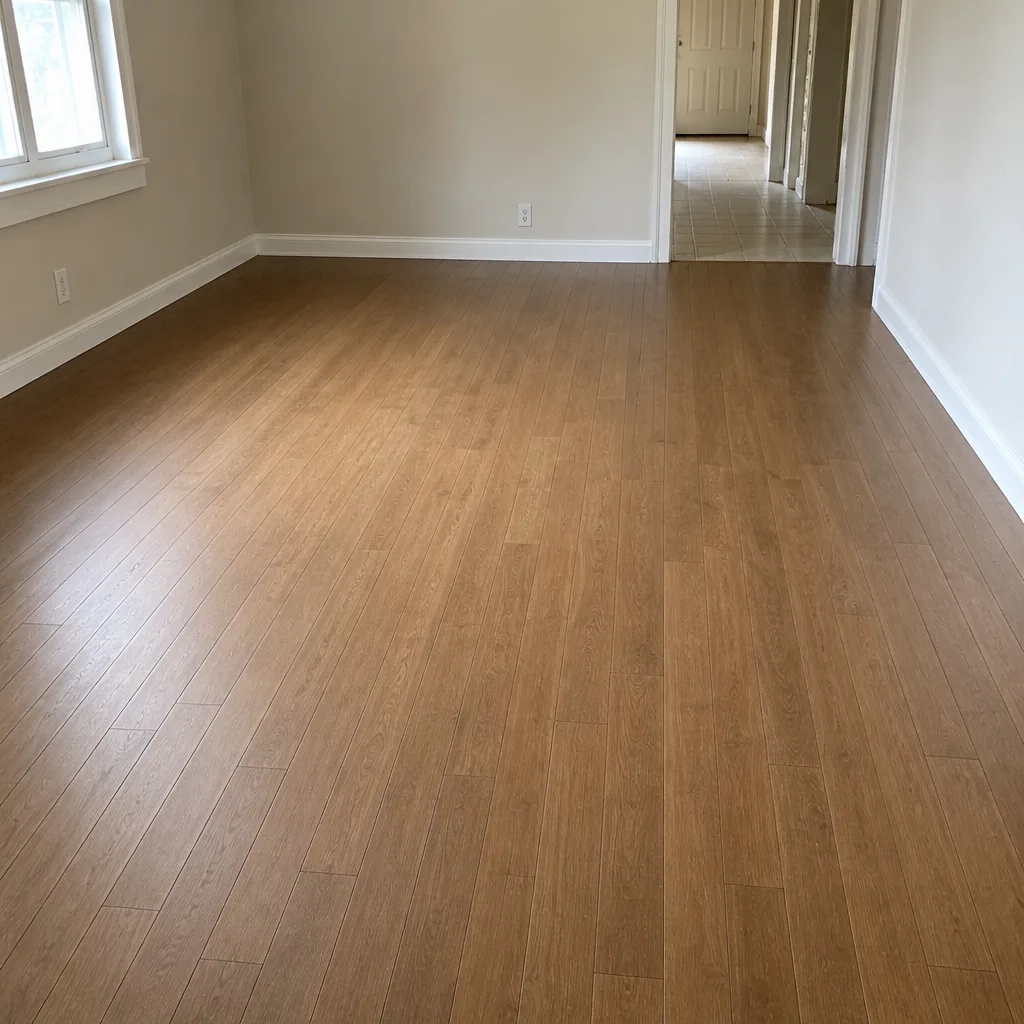
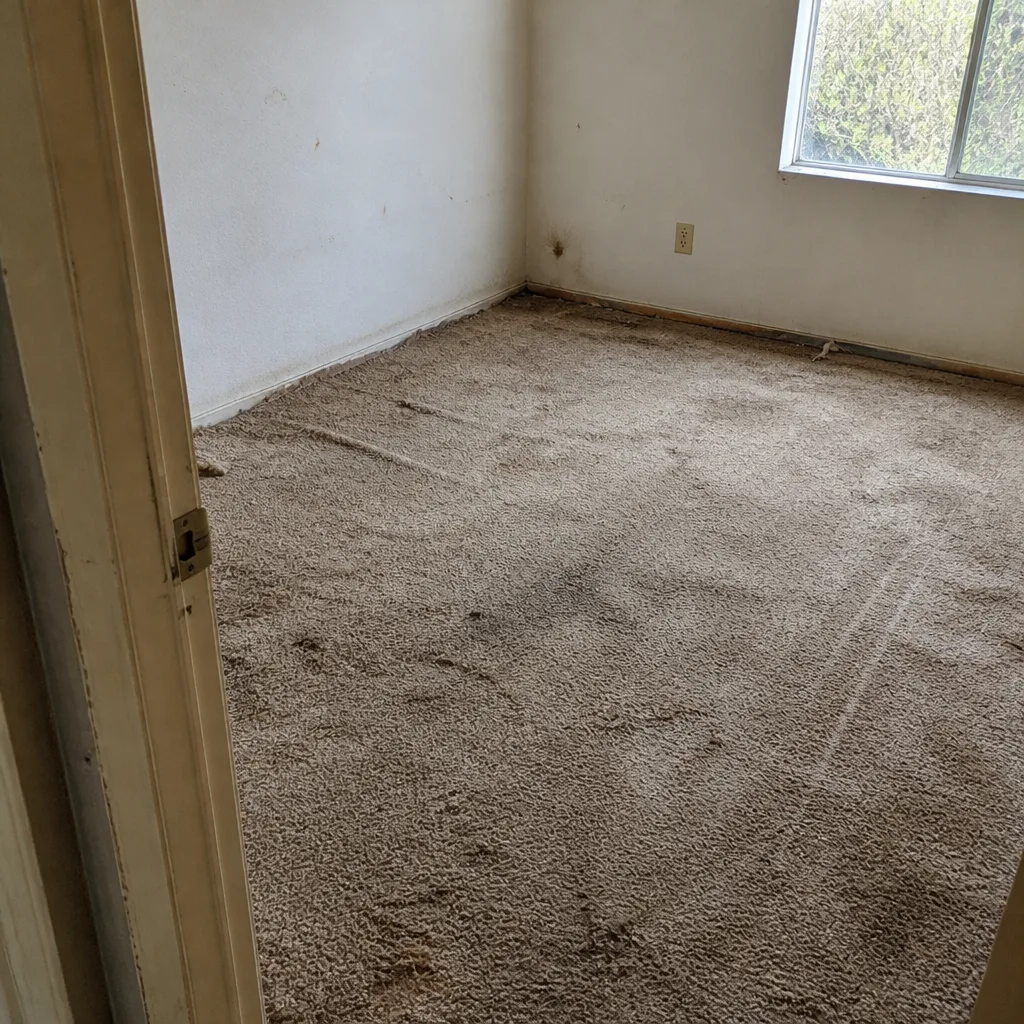
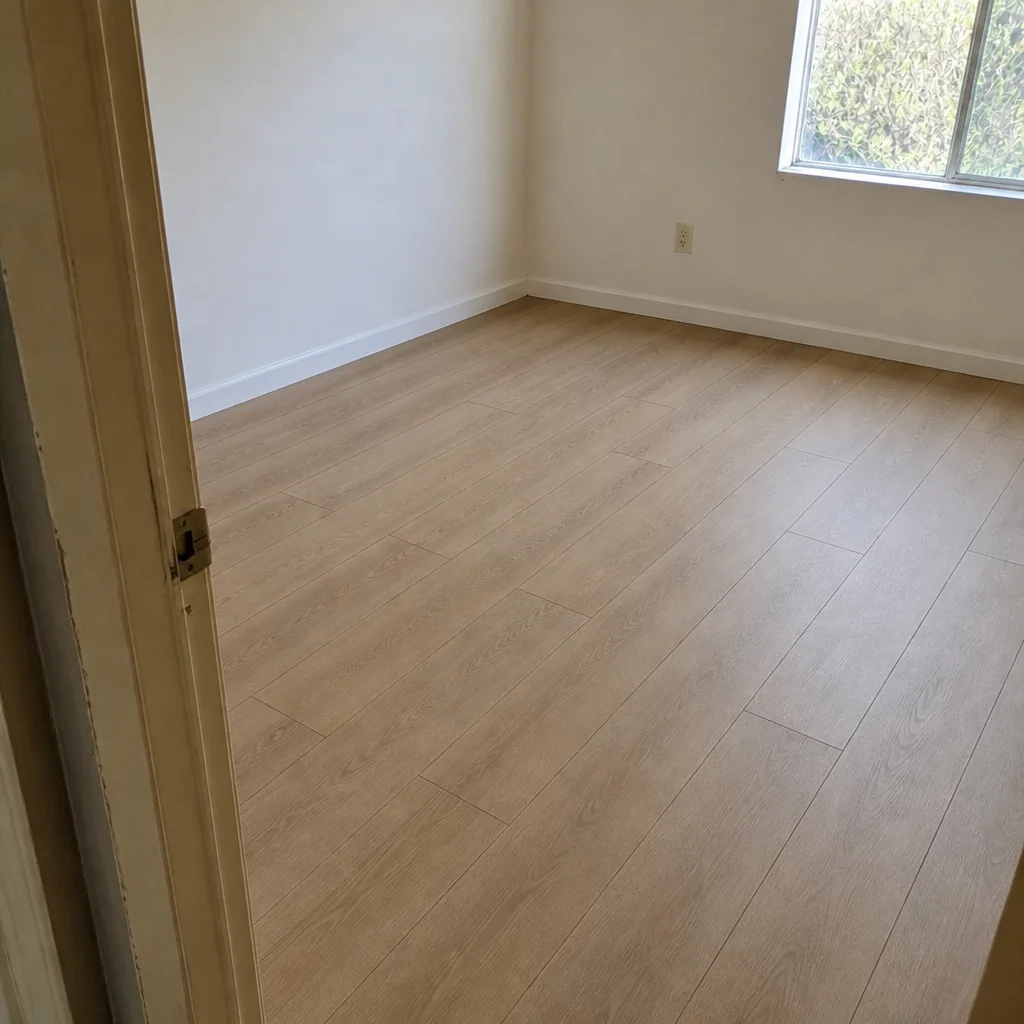
See the difference
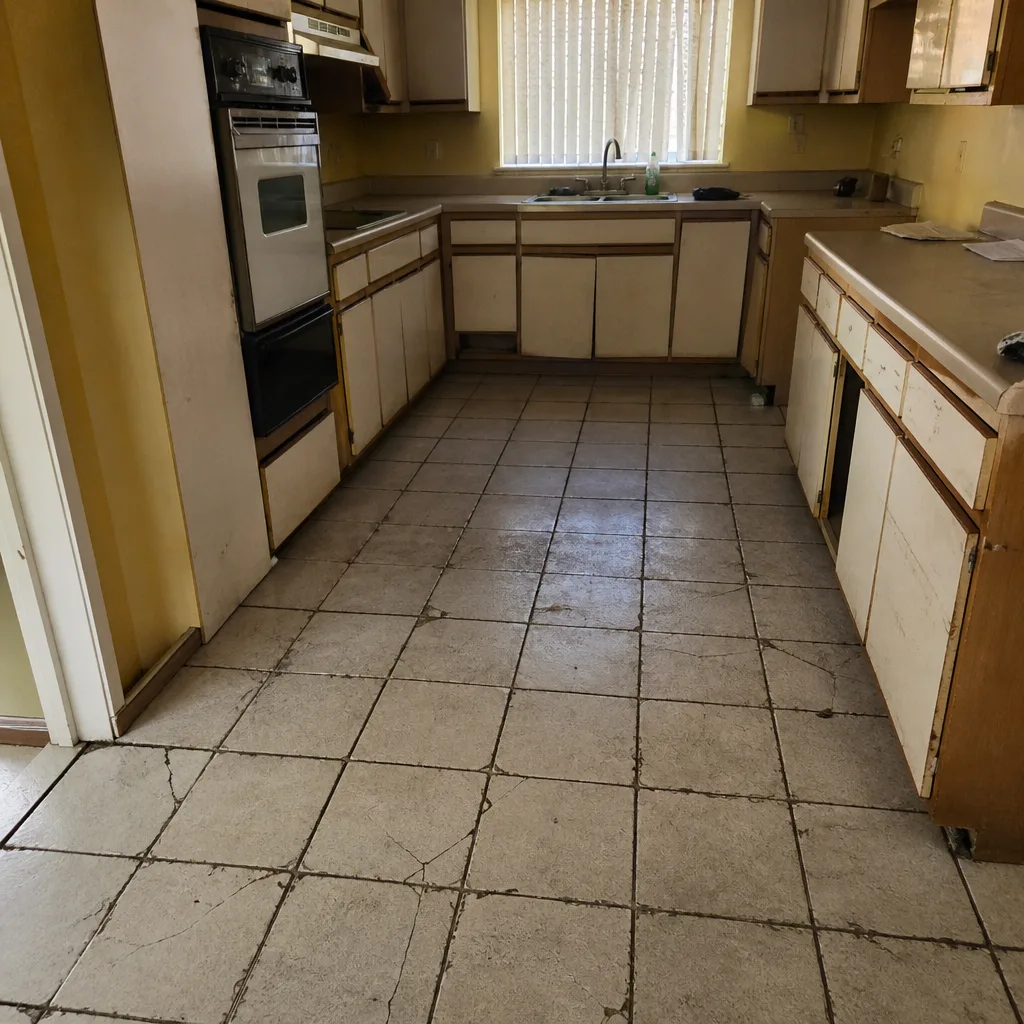 Before
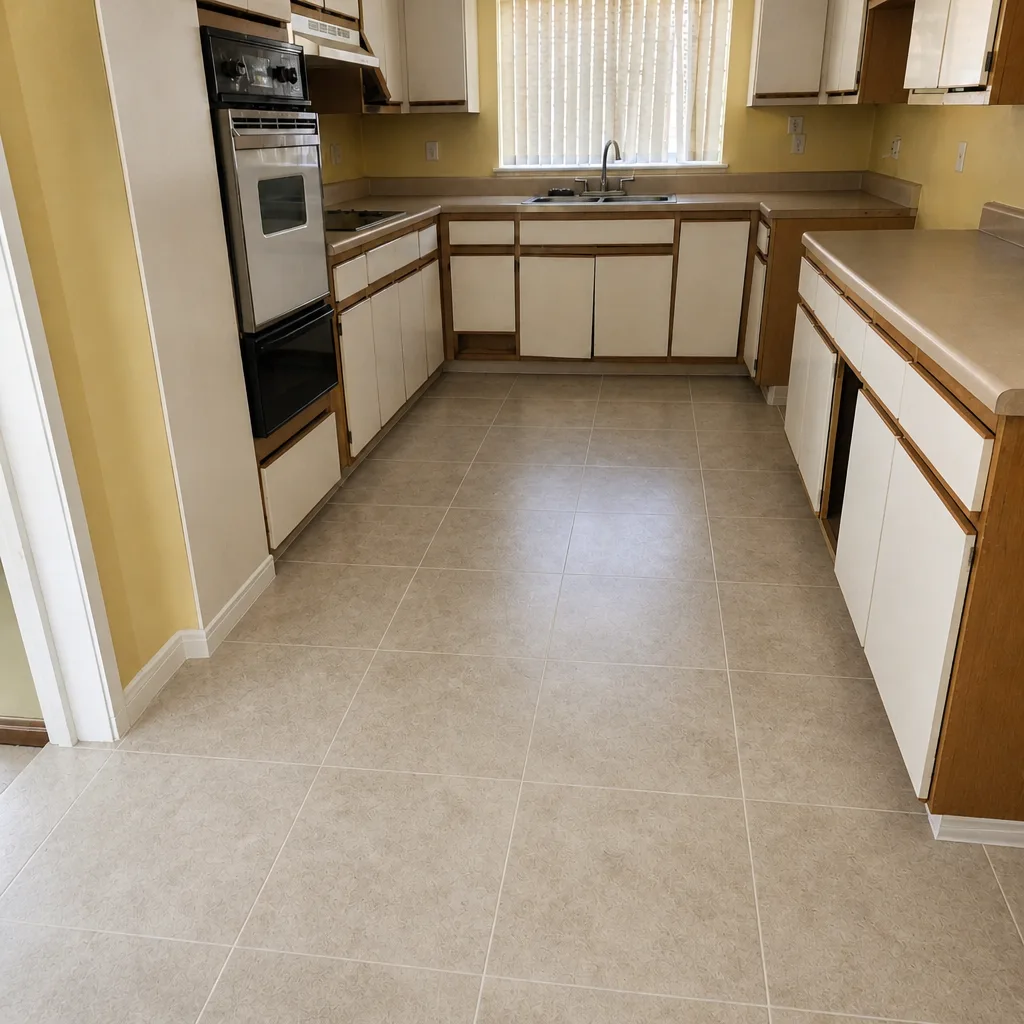 After
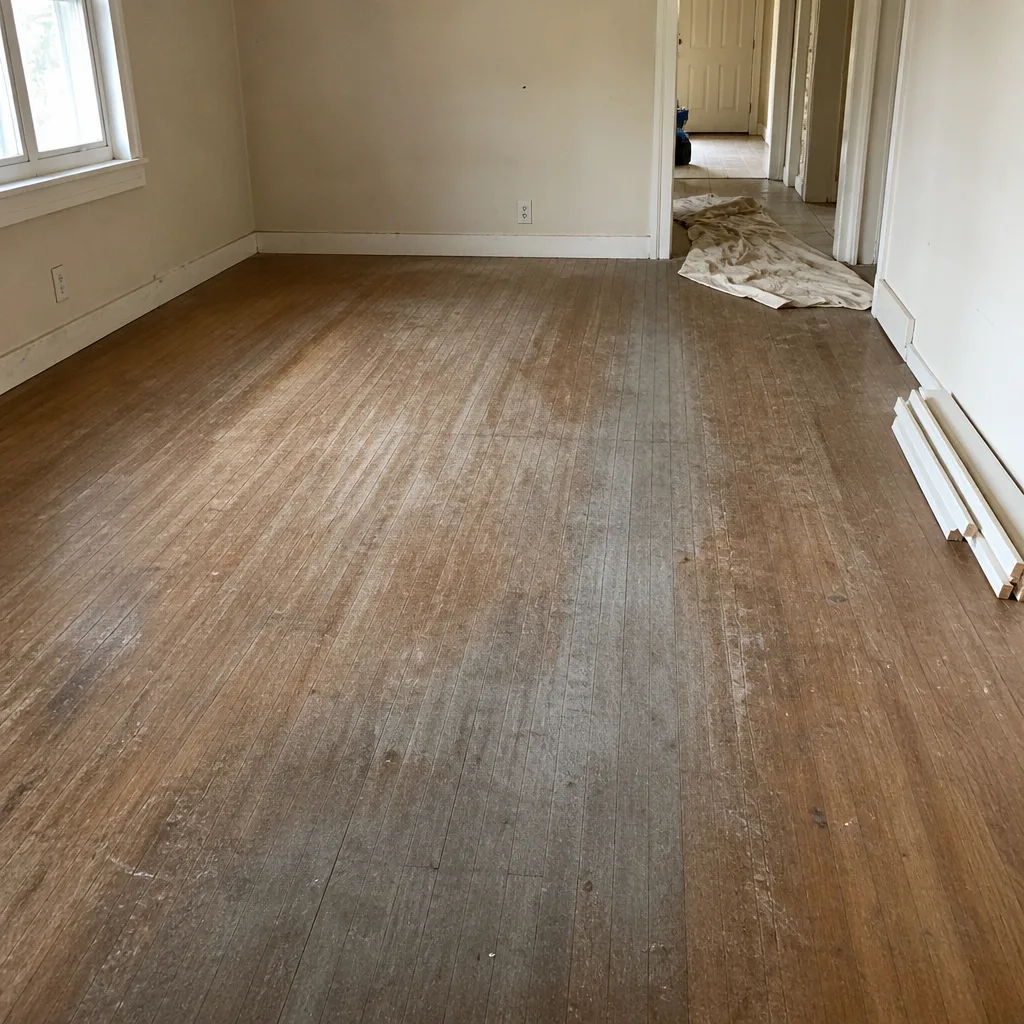 Before
 After
 Before
 After
When to Call a Professional
Call a professional when the floor affects structure, moisture, or a multi-room product decision. Any install over a slab needs a moisture check before materials go down. Any job where old flooring has to be removed needs someone who can evaluate what’s underneath it. Any multi-room project that mixes carpet, tile, and hard surface needs a single accountability line. Any existing wood floor worth refinishing deserves a professional look before you replace it, since restoration is often the smarter spend when the wood is sound. And any time you’re being asked to hand over money for an install without a written scope of subfloor work, that’s the moment to stop and call. Flooring Installation Spring Valley offers free estimates in Spring Valley. Call (844) 797-4453. We answer 24/7, with fast dispatch from 7am to 7pm, Sunday through Friday.
Frequently Asked Questions
Look up the contractor’s license number on the Nevada State Contractors Board online database and confirm the status is active and the classification is C-16 for flooring work. The lookup takes about two minutes and also shows any disciplinary history. Ask for the license number before you ask for a price. If they hesitate, that’s an answer in itself. Call (844) 797-4453 to get a written estimate and to ask for our license details.
Cost depends on the product, the square footage, and what the subfloor needs. There isn’t a single Spring Valley number, because a carpet install, a tile install, and a hardwood refinishing job involve different labor and different materials. The estimate visit is where the written quote comes from, and the written quote sets the final price. Estimates are free, so the cost of finding out your actual range is a phone call. Call (844) 797-4453 to schedule yours.
Most municipalities require a permit for structural floor work, and Spring Valley is in unincorporated Clark County, so permitting and inspection questions go to the county. For straightforward room refreshes, many installs don’t need one; for structural work, ask. The right way to handle it is to ask any contractor how they handle permits in unincorporated Clark County and listen for a specific answer. Call (844) 797-4453 to ask about your project and get a free estimate.
Yes. The estimate is free, and the written quote it produces sets the final price. Nothing moves forward until you approve the scope and the numbers. If a contractor won’t put the scope in writing, that’s not a free estimate; that’s a verbal quote. Call (844) 797-4453 to schedule your free in-home measure and estimate.
The installation length depends on the product, the square footage, the room layout, and what the subfloor needs once it’s opened up. The schedule is set at the estimate, once scope and product are confirmed, and the written estimate is where the timeline lives. We don’t quote a number of days over the phone, because the honest answer depends on your specific rooms. Call (844) 797-4453 for an exact estimate.
Sometimes, and it’s worth asking before you replace. Whether refinishing is possible depends on the thickness of the wood and its condition, both of which are checked at the estimate visit. If the floor can be restored, refinishing is often the more cost-effective path, and it keeps existing wood that’s still structurally sound. If it can’t, replacement is the answer. Call (844) 797-4453 to have it looked at and get a free estimate.
The Bottom Line
The right way to hire a flooring contractor in Spring Valley isn’t to compare reviews and pick the lowest number. It’s to verify the C-16 license in two minutes, ask the five technical questions that separate a specialist from a generalist, and get a written contract that names the subfloor scope, the product lot number, and the process for a warranty claim. Product choice matters, and a broad brand selection across carpet, tile, and hardwood refinishing means the right floor gets matched to the right room. But the accountability line matters more. One installer, one contract, one written scope, and one party who owns the outcome. That’s the difference between a floor that lasts and a floor you’re calling someone back about.
Flooring Installation Spring Valley connects homeowners with independent local professionals who install carpet, install tile flooring, and refinish hardwood across the Spring Valley area. Estimates are free, the written quote sets the price, and the schedule is set once you approve the scope. Call (844) 797-4453. We answer 24/7. Fast dispatch from 7am to 7pm, Sunday through Friday. Our technicians have up to 13 years of experience.
Written by the team at Flooring Installation Spring Valley.