
Last updated November 17, 2026
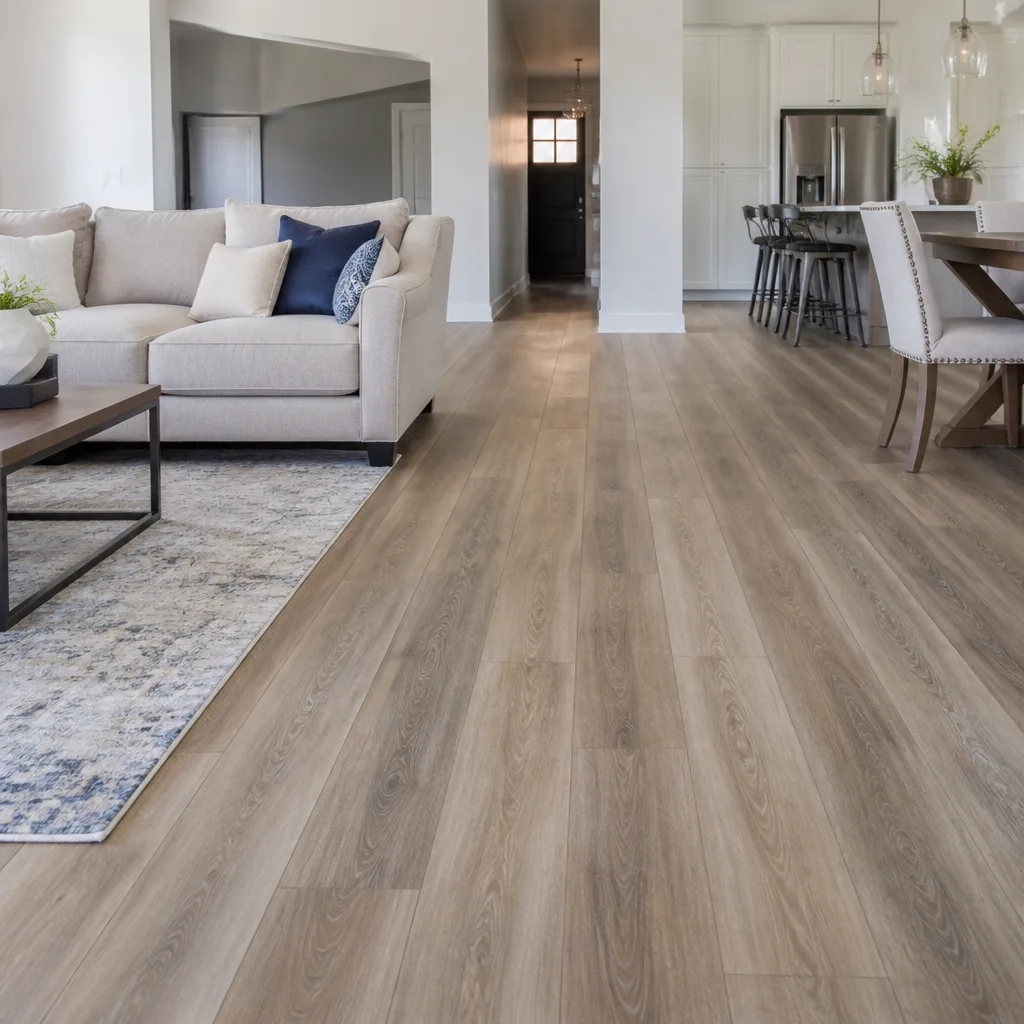 Luxury vinyl plank
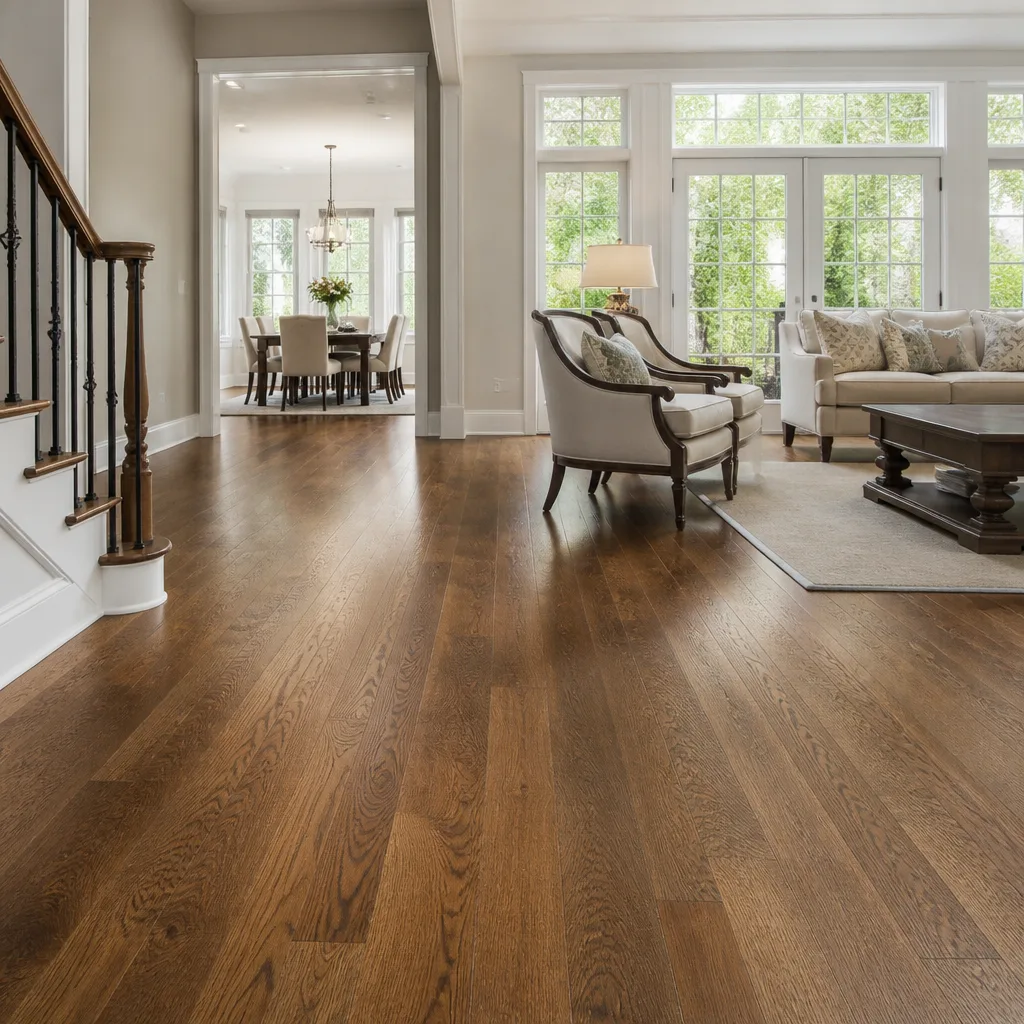 Hardwood
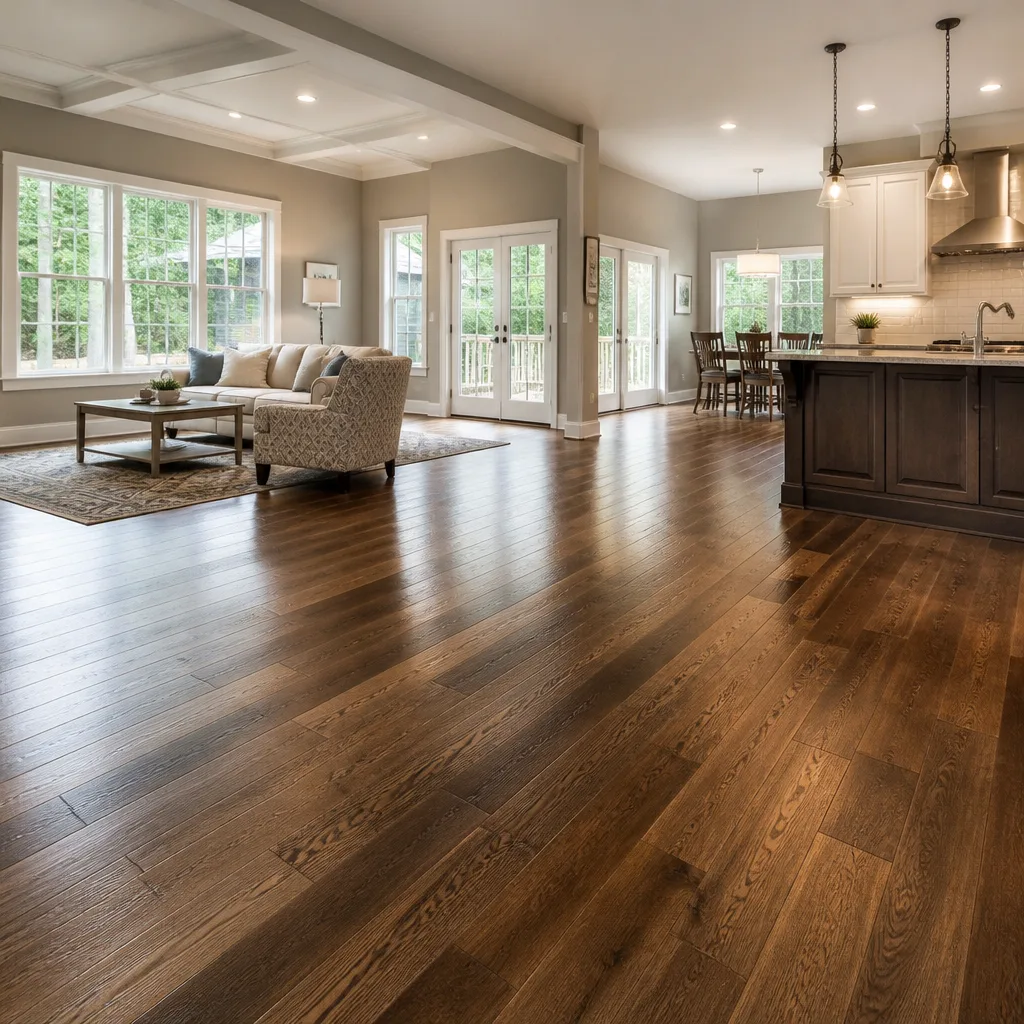 Engineered hardwood
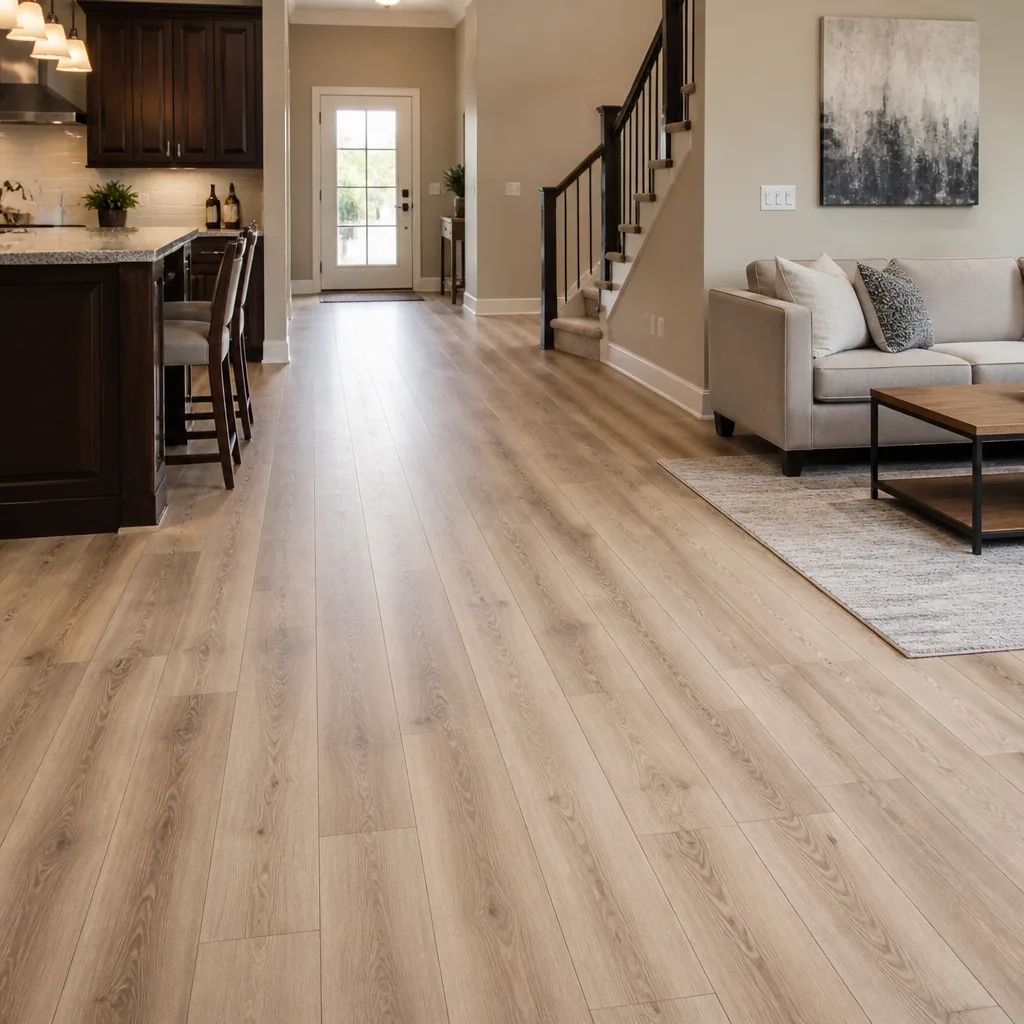 Laminate
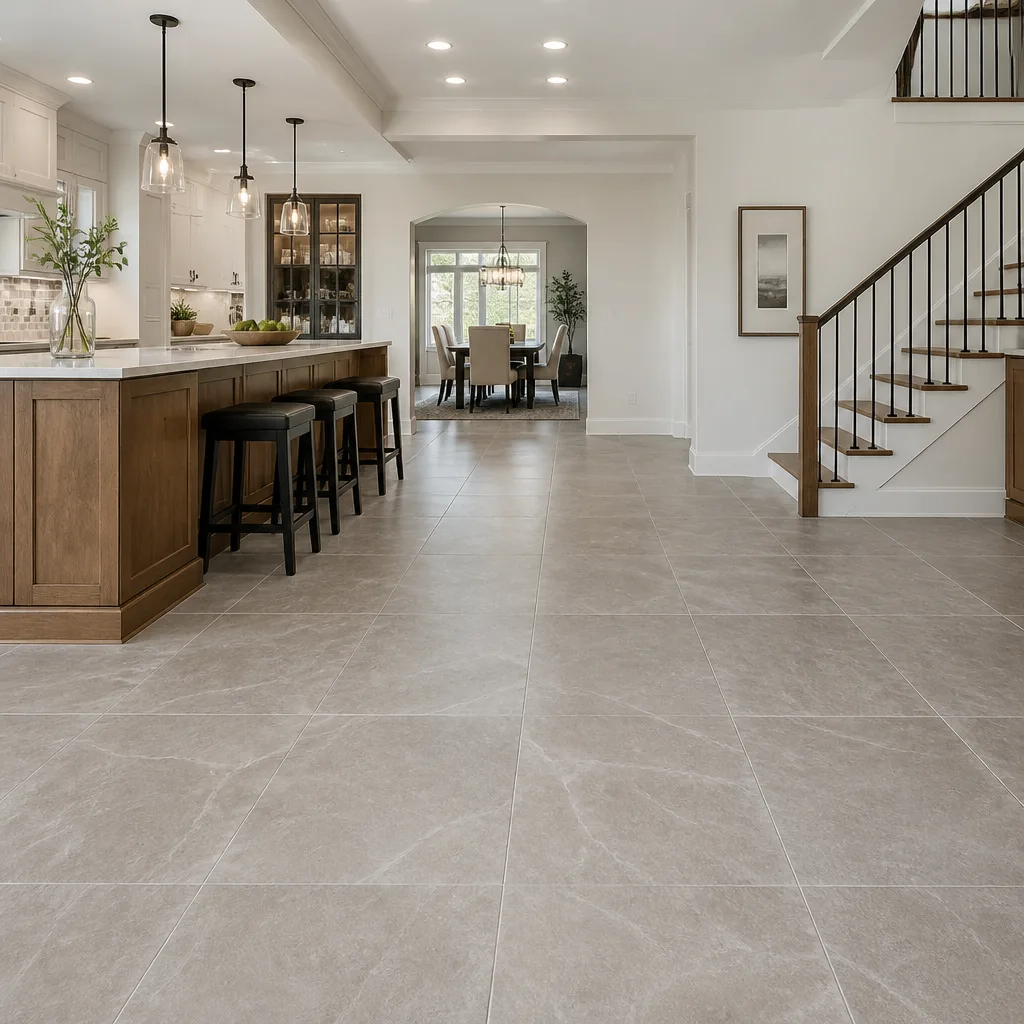 Porcelain tile
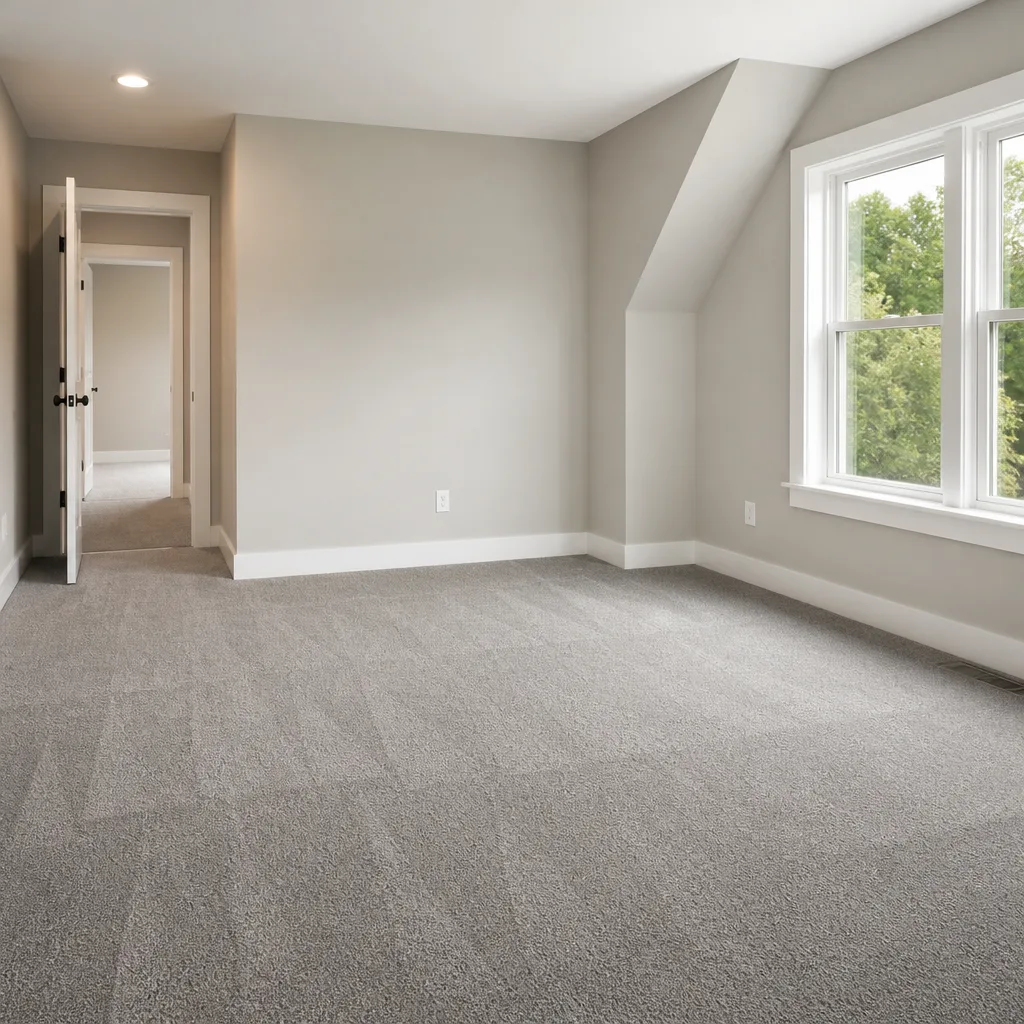 Carpet
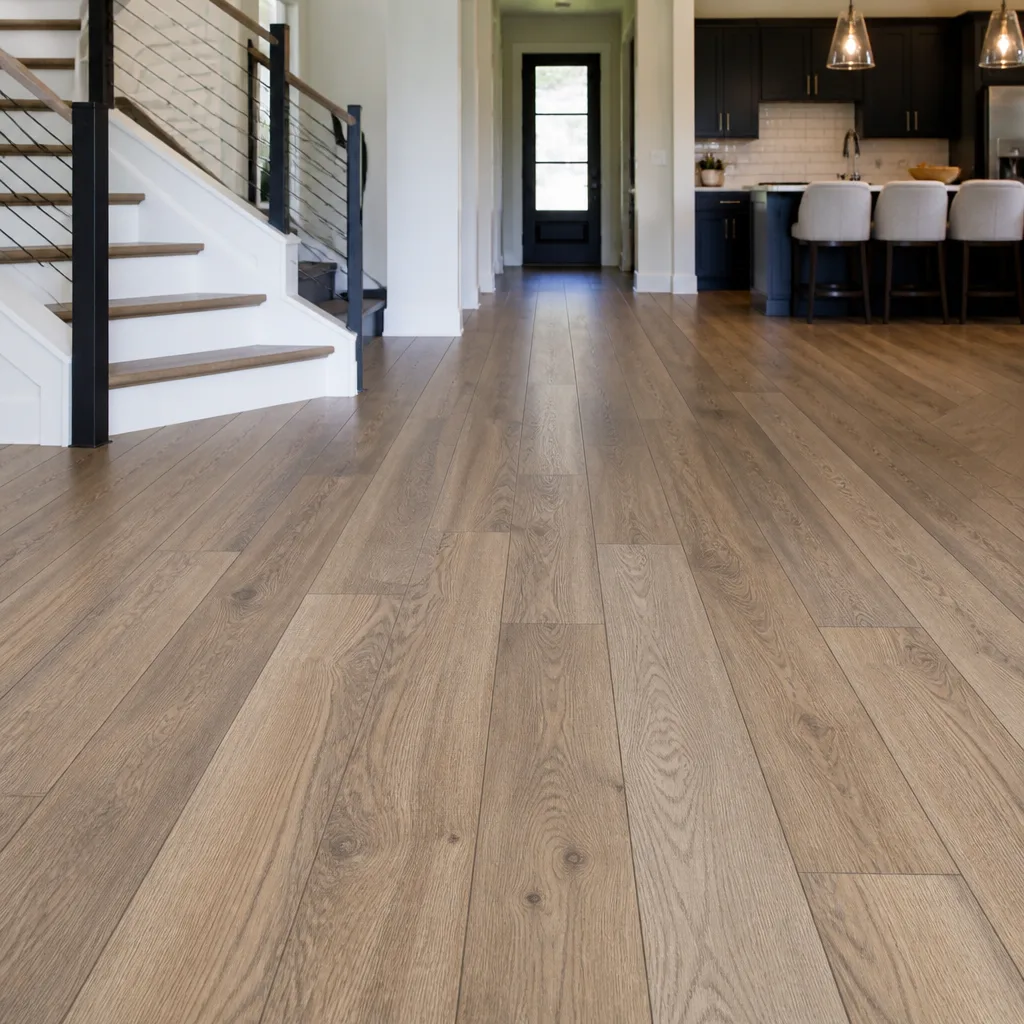 Shaw
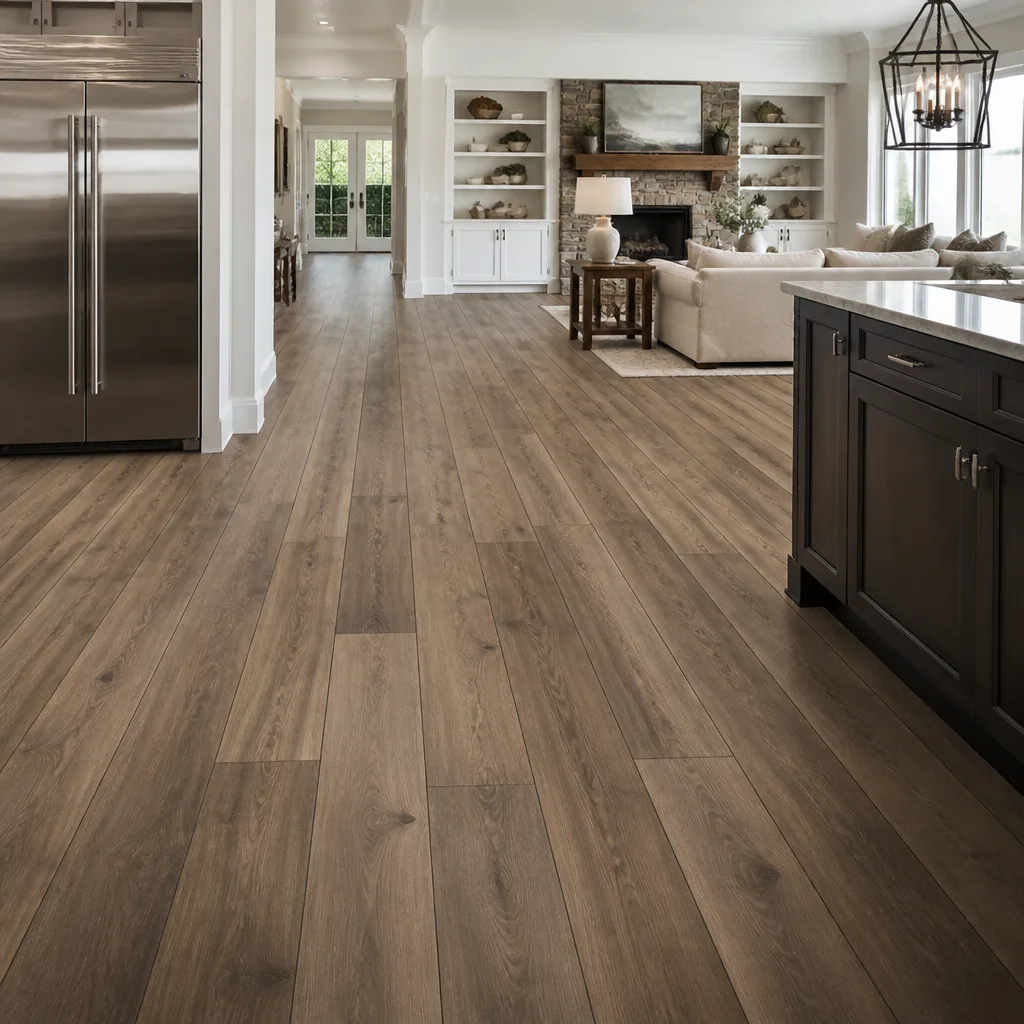 Mohawk
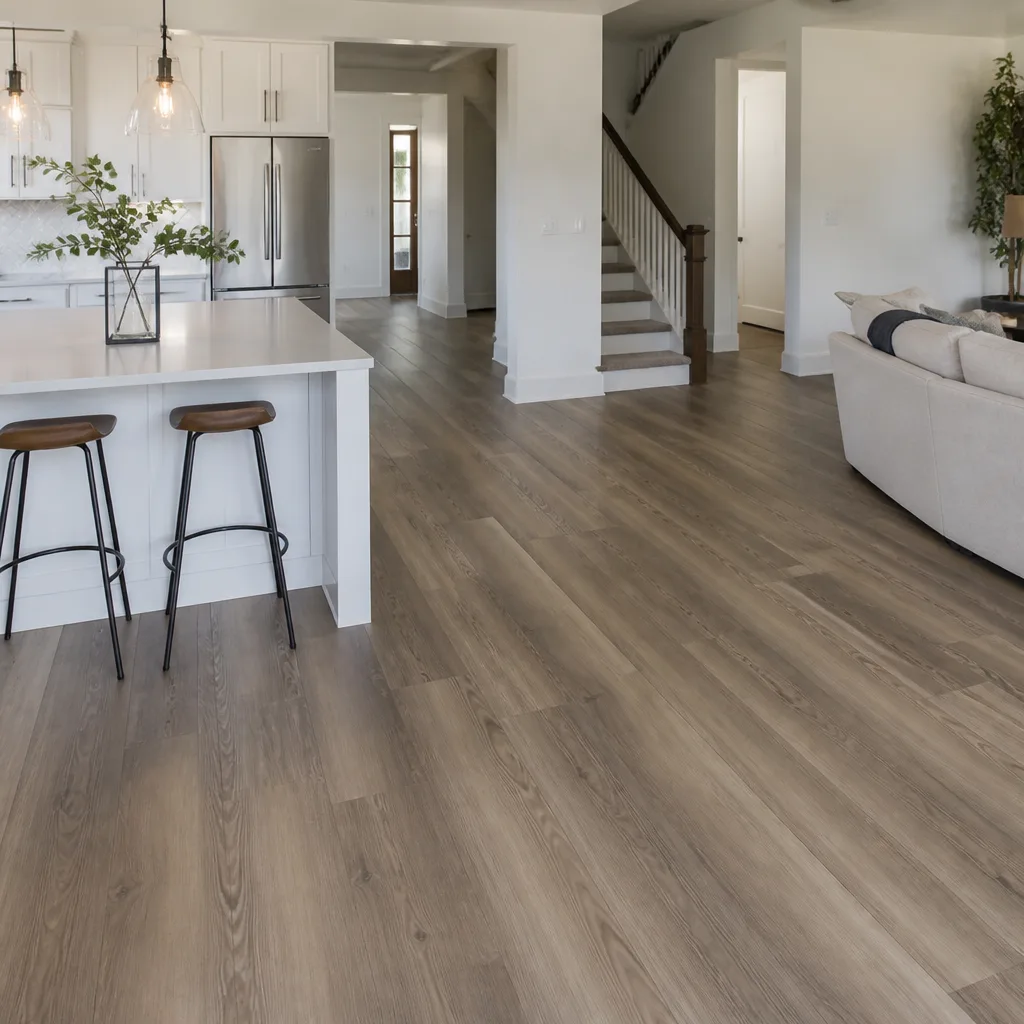 COREtec
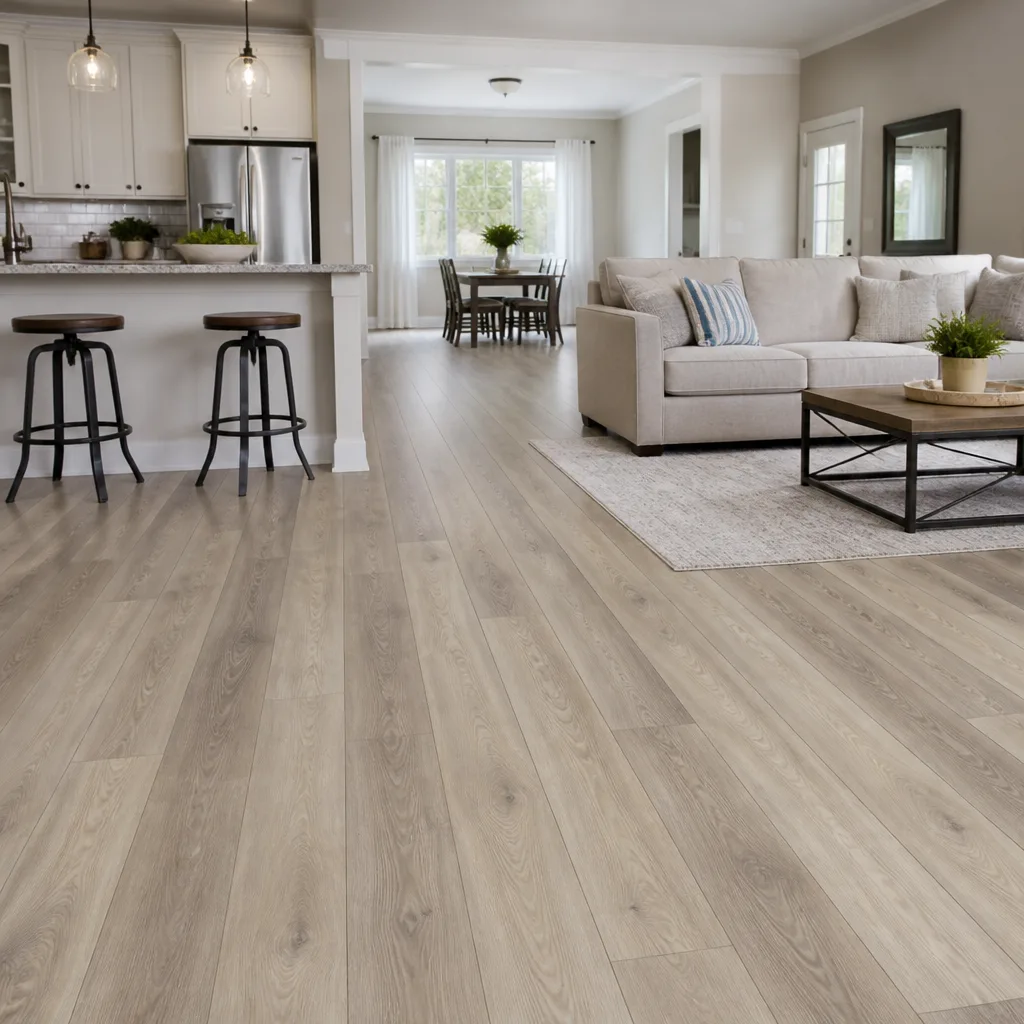 Pergo
Free in-home measure and written estimate: Shaw, Mohawk, COREtec and Pergo lines compared on your own rooms, with carpet, tile, vinyl plank, laminate and hardwood laid out side by side
Get your free estimateHardwood, Vinyl Plank, Laminate or Tile: How Spring Valley Homeowners Decide
Solid hardwood has been installed successfully in Las Vegas Valley homes for decades, but almost always in upstairs bedrooms, never on a ground-level slab, and never in a room that takes direct afternoon sun through west-facing glass with no window treatment. The product isn’t wrong. The placement is. Most of the hardwood-versus-vinyl-plank debate you’ll read online was written by people who’ve never thought about what’s under the floor or which direction the windows face. In this guide we’ll walk through the three inputs that actually decide the question for a Spring Valley home: subfloor type, room moisture risk, and sun exposure. Lifestyle preference comes after those, not before.
Quick Answer
The right floor for a Spring Valley home is decided by three things, in order: what the subfloor is made of, how much moisture the room sees, and how much direct sun hits it. On a ground-level concrete slab, luxury vinyl plank from a brand like LifeProof or COREtec is the sensible default; engineered hardwood works well on upper floors and in rooms with controlled sun; laminate fits dry interior rooms with moderate traffic; and porcelain tile belongs in kitchens, baths, and entryways where water and wear are constant. The product isn’t a personality test. It’s a fit between a room’s conditions and a board’s construction.
Styles & brands we work with
- Hardwood
- Engineered hardwood
- Luxury vinyl plank
- Laminate
- Porcelain tile
- Carpet
- Shaw
- Mohawk
- COREtec
- Pergo
Table of Contents
- Start Here: The Three-Input Decision Tree
- Why Subfloor Type Comes Before Everything Else
- Where Engineered Hardwood Genuinely Wins (and Why It’s Undersold)
- Laminate’s Honest Position in 2026
- Tile’s Twenty-Year Math Nobody Runs
- How to Read a Spec Sheet Without Star Ratings
- Sun, Windows, and the Compass in Your Own House
- Your Installer, Not Just Your Seller
Start Here: The Three-Input Decision Tree
Forget brand marketing for a minute. The hardwood-versus-vinyl debate in Spring Valley is settled by three physical facts about the room, and you can answer all three without a salesperson.
- What’s under the floor? A ground-level concrete slab behaves very differently from a wood-framed second-story subfloor. Concrete wicks moisture from below, moves slowly with temperature, and can’t take a nail. Wood framing stays drier and accepts fasteners but flexes slightly under load.
- How much moisture does the room see? A powder room, laundry room, kitchen sink zone, and mudroom entry off the garage are all moisture-adjacent. A bedroom or upstairs landing is not. Water from a splash, a wet mop, or a slow leak under a sink is what kills wood-fiber products; it isn’t a stain issue, it’s a structural one.
- How much direct sun hits the floor? A west-facing window in a Spring Valley living room gets strong afternoon light for hours, which heats the floor surface and stresses any wood-based product over time. East-facing morning sun is milder; north-facing rooms get very little direct light. You can walk your own house with a compass or watch the light at different hours.
Run those three questions on any room and you land on a small set of sensible products almost immediately. It’s how we think through flooring installation Spring Valley projects before we ever open a sample book. The rest of this guide unpacks each answer.
Why Subfloor Type Comes Before Everything Else
The subfloor question answers more of the decision than any other input, and Spring Valley homes split roughly into two groups: ground-level with a concrete slab underneath, and upper-floor with a wood-framed subfloor. Each behaves differently enough to change which product makes sense.
The ground-level slab
Concrete on grade is always moving slightly with moisture and temperature. It stays cool, which makes it comfortable in summer but also means any product that hates moisture from below has a hard time here. Luxury vinyl plank is the natural fit for two reasons: it tolerates a slab, and the better LVP cores – the ones COREtec and LifeProof build – are designed to sit on top of concrete without needing a plywood layer between.
The upper-floor wood frame
Wood framing under a floor is drier and more forgiving of absorbent products, which is exactly why solid hardwood works upstairs in Spring Valley homes that were built with it decades ago. The framing accepts nails, the floor can be sanded and refinished more than once, and the room is typically a bedroom or landing where moisture is a non-issue.
Where it gets tricky
Rooms that straddle the two – a stair landing over a garage, a hallway over a cantilevered bump-out – sometimes have a stiffness issue the sales floor never asks about. That’s a conversation to have at the estimate, not after the material’s been delivered.
Where Engineered Hardwood Genuinely Wins (and Why It’s Undersold)
Engineered hardwood is the most undersold flooring option in the Spring Valley market, and it isn’t because the product is worse. It’s because most of the online debate treats “hardwood” and “LVP” as the only two positions, engineering is a compromise in the middle, and homeowners skip straight to the two poles.
Here’s the case for engineered:
- It’s real wood at the surface. Engineered hardwood is a bonded plywood core with a slice of real hardwood on top. You get the look and feel of wood, which luxury vinyl can approximate but never fully match underfoot.
- It tolerates moisture swings better than solid wood. The layered core resists the expansion and contraction that works against solid planks, which matters in a valley climate with dry summers and cool winters.
- It works over some slabs with the right underlayment. Whether a slab will accept engineered hardwood depends on the moisture condition of that slab and the product’s own installation instructions. Builders sometimes put it on slab in Spring Valley, but always with that check done first.
- It sits in a place solid wood can’t. A west-facing upstairs den getting afternoon sun is a good candidate for engineered rather than solid oak, because the layered construction handles the movement that comes with heat and drying more gracefully.
The undersold part is the trade: engineered hardwood costs more than luxury vinyl but less than solid hardwood in most cases, and it looks like wood rather than a photograph of wood. Where a Spring Valley homeowner has an upper-floor room with controlled sun and no real moisture, engineered is often the quiet answer that never gets discussed on the forums.
Laminate’s Honest Position in 2026
Laminate has improved more in the past five years than any other flooring category, and the honest framing is this: a modern laminate from a brand like Pergo or Armstrong holds up better under daily traffic than the laminate most homeowners remember from a decade ago. The wear layers are denser, the photographic realism has crossed a line where most people can’t tell it from wood at arm’s length, and the price per square foot lands meaningfully below engineered hardwood.
What hasn’t changed is the water question. Laminate is a wood-fiber core. When water gets into it – a burst pipe under the sink, a dishwasher leak, a pet accident left standing for half an hour – the core swells and the plank stays swollen. It cannot recover the way luxury vinyl can. That single fact places laminate in a narrower lane than LVP, no matter how good the surface wear layer is.
Where laminate fits in a Spring Valley home:
- A ground-level or upper-floor living room where foot traffic is steady but no water source sits nearby
- A dry bedroom that wants the look of wood without the engineered-hardwood price
- A rental property where the owner wants a wood appearance and a lower replacement cost if a tenant damages a room
Where it doesn’t:
- Any kitchen sink zone, powder room, laundry room, or mudroom entry off the garage
- Ground-level rooms with a moisture issue in the slab
- Rooms taking heavy direct afternoon sun without blinds
Laminate is a good floor in the right room. It’s the wrong floor anywhere water lives.
Tile’s Twenty-Year Math Nobody Runs
Porcelain tile has the highest upfront price of any of the four options on this page, which is why it loses the short-term comparison almost every time. Run the same comparison over twenty years and the answer flips in most of the rooms where it belongs.
The upfront side
Tile costs more per square foot installed than luxury vinyl plank or laminate in every Spring Valley project we see. Quoting an exact number would mean knowing the room, the tile, the pattern, and the subfloor condition – all of which get settled in a written estimate – but on a level estimate the gap is real and doesn’t close.
The way tile behaves over twenty years
In a kitchen, bathroom, entryway or mudroom, porcelain tile simply doesn’t wear out under the conditions those rooms see. Water doesn’t affect it. Sand and grit from shoes don’t scratch it. Point loads from a heavy chair leg don’t dent it. It’s not indestructible – a dropped pan can chip a tile, and a shifted subfloor can crack a grout line – but the failure modes are specific and repairable rather than cumulative. In a twenty-year window, tile is the only one of the four floors that can plausibly still be the same floor on day one and day 7,300 in a high-traffic, moisture-adjacent room.
Where the math falls apart
Tile is the wrong floor in a bedroom, upstairs hallway, or living room where you want softness and warmth underfoot. In those rooms the twenty-year cost comparison doesn’t matter, because tile isn’t a candidate regardless of price. Run the math on the rooms it actually fits.
Daltile and Mannington are the two brands on our tile lineup, and the reason is straightforward: both make porcelain products that hold their look and hold their edge in daily use, which is exactly what the twenty-year calc depends on. The math only works if the tile itself survives the window. On tile flooring installation, the product and the install have to both be right for the total-cost argument to hold up.
How to Read a Spec Sheet Without Star Ratings
Star ratings on retail flooring pages measure how the room felt on day one. They don’t measure whether the floor will still be in your home in ten years. Here’s what to read instead, across our portfolio of nine brands – a lineup that includes Shaw, Mohawk, COREtec, Pergo, LifeProof, Mannington, Armstrong, Daltile, and Karndean – and across the category you’re considering.
- Wear layer thickness on LVP. The wear layer is the clear layer over the pattern. Thicker wear layers mean a floor that resists scratching and dulling longer under traffic. Reading the number on the spec sheet tells you more than any star rating on the box.
- Core density on LVP and laminate. The core is the structural middle of the plank. Denser cores handle foot traffic and point loads better. Any spec sheet that publishes a density figure is telling you something; a spec sheet that hides it isn’t.
- Locking system design on the plank. The lock is what holds the planks together. A lock with a good mechanical design stays tight under seasonal movement; a weak one opens gaps at the seams. Ask to see a lock sample and check how the planks engage.
- Wear layer and surface on laminate. Pergo and Armstrong both publish laminate wear information on their spec sheets. Look for the surface construction rather than the printed wear warranty term – the surface tells you how it’s likely to hold up, and the paperwork sets what the manufacturer warrants.
- Porcelain body rating on tile. Daltile and Mannington both publish the porcelain body classification on their spec sheets. The classification tells you what kind of room the tile can take; a bath floor and a decorative wall tile don’t have the same body.
The important thing here is that you don’t need us to interpret the numbers. You need us to make sure the product you’re choosing actually meets the spec for the room it’s going in, and that the brand side of the transaction is someone we can hold accountable for. That’s the difference between your installer and just your seller.
Sun, Windows, and the Compass in Your Own House
Spring Valley’s afternoon sun is one of the most underrated inputs in flooring choice, and it’s the one homeowners almost never think about because they’re not sitting in the room with the sun on a rectangle of floor watching what happens to it. Two things happen to a floor under direct afternoon sun through west-facing glass: the surface heats up more than the room’s ambient temperature suggests, and the transition from cool shade to hot sun and back, day after day, is exactly the kind of cycle that dries and stresses wood-based products faster than steady temperature does.
How this plays out for each floor:
- Solid hardwood dries and moves, and can develop cracks between planks with enough heat cycling. It also fades. A west-facing room with no window treatment is the one place we push back hardest on solid wood.
- Engineered hardwood handles the same cycle better because the layered construction resists the movement. It still fades, though, and the same afternoon sun that stresses solid wood will stress engineered over time.
- Luxury vinyl plank is largely unaffected by the heat cycling itself. Some LVP can fade under strong UV, so check the brand’s published UV rating for the room in question.
- Laminate will fade and, in the worst cases, can have surface layers lift under sustained heat. It’s not the right floor for a west-facing room without blinds.
- Porcelain tile doesn’t care. The tile body is fired ceramic; sun, heat, and UV are non-events. It’s the only one of the four that shrugs off the sun issue entirely, which is one more reason it wins the twenty-year math in the sunniest rooms.
The practical fix, in any room where you love the floor but hate what the sun will do to it, is a window treatment – shades, blinds, or a UV film on the glass. That’s a $200 conversation that can extend the life of a hardwood floor by years. Walk your Spring Valley home with a compass. The west side is the one to worry about.
Hardwood Refinishing: Restore Before You Replace
Before comparing new floors, it’s worth checking whether the wood you already have can be saved. Hardwood floor refinishing is the quiet alternative to replacement, and in a Spring Valley home with an original wood floor upstairs it’s often the better money spent.
Refinishing means sanding back the existing surface, correcting minor wear, and applying a new finish and stain. It costs meaningfully less than a new floor of comparable appearance, it’s significantly faster than a full replacement, and it keeps the character of the original wood – the reason a lot of homeowners chose their house in the first place. In Spring Valley homes built in the 1980s and 1990s, the upstairs flooring is often solid wood that’s still structurally sound under a dated finish. That floor is a candidate for a new look with a refinement, not a tear-out.
Two honest caveats. First, not every floor can be refinished. The refinement depends on how thick the wood is and how many times it’s been sanded before. That’s checked at the estimate visit, not on the phone. Second, a stain match to a sample isn’t guaranteed on an existing floor – wood takes finish differently depending on age and species, and the shop can get close but not to the millimeter. We tell homeowners both things before the work starts.
The takeaway is simple: restore what’s there before you replace it, and only replace if the structure won’t take a refinement. For a full look at what we install, see flooring installation Spring Valley for the categories we cover – carpet, tile, and hardwood refinishing – or read on for the carpet side in our guide to carpet installation.
Your Installer, Not Just Your Seller
One of the differences that matters most in a Spring Valley flooring project isn’t the product at all – it’s who’s accountable for it from the sample book to the final walk-through. Big-box stores sell the floor and subcontract the install. Showroom dealers sell their single brand and leave you to coordinate the trades if the project spans two flooring types. We do it differently: nine brands, one installer.
What that means for you:
- Nine-brand portfolio. Shaw and Mohawk for carpet, COREtec, LifeProof, and Karndean for luxury vinyl, Pergo and Armstrong for laminate, Daltile for tile, and Mannington across categories. That breadth means we’re matching a product to your room, not steering you toward the one brand we happen to stock.
- Value tier and designer tier, side by side. Pergo and Armstrong earn their place for a landlord turning apartment floors. Karndean and COREtec earn theirs for a kitchen that sees real traffic. The recommendation follows the room, not the margin.
- Hardwood refinishing alongside new installation. We can refinish your existing wood or install new flooring, which means the answer isn’t always a tear-out. Sometimes the right call is restoring what’s there.
- Three core services under one contractor relationship. Carpet installation, tile installation, and hardwood refinishing handled by the same team, which takes the coordination risk out of a multi-room project.
Our technicians have up to 13 years of experience across these categories, which matters when a subfloor isn’t level, a slab has moisture, or a stair landing has an odd framing situation – the three spots where installs usually go wrong. For homeowners in Spring Valley weighing a multi-room project, having one point of accountability from product selection through final installation is worth as much as the product itself.
See the difference
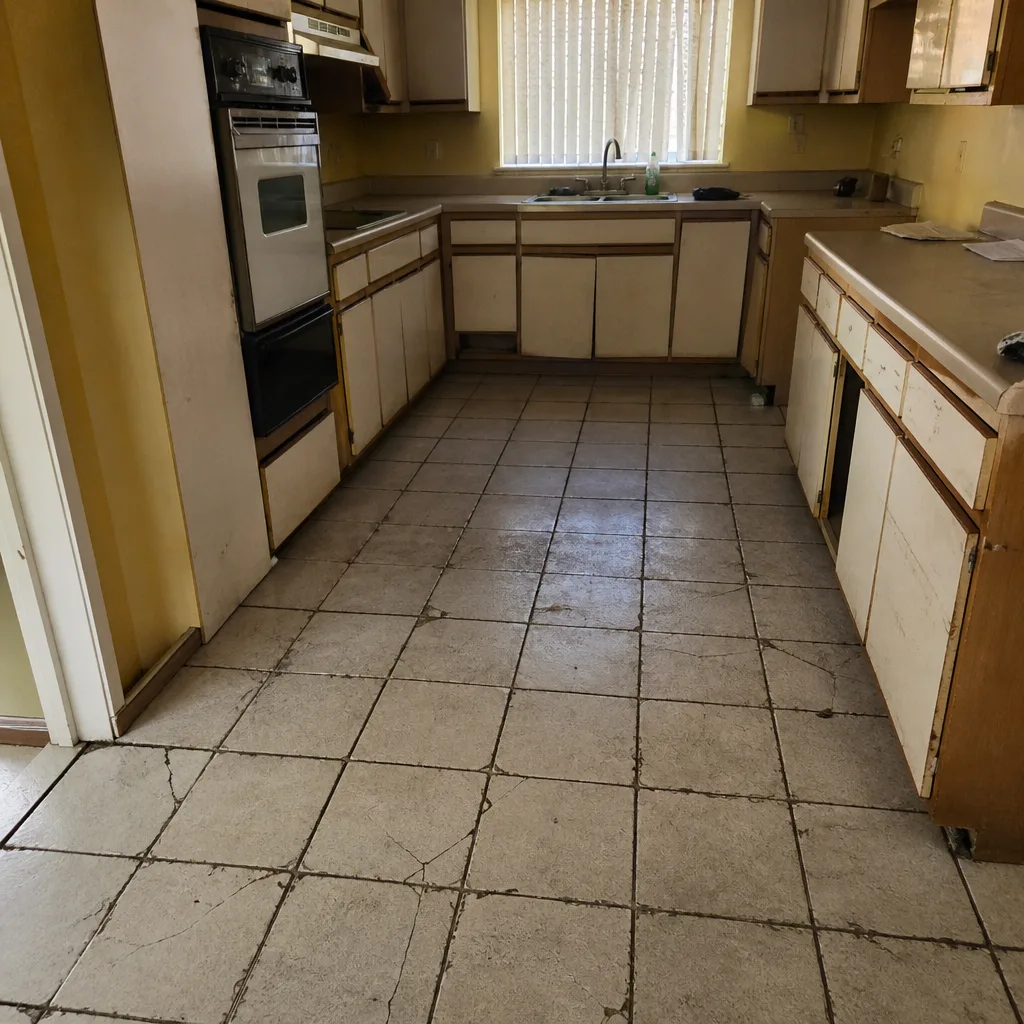 Before
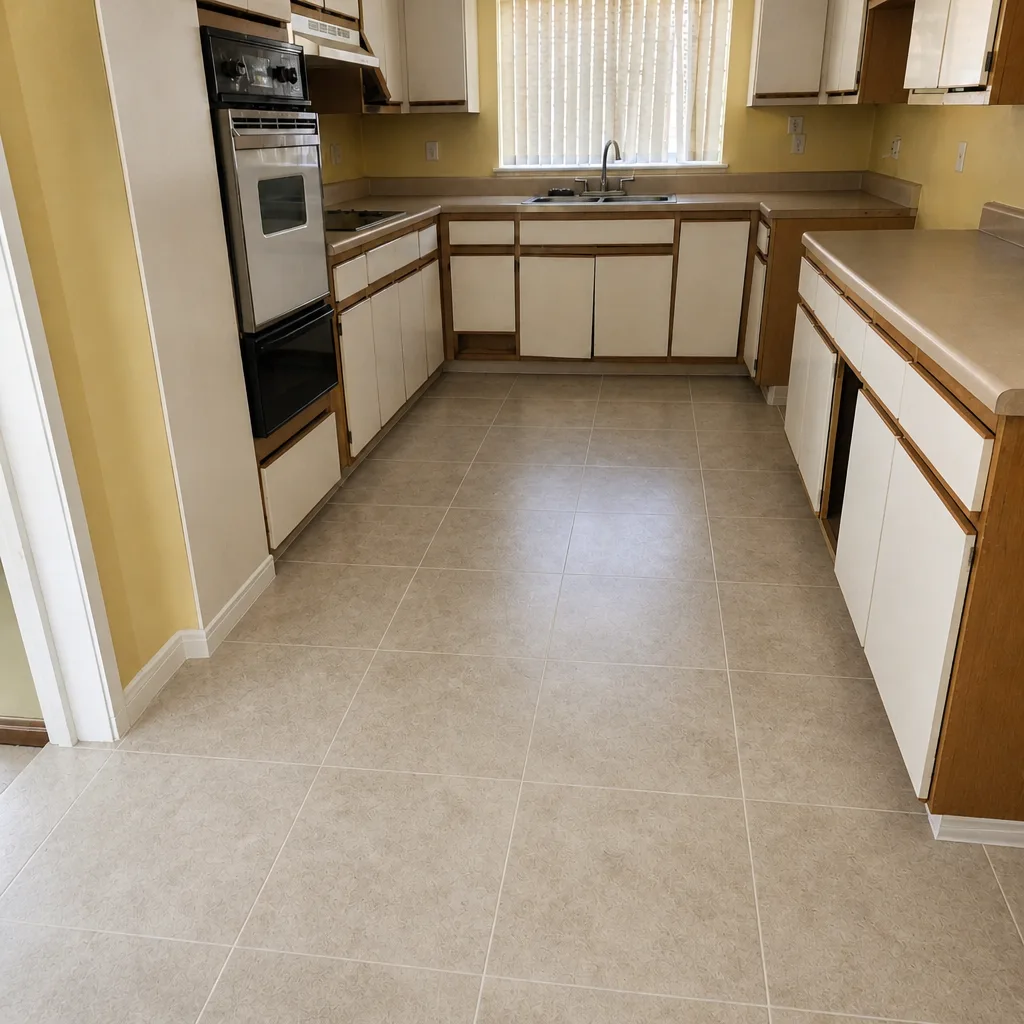 After
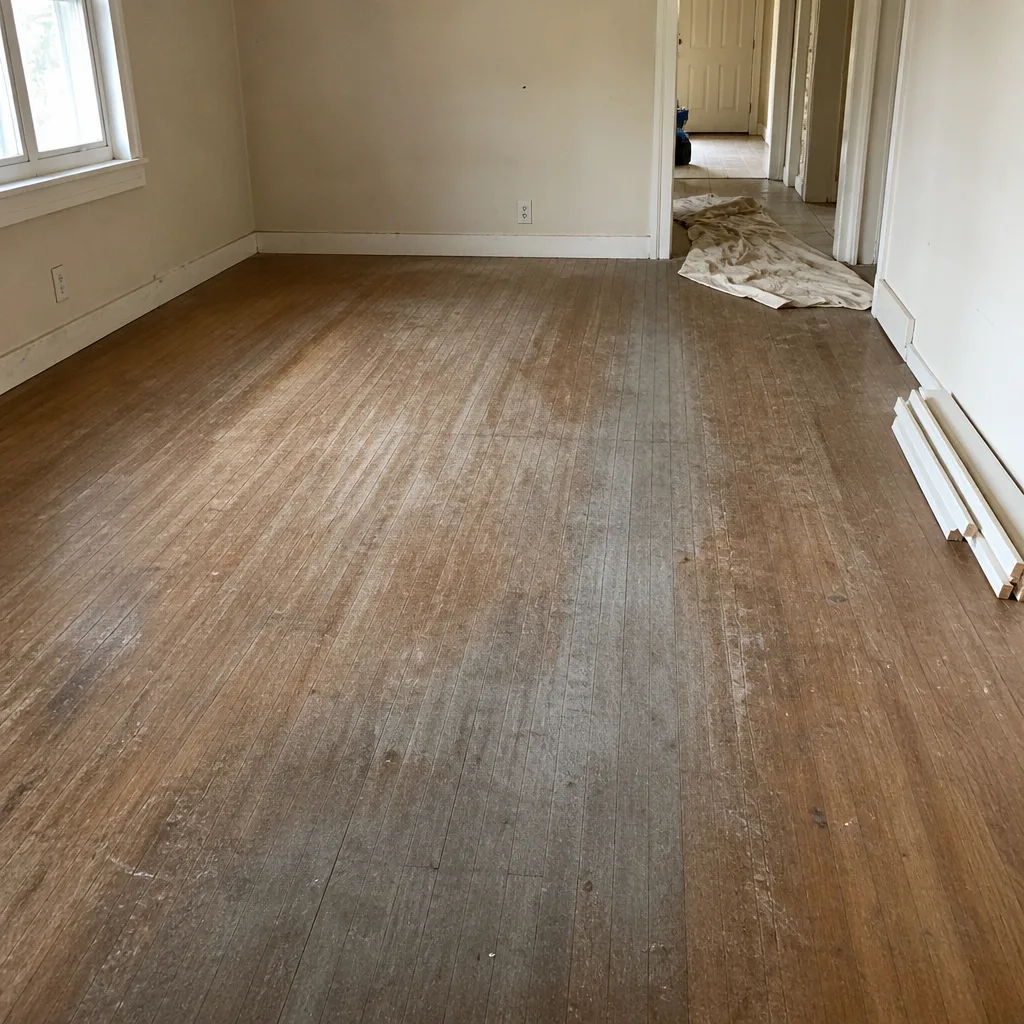 Before
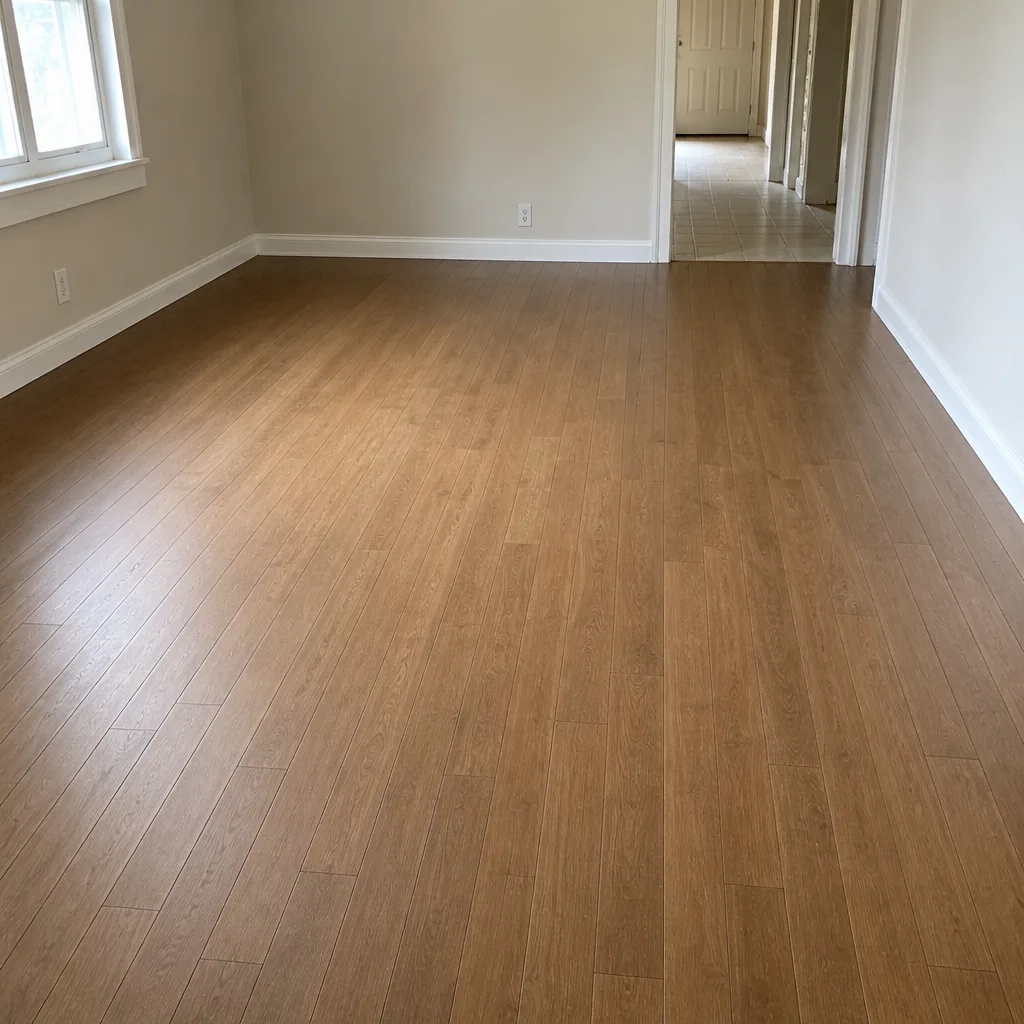 After
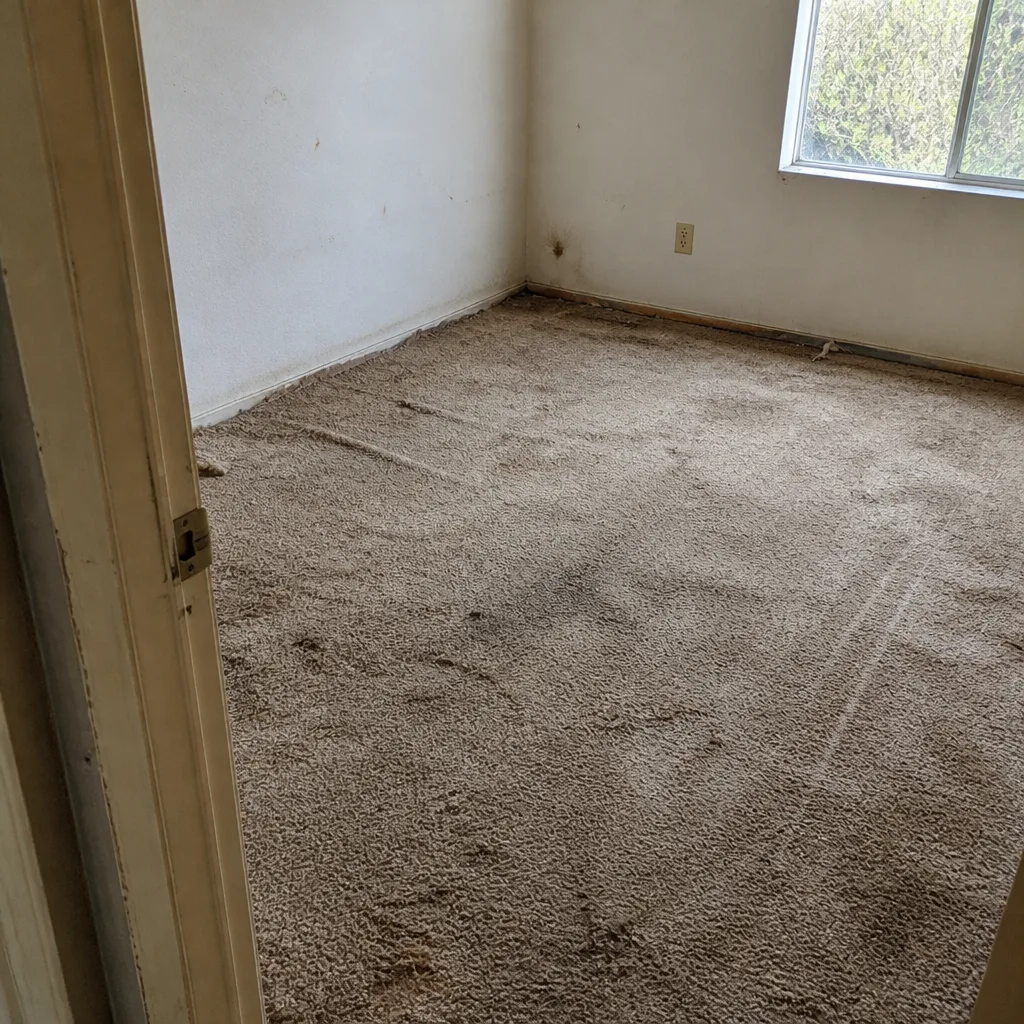 Before
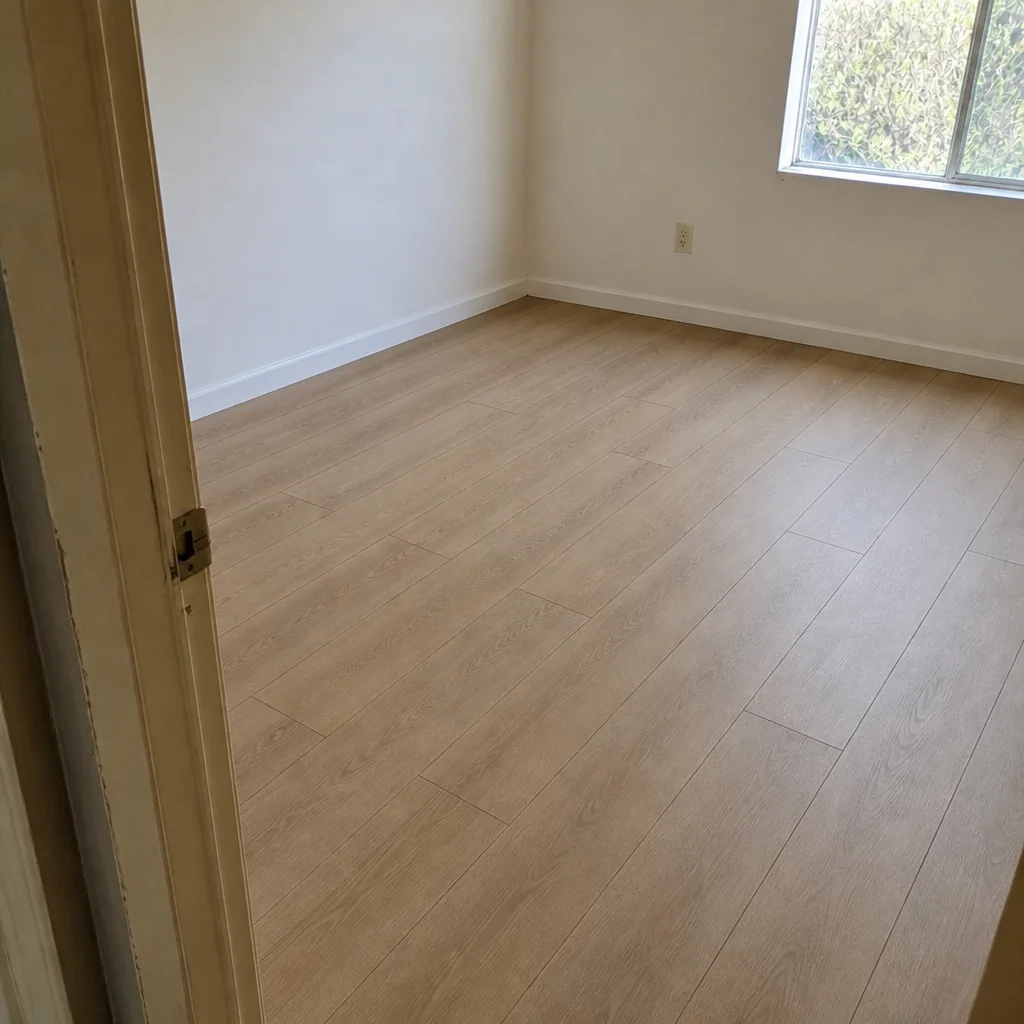 After
Common Mistakes to Avoid
- Choosing hardwood for a ground-level slab room. The slab moves with moisture and the solid plank doesn’t handle it gracefully. Engineered hardwood or LVP is the right answer on a slab; solid wood wants an upper floor.
- Putting laminate in a bathroom or kitchen sink zone. The surface wear layer is fine; the wood-fiber core is not. A single slow leak can turn a laminate floor into a replacement project.
- Ignoring west-facing sun in the room plan. The light through a west window in Spring Valley heats a floor for hours daily and stresses any wood-based product. Window treatment is the fix; ignoring it is the mistake.
- Comparing products on star ratings only. Star ratings measure day-one impression. Wear layer, core density, locking system design, and porcelain body classification measure what happens in year five.
- Assuming tile loses on cost in every case. In a kitchen, bath, or entryway, tile usually wins the twenty-year comparison. In a bedroom it doesn’t belong regardless of price, so the cost argument is irrelevant there.
- Buying from a big-box install program without a written scope. The store sells the floor, a subcontractor installs it, and the homeowner is coordinating between the two if anything goes sideways. Insist on a single accountable installer from selection through walk-through.
- Skipping the refinish check before a tear-out. A structurally sound hardwood floor can be sanded and refinished at a fraction of the cost of new flooring. Have the thickness and condition checked before committing to a replacement.
When to Call a Professional
Some decisions on this page are genuinely yours to make on your own. Others are not. If your subfloor is concrete and you’re not sure what’s under it, if you’ve spotted a moisture issue in a slab-level room, if your hardwood floor has visible plank separation or cupping, if a floor you’re considering refinishing might be too thin to sand again, or if a multi-room project involves more than one flooring type – those are the moments to bring in an installer who can look before you buy. Flooring Installation Spring Valley offers free estimates in Spring Valley – call (844) 797-4453. We answer 24/7. Fast dispatch from 7am to 7pm, Sunday through Friday. Estimates are free, and a written quote sets the final price.
Frequently Asked Questions
Neither is universally better; it depends on the room. Solid hardwood works well on upper floors with controlled sun and no moisture, while luxury vinyl plank from a brand like LifeProof or COREtec is the sensible default on ground-level concrete slabs and in rooms that see water. Walk the three-input test – subfloor, moisture, sun – and the answer for each room usually becomes obvious.
Solid hardwood on a ground-level slab is rarely the right call. Engineered hardwood is a different story when the slab’s moisture condition is checked first and the product’s own installation instructions allow it. Whether your specific slab will accept engineered hardwood is decided at the estimate, not on the phone. Call (844) 797-4453 for a free estimate.
No, in most rooms where tile fits. Porcelain tile costs more upfront than LVP, but in a kitchen, bathroom, or entryway, the tile typically doesn’t wear out the way any plank floor does, and the twenty-year math usually favors it. In a bedroom or upstairs hallway, tile isn’t a candidate regardless of price.
Sometimes yes. If the existing wood is structurally sound and thick enough to sand again, refinishing costs meaningfully less than a full replacement and keeps the original character of the wood. Whether a specific floor can be refinished is checked at the estimate visit, because the answer depends on plank thickness and past wear. Refinishing along with new installation are both on our service list.
Because laminate has a wood-fiber core. Water from a slow leak, a dishwasher overflow, or a wet mop left pooling can swell the core, and the plank stays swelled. Modern laminate from Pergo or Armstrong has a much better surface wear layer than five years ago, but the core behavior hasn’t changed. Dry rooms only.
We carry nine brands across the categories: Shaw and Mohawk for carpet, COREtec, LifeProof, and Karndean for luxury vinyl plank, Pergo and Armstrong for laminate, Daltile for tile, and Mannington across categories. Brand matters less than product spec; what matters is whether the product you choose actually fits the room’s conditions. That’s the conversation we have at the estimate, and the estimate is free. Call (844) 797-4453.
It depends on the scope: single room, whole home, number of flooring types, subfloor prep, and whether the project includes refinishing existing wood. The schedule is set at the estimate along with the written price, so you know both before any material is ordered.
The Bottom Line
The hardwood-versus-vinyl-versus-laminate-versus-tile debate is simpler than the forums make it out to be once you strip the brand marketing and start with three physical questions: what’s under the floor, how much moisture the room sees, and how much direct sun hits it. In a Spring Valley home, those three questions do most of the decision-making work, and the right answer often isn’t the most discussed option – engineered hardwood in an upstairs den, LVP on a slab, laminate in a dry bedroom, tile in a wet room. Nine brands, one installer, one accountable point from sample book to final walk-through. That’s what the decision actually comes down to when you’re ready to price it.
We work with homeowners across Spring Valley on single-room refreshes and whole-home projects alike, and we’re happy to walk your rooms with you before you commit to a product. Call (844) 797-4453 for a free estimate. We answer 24/7, and fast dispatch is available from 7am to 7pm, Sunday through Friday. The estimate is free, and the written quote sets the final price.
Written by the team at Flooring Installation Spring Valley.