
Last updated November 17, 2026
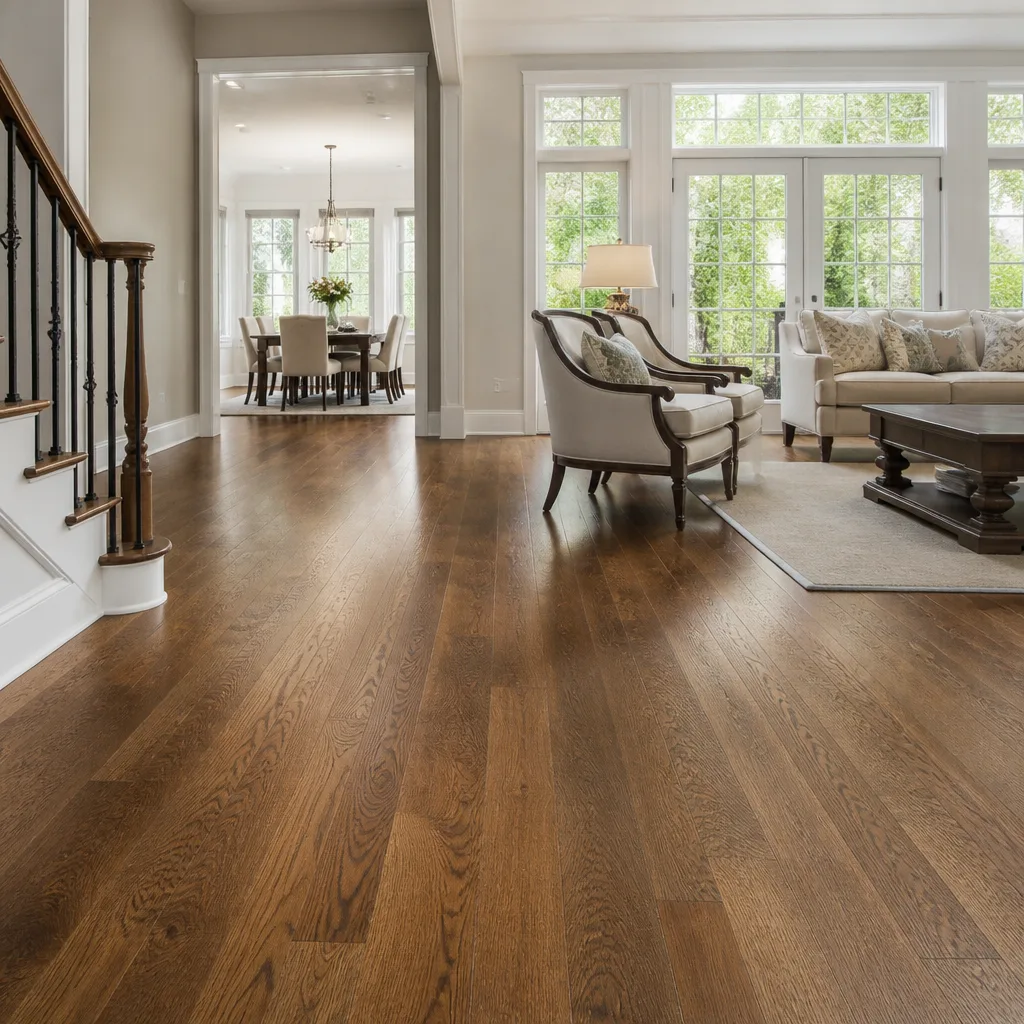 Hardwood
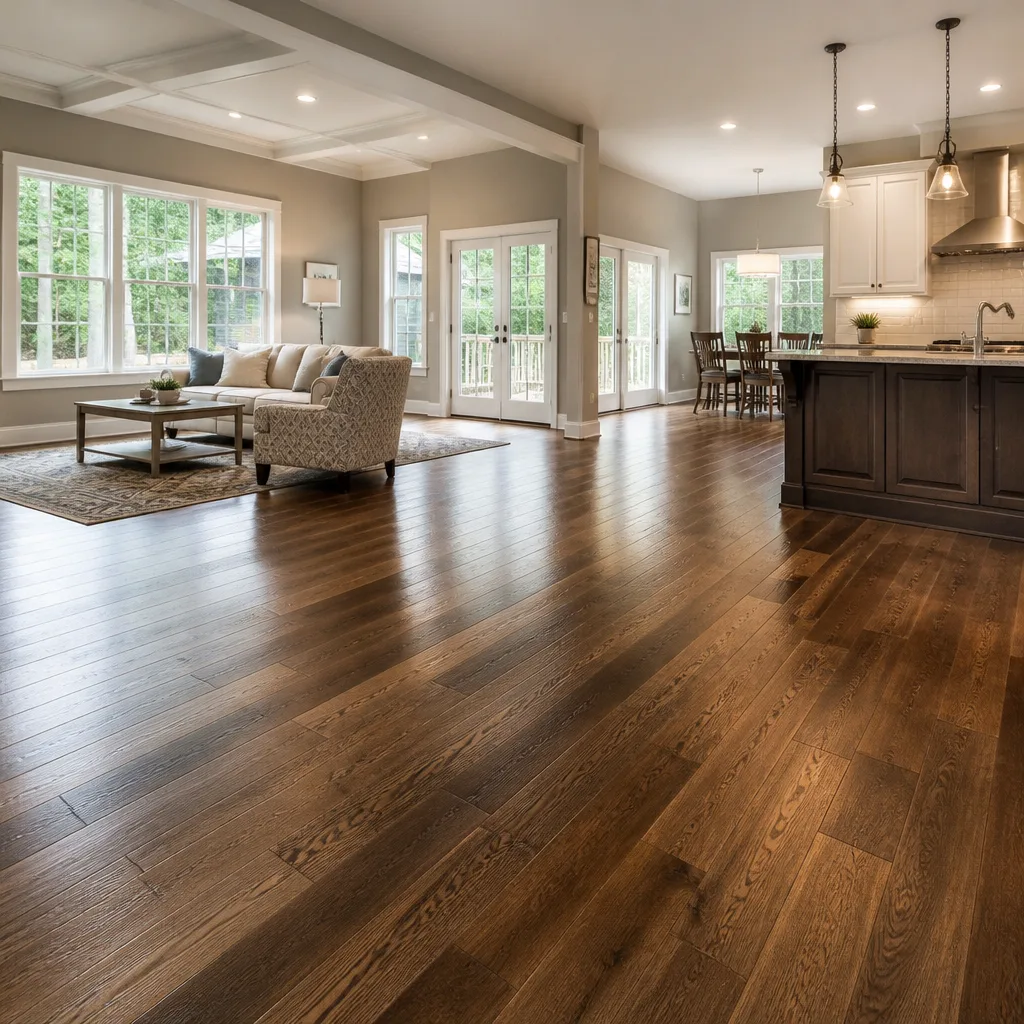 Engineered hardwood
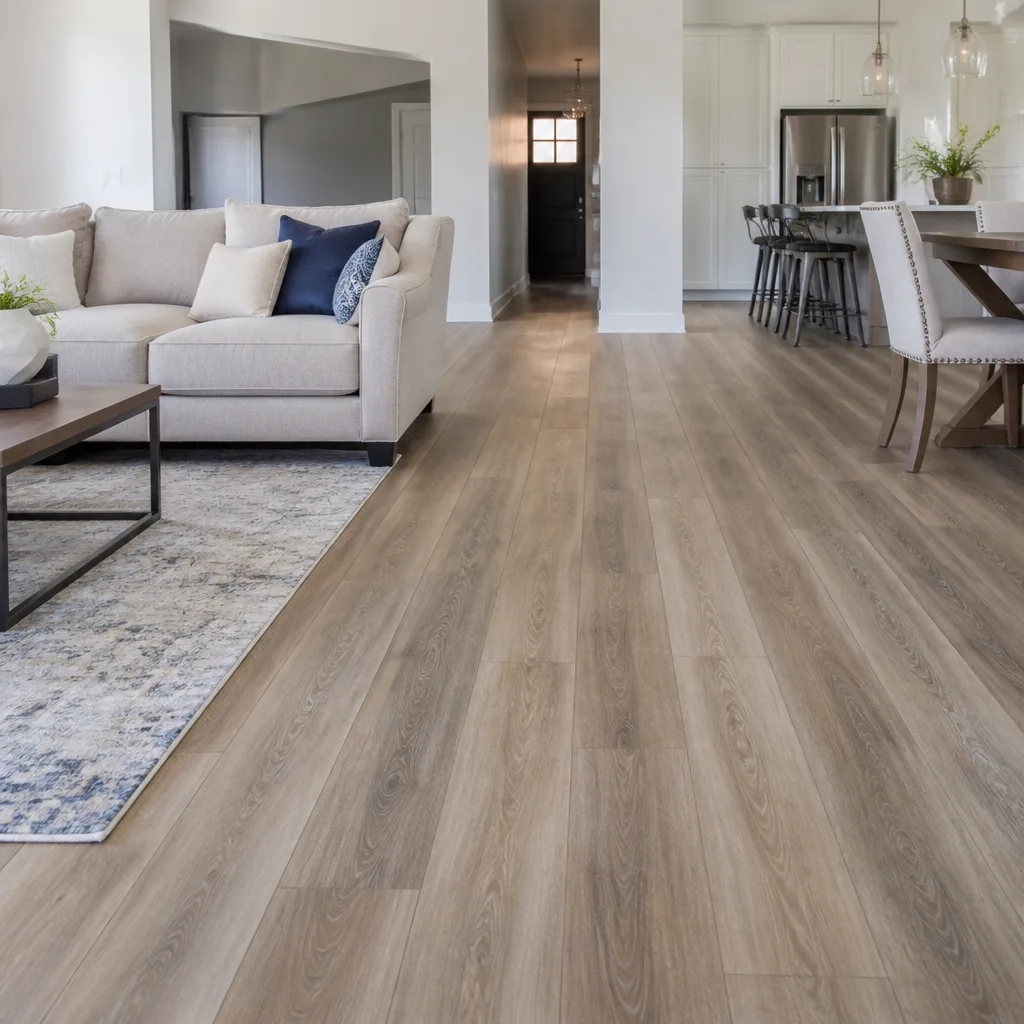 Luxury vinyl plank
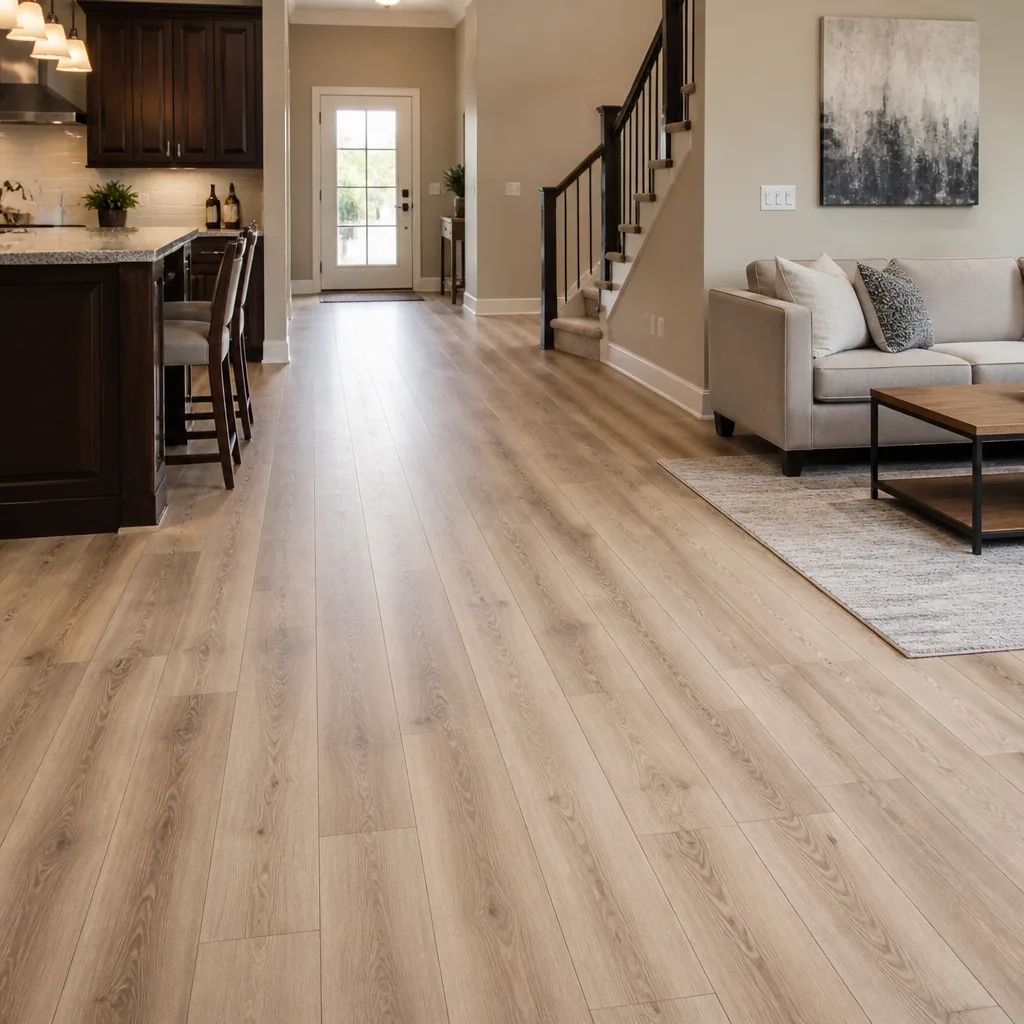 Laminate
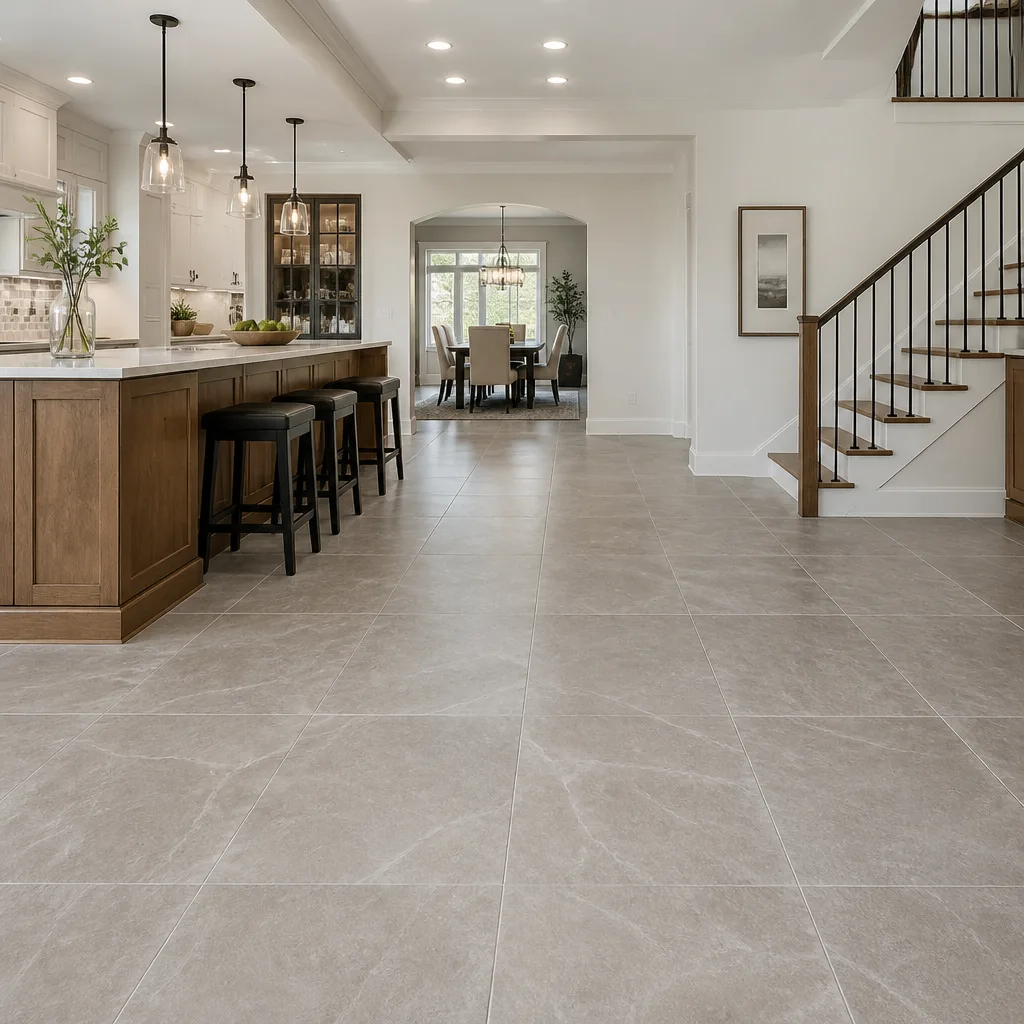 Porcelain tile
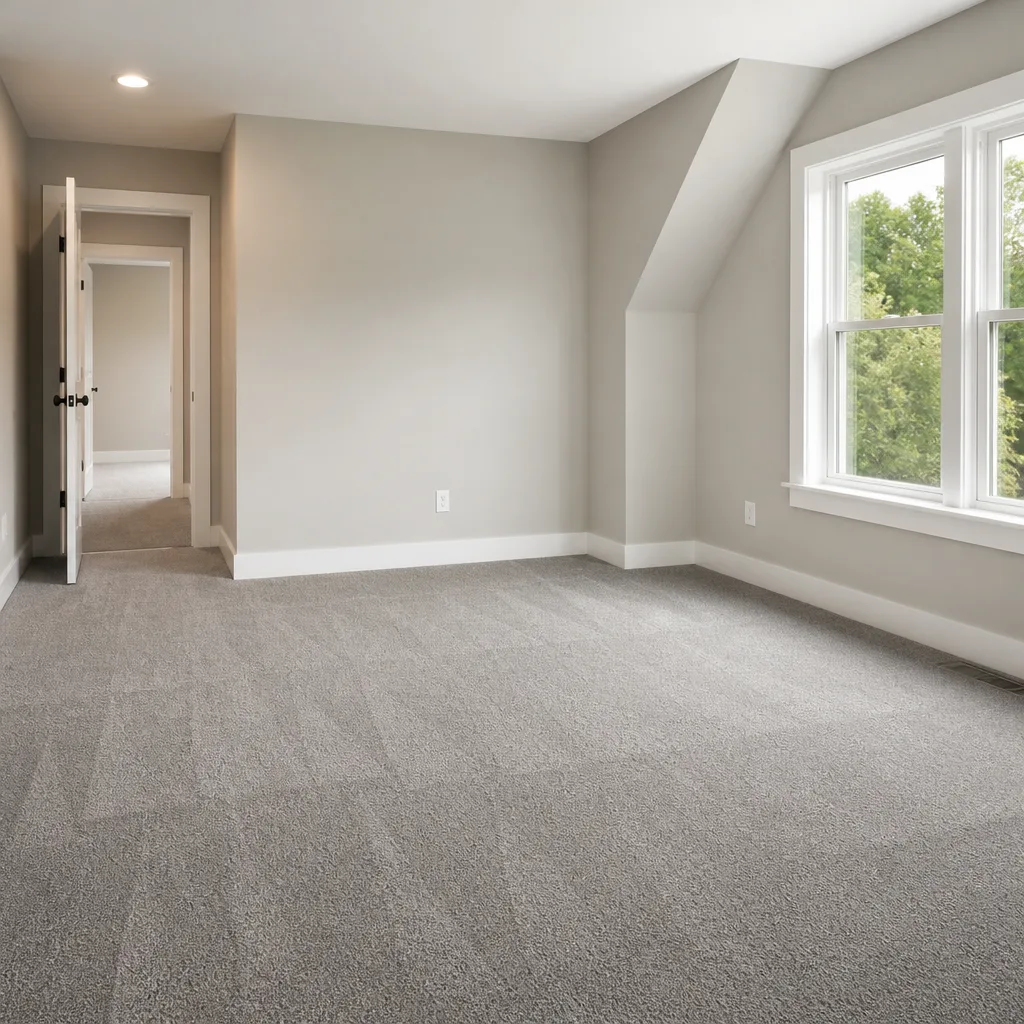 Carpet
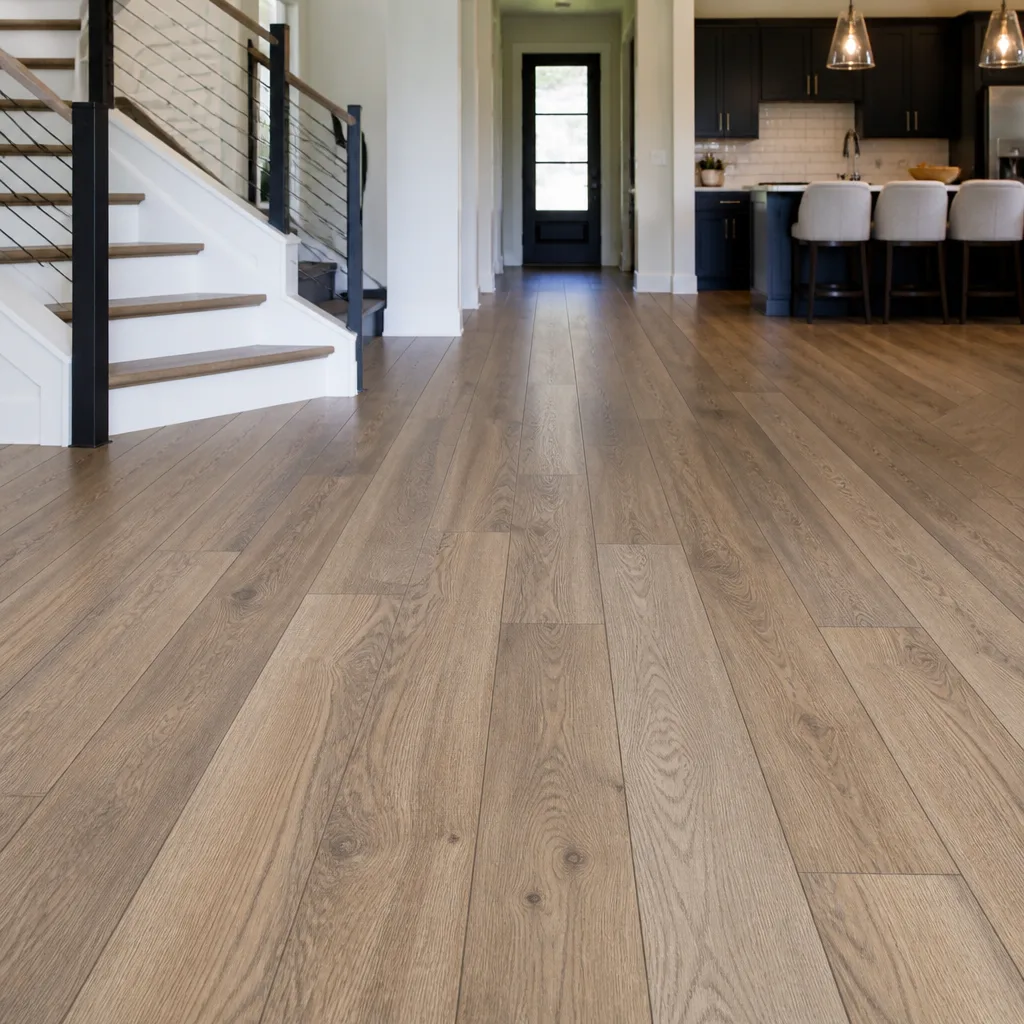 Shaw
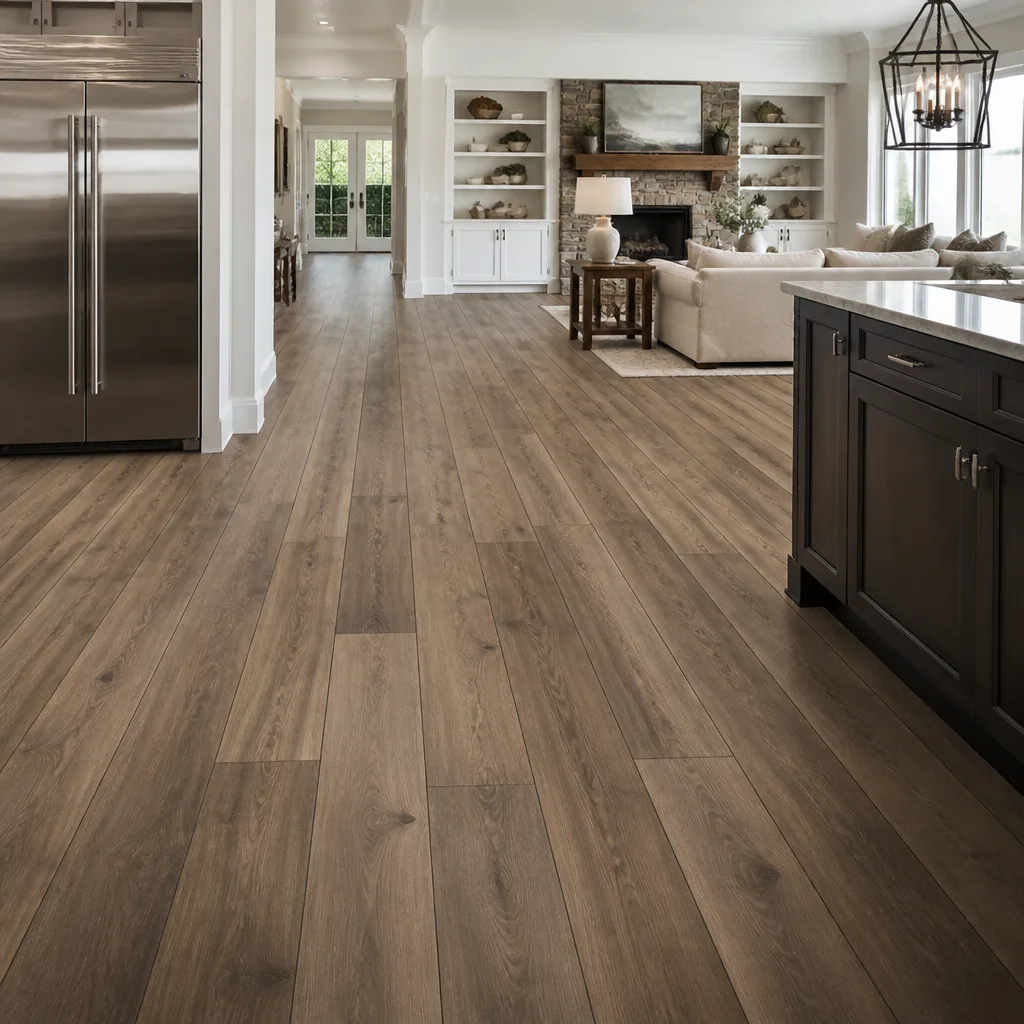 Mohawk
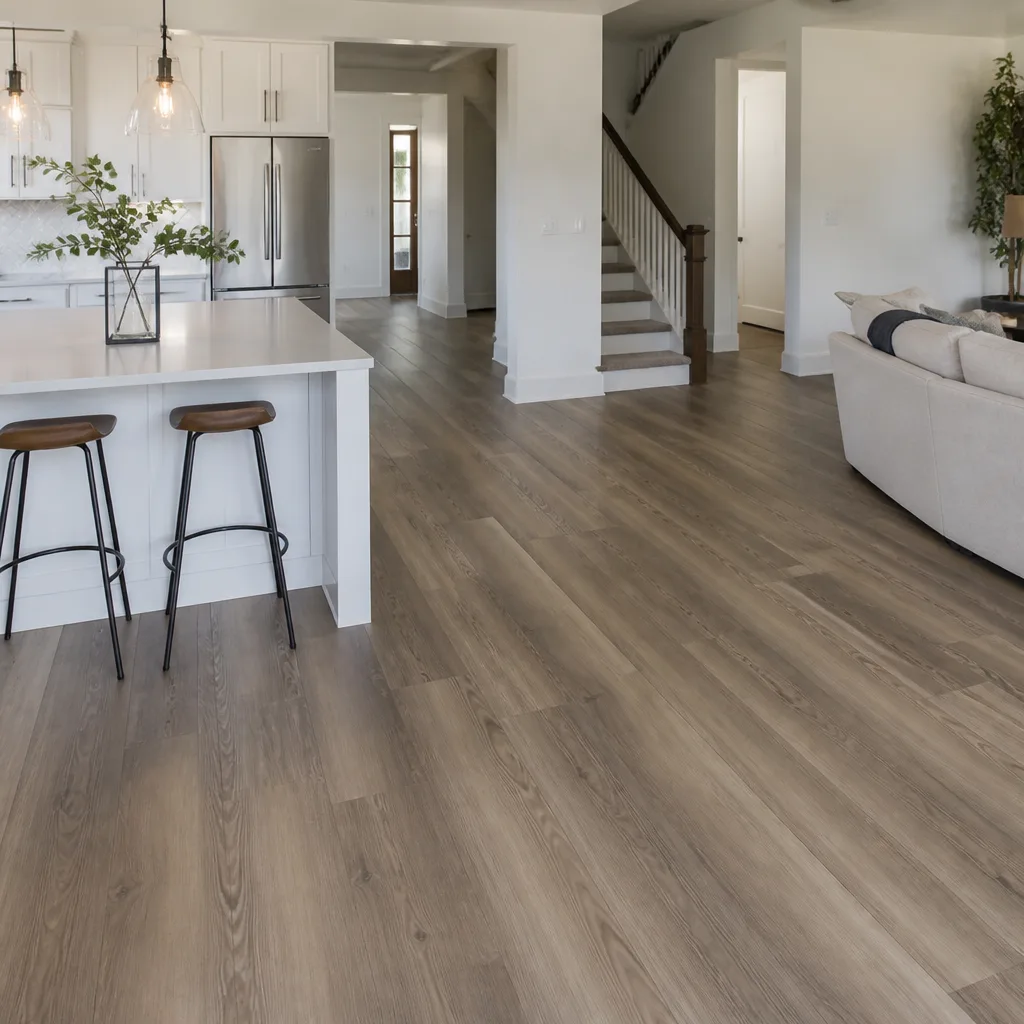 COREtec
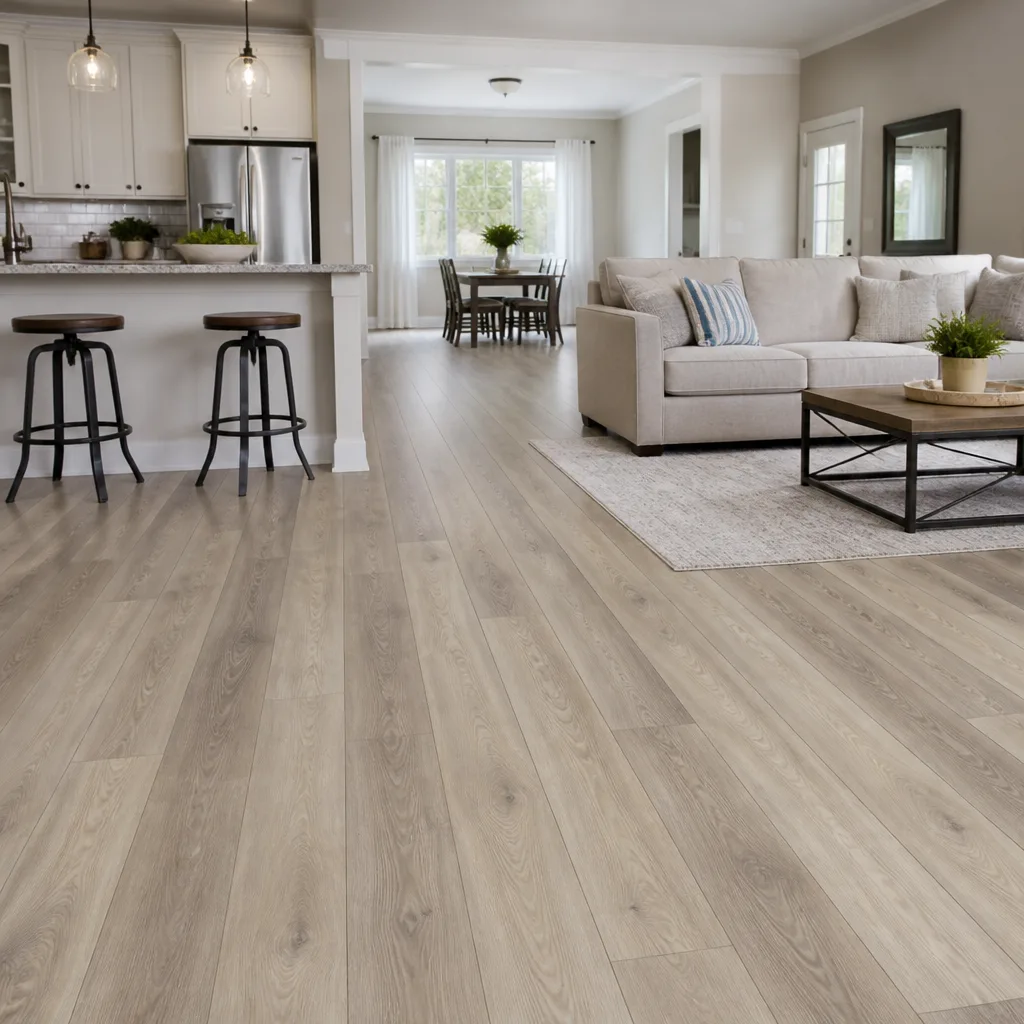 Pergo
Free in-home measure and written estimate: Shaw, Mohawk, COREtec and Pergo lines compared on your own rooms, with carpet, tile, vinyl plank, laminate and hardwood laid out side by side
Get your free estimateWhat Happens at a Free In-Home Flooring Estimate in Spring Valley
If an estimator walks your rooms with just a tape measure and leaves in 20 minutes, you don’t have an estimate. You have a guess. In a Spring Valley slab-foundation home, a proper in-home flooring estimate includes at minimum a moisture reading, a subfloor flatness check, and a measurement that accounts for pattern repeat waste. Skip any of those and the number on the quote is fiction dressed up as a price. This guide walks you through exactly what a thorough estimator evaluates, what to have ready before they arrive, how to read the resulting quote, and the questions that reveal whether the person quoting your Karndean or Armstrong floor has actually installed one on a slab in the desert. You’ll finish knowing how to turn a free visit into a quote you can trust.
Quick Answer
A free in-home flooring estimate in Spring Valley is a technical site visit, not a sales pitch. A qualified estimator measures every room, checks slab moisture and subfloor flatness, reviews existing transitions, stairs, and door clearances, and asks about water history before recommending a product from brands such as Daltile, Mannington, or Karndean. You leave the visit with a written, itemized quote and no obligation to book.
Styles & brands we work with
- Hardwood
- Engineered hardwood
- Luxury vinyl plank
- Laminate
- Porcelain tile
- Carpet
- Shaw
- Mohawk
- COREtec
- Pergo
Table of Contents
- Why the In-Home Estimate Is a Technical Visit, Not a Sales Call
- The Five Things a Thorough Estimator Checks
- What to Have Ready Before the Estimator Arrives
- How to Read the Written Quote You Get Back
- Questions to Ask During the Visit
- Validating Installer Credentials on the Spot
- Spring Valley Specifics That Change Your Quote
- What Happens After the Estimate
Why the In-Home Estimate Is a Technical Visit, Not a Sales Call
A showroom quote is a price for a product. An in-home estimate is a price for a product installed in your specific house. Those are two different things, and the gap between them is where homeowners get surprised.
When you walk into a big-box store and ask what a Mannington or Armstrong floor costs per square foot, you’re getting a number based on square footage alone. That number cannot account for the dip in your hallway slab, the door that grazes the current carpet, or the water heater that let go two winters ago. Those details don’t live in a catalog. They live in your home, and the only way to price them is to stand in the room.
In our experience, the most common cause of a quote that grows after the job starts is a quote that was never grounded in the actual conditions of the home. A slab foundation behaves differently from a pier-and-beam floor. A room with a bay window and a fireplace hearth requires more cutting and fitting than a plain rectangle. Stairs, transitions between rooms, and door clearances all add labor that a per-square-foot number can’t see.
This is why we think of the free estimate as the most important part of the whole project. It’s where the real work of planning happens. An experienced estimator is doing math, yes, but they’re also doing diagnosis: is this floor going to behave here, and if so, what’s the right way to install it?
The visit is also free, and it comes with a written quote. Nothing is committed until you’ve read the numbers and decided. Treat it as a consultation with a specialist, because that’s what it is.
The Five Things a Thorough Estimator Checks
These five assessments separate a real estimate from a guess. If your estimator skips any of them, ask why before you accept a number.
1. Moisture
On a slab foundation, moisture is the single most consequential variable for any hard floor. Concrete wicks moisture from the ground below, and desert slab construction still sees moisture migration even in a dry climate like Spring Valley’s. An estimator who doesn’t take a slab moisture reading is pricing a floor that may fail. For tile, moisture affects the bond and the underlayment choice. For laminate and for luxury vinyl such as Karndean or COREtec, moisture from below has to be managed with the right underlayment or vapor barrier, and the product instructions decide what’s appropriate. Standing water and moisture from below always have to be dealt with, no matter what floor goes on top.
2. Flatness
Slabs settle, and they rarely settle perfectly flat. Most flooring products specify a flatness tolerance in their installation instructions, and the estimator needs to measure your rooms against it. If your slab is out of tolerance, the quote has to include prep work to bring it in line. A quote that ignores flatness is a quote with a hidden line item waiting to appear.
3. Existing Transitions
Where one floor meets another – carpet to tile at a hallway, tile to vinyl at a bathroom door – you need a transition piece. The estimator has to note every one, because each requires a specific profile, matching height, and a small amount of labor. Older Spring Valley homes sometimes have transitions that were built into the original finish carpentry, and those take more care to match.
4. Stair Configuration
Stairs are priced differently from flat floor. Each tread and riser is measured and cut individually, and the method depends on whether the stairs are open or closed, carpeted or underlaid with something else. An estimator who eyeballs the stairs and moves on hasn’t priced them.
5. Door Clearance
Every door in the affected rooms needs to clear the new floor. Sometimes that’s fine. Sometimes it isn’t, and the door has to be trimmed or the threshold adjusted. This is a small detail that becomes a big annoyance if it’s discovered on install day, and it’s one reason the in-home visit matters more than a showroom visit.
What to Have Ready Before the Estimator Arrives
A little prep before the visit makes the estimate faster and more accurate. You don’t need to move furniture or pull up old flooring – the estimator can work around both – but having these ready helps.
- Note the existing floor type in each room. Carpet, tile, laminate, hardwood, or a mix. If you have original hardwood under carpet, say so, because that changes the recommendation entirely and opens up refurbishing rather than replacing.
- List any known water events. A leak from a bathroom, a water heater failure, a slow drip under a sink. Even years-old events matter, especially on a slab.
- Rough square footage by room. Walk each room and pace it out. You’ll be off by a bit, but it gives the estimator a check against their own measurement and helps you both plan.
- Your must-haves vs. flexibles. If you have your heart set on Daltile tile in the bathroom, say so. If the guest room just needs something quiet and stain-resistant with a budget cap, say that too.
- Your rough budget range. It’s not an uncomfortable conversation. It helps the estimator recommend the right tier – a value-tier laminate such as Pergo, a premium designer LVP such as Karndean – instead of aiming at a number you didn’t set.
One more thing: be honest about your timeline. If you’re planning to install in stages, room by room, tell the estimator. That changes how the project is quoted and scheduled.
How to Read the Written Quote You Get Back
The quote you receive after the visit should be itemized. A single lump-sum number is a red flag because you can’t verify what’s in it.
A detailed flooring estimate typically separates the following:
- Materials – product by product, by room, with square footage and an allowance for waste (which is affected by pattern repeat, room shape, and layout)
- Subfloor prep – any flattening, patching, or moisture mitigation required
- Underlayment – product-appropriate, particularly for carpet and laminate
- Transitions and trim – every threshold, reducer, and t-molding, itemized
- Stair work – treads and risers priced separately if applicable
- Removal and disposal – if the old flooring is being taken out
- Labor – either bundled into material or quoted separately, but clear about what it covers
A vague quote omits several of these. It’s not that a vague quote is always wrong; it’s that you can’t tell what’s included, and the gap between “included” and “extra” is exactly where disappointment lives. If the quote you receive is missing line items for prep, transitions, or disposal, ask for them before you sign.
Also read what the quote does not cover. Does it account for moving furniture? Does it include pulling out the existing flooring, or only installing on top? These questions cost nothing to ask and save significant negotiation on install day.
The written estimate always sets the final price. Any verbal number is a placeholder.
Questions to Ask During the Visit
The estimator is there to measure and quote, but it’s also your opportunity to interview them. A few pointed questions reveal whether they’ve done the specific kind of job you’re planning or just know the product names.
- “What’s your approach to subfloor prep on a slab like mine?” Listen for specific language: flatness tolerances, patch, underlayment choices that depend on the product. If the answer is “we just lay it down,” keep asking.
- “How will you handle the transition at the hallway and the bathroom door?” They should be able to name the profile type and explain how it sits at the correct height. If they wave it away, the quote is missing something.
- “Have you installed [brand] before?” Name the specific product in the quote. A Mannington LVP and a Daltile porcelain tile are not the same job, and an estimator who specializes in one doesn’t necessarily have the specific experience with the other.
- “What are the product instructions for moisture and flatness?” Every floor has installation requirements from the manufacturer. An experienced estimator can tell you what those are in general terms and confirm they’ll be checked on install day.
- “What are common things that push a job past the original scope?” The answers tell you what to plan for and help you read the quote more critically.
Hearing the estimator ask their own questions is equally important. If they don’t ask about past water damage, they’re not thinking about moisture. If they don’t ask about pets or kids, they’re not selecting the right floor for the room.
Validating Installer Credentials on the Spot
The in-home estimate is your best opportunity to confirm who’s actually going to do the work. Before you commit, ask three things.
- License and insurance. Ask to see confirmation of state licensing and liability coverage. A qualified flooring contractor expects the question and has the answer ready. If you’re asked to accept “we’re covered” without documentation, that’s a sign to keep looking.
- Brand relationships. If the quote includes Karndean or COREtec, ask whether the installer is authorized for those brands. Authorization is more than a badge; it means the installer has access to manufacturer installation guidance and material sourcing.
- Warranty on labor. No warranty or guarantee terms have been confirmed in this guide because they vary. Ask directly what the installer’s policy is on labor warranty, what it covers, and how long it runs. A clear answer tells you a lot about how they handle problems after install day.
Access to commercial-grade product like Karndean and COREtec is a useful signal. It usually means the installer can handle higher-durability requirements in kitchens, bathrooms, and rental properties, and it means the recommendation won’t be limited to what a single-brand dealer happens to stock.
You’re also evaluating the communication itself. An estimator who listens, asks good questions, and follows up with the written quote in a reasonable time is demonstrating the same care they’ll bring to the install.
Spring Valley Specifics That Change Your Quote
Spring Valley sits on the west side of the Las Vegas Valley, and the housing stock here includes slab-foundation single-family homes, townhomes, and condos across neighborhoods from Rhodes Ranch and Southern Highlands to Chinatown and the areas near the 215. That range matters for a flooring estimate in a few specific ways.
Slab foundations are the norm, and slab means moisture. The desert climate is dry above ground, but below the slab, moisture still migrates. Every hard-floor product goes down over something that has to be assessed, whether that’s a vapor barrier, an underlayment, or a direct-glue method specified in the product instructions. An estimator in Spring Valley who skips the moisture reading is skipping the thing that matters most here.
Tile is very common in Spring Valley homes, particularly in bathrooms, kitchens, and entryways. Daltile is one of the brands in our portfolio for this reason – it handles the wear and moisture exposure that desert families put on a floor. For bedrooms and living rooms, carpet installation remains the standard, with brands like Shaw and Mohawk providing a broad range of price tiers. If your home has original hardwood under carpet, an estimator should flag that early, because refinishing is often more cost-effective than a full replacement if the wood is still structurally sound. For luxury vinyl, Karndean and COREtec cover the designer and high-traffic ends of the spectrum, while Pergo and Armstrong laminate fill the value tier where a room needs durability on a defined budget.
Desert heat also drives a practical detail: temperatures inside a home near a west-facing window can run higher than expected, especially before the HVAC catches up. Product instructions account for indoor temperature ranges during installation, and a careful estimator will ask about your HVAC setup and installation season.
What Happens After the Estimate
Once you have the written quote in hand, the ball is in your court. Nothing happens automatically. The quote is a document you can compare against other quotes, ask questions about, or accept.
If you decide to book, the next step is usually a scheduling conversation to confirm the product order, the install date, and the specific prep work agreed to in the quote. The install itself is a booked job, not a same-day dispatch. Flooring is scheduled: measurement, estimate, product order, then a booked install day. That sequence gives you time to review the quote, ask follow-up questions, and adjust the scope if your priorities shift.
If your estimate is for hardwood refinishing, the estimator will have noted the thickness and condition of the existing wood, because not every floor can be refinished and the stain you have in mind may not match a sample exactly. Those are checked at the estimate visit, not promised in advance.
If you have multiple rooms or a whole-home project, one contractor relationship covers the whole scope. That’s the practical case for working with a single installer across carpet, tile, and hardwood refinishing: fewer handoffs, one point of contact, and less risk that two trades show up with conflicting schedules. You can read more about that approach on our flooring installation Spring Valley page.
Common Mistakes to Avoid
- Treating the visit as a quote-collection exercise. Calling three installers to “just get prices” without asking what each one checked produces three numbers you can’t compare. Ask what each estimator assessed and whether that assessment is documented.
- Not mentioning old water damage. A slab in Spring Valley that saw a water heater leak five years ago is a different floor today. If you know of a past event, say so. The estimator’s moisture reading will confirm it, but your story helps them plan the right mitigation.
- Fixing the budget after the quote comes in. If you don’t give a rough range up front, you may get a quote aimed at a number you never wanted to spend. Share your budget before the estimator recommends a product tier.
- Accepting a single lump-sum quote. A quote that doesn’t separate materials, prep, transitions, and labor leaves you guessing. Ask for itemization before you sign.
- Ignoring door clearance. The door that drags on new carpet is the door that needed trimming all along. It’s a small item, but it’s a real cost – confirm it’s in the quote.
- Skipping the credential check. Ask for license, insurance, and brand authorization documentation at the visit. If it isn’t available, that’s information too.
- Assuming every floor can be refinished. Hardwood refinishing depends on the thickness and condition of the wood, and a stain match isn’t guaranteed. Have the existing wood evaluated before you book.
See the difference
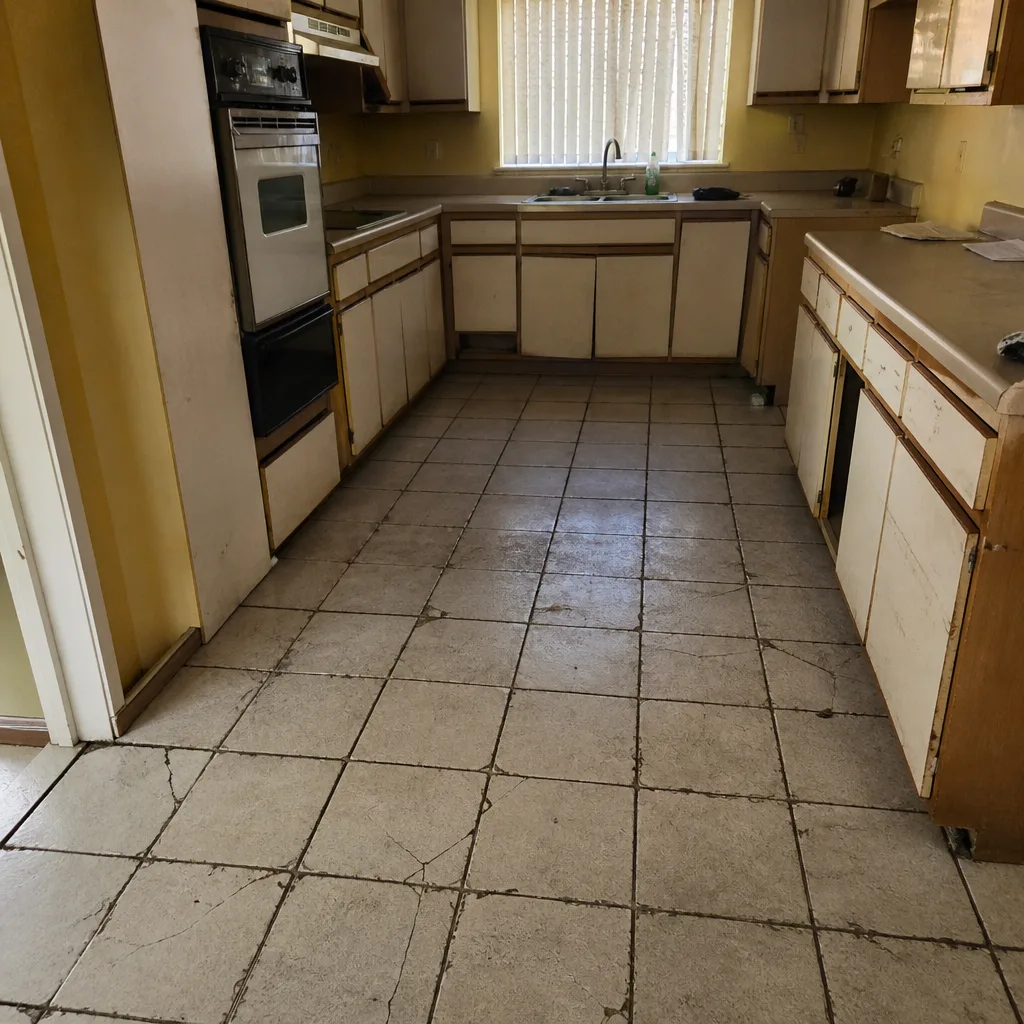 Before
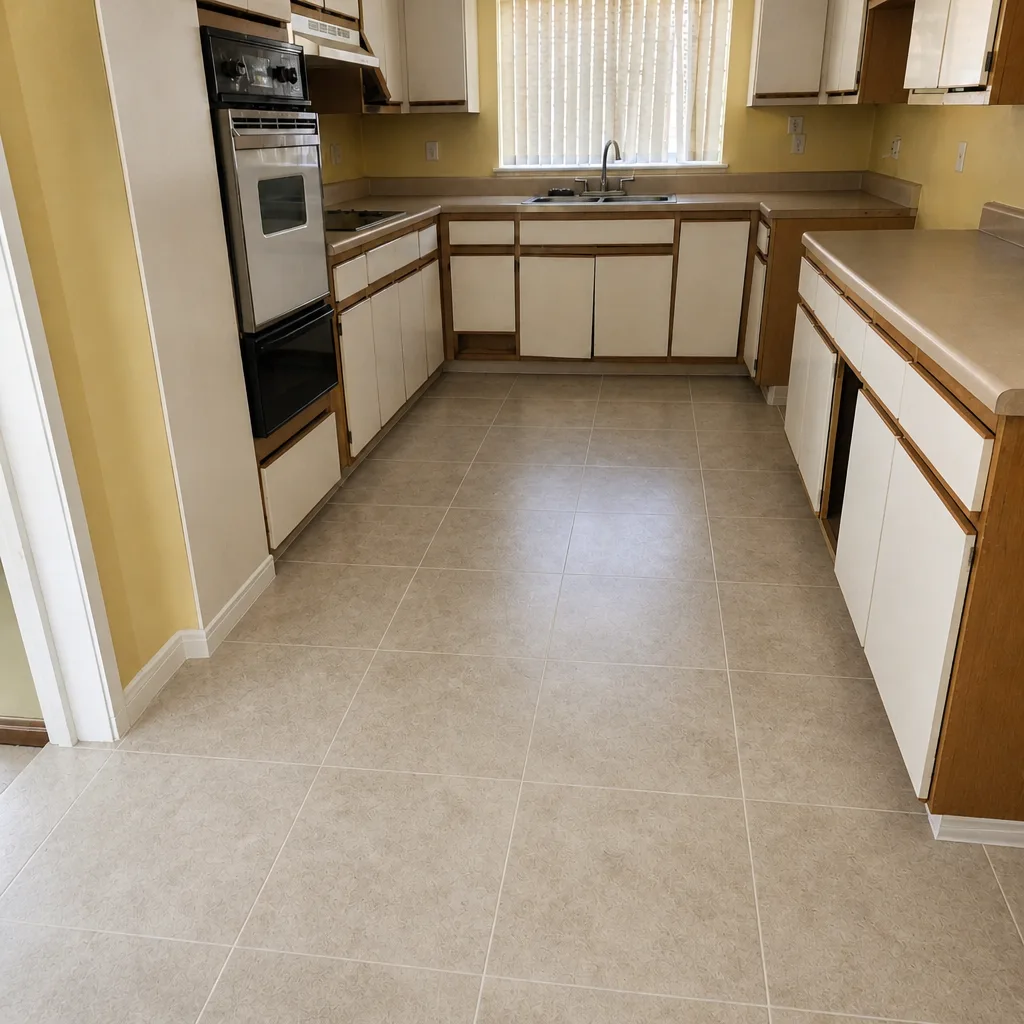 After
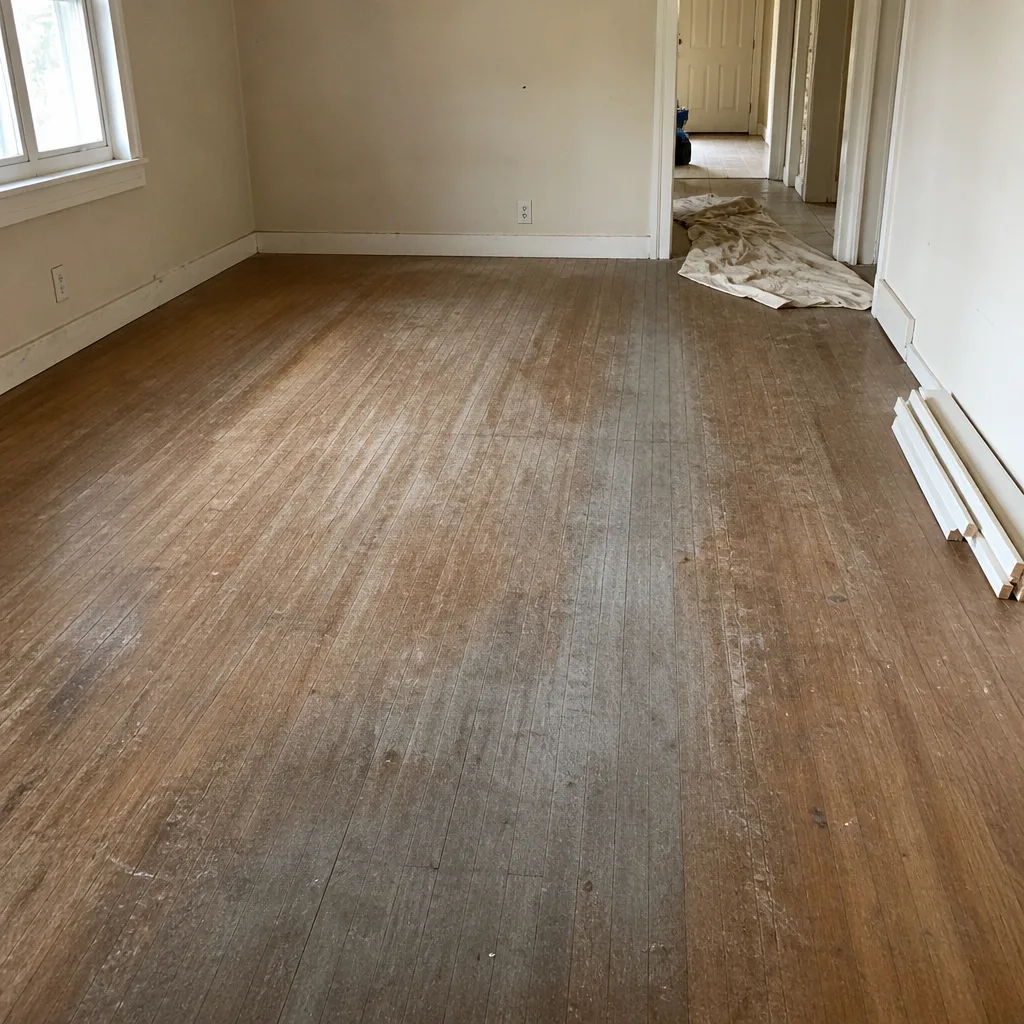 Before
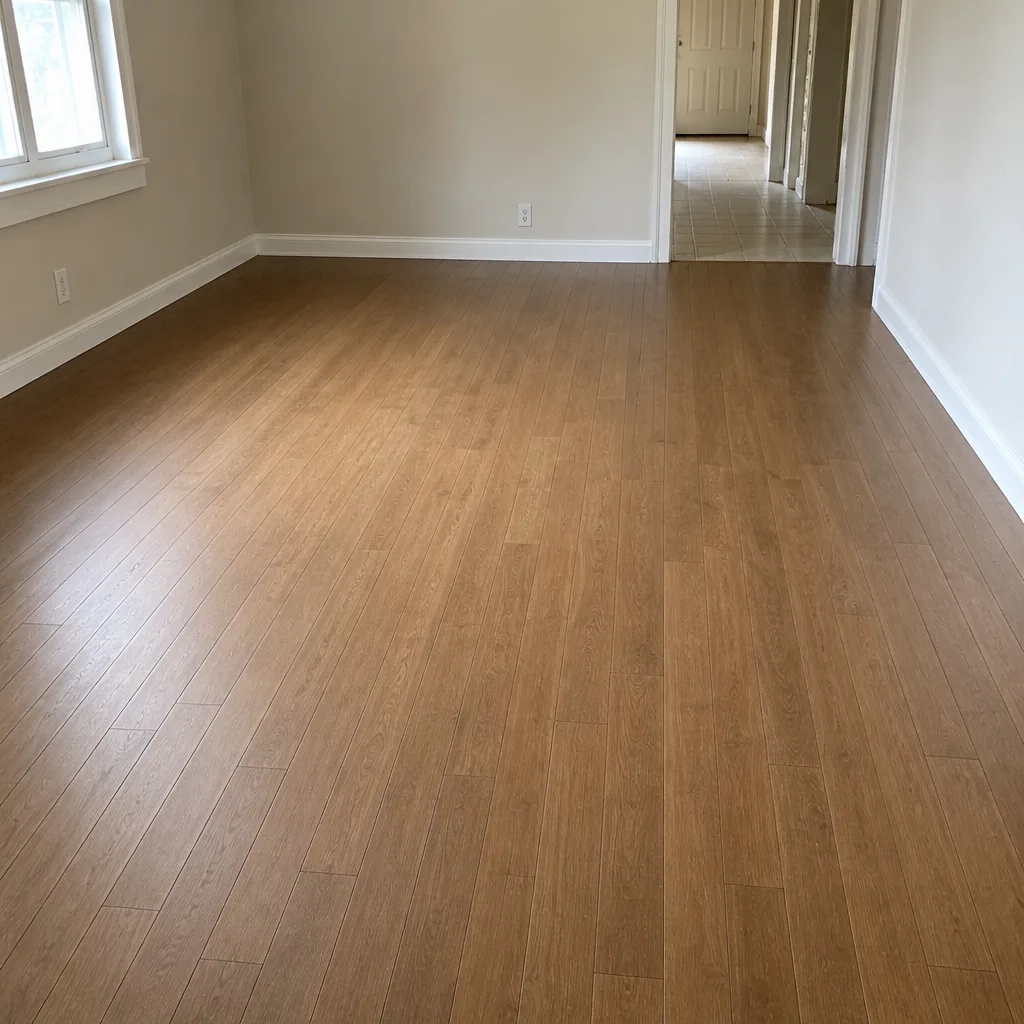 After
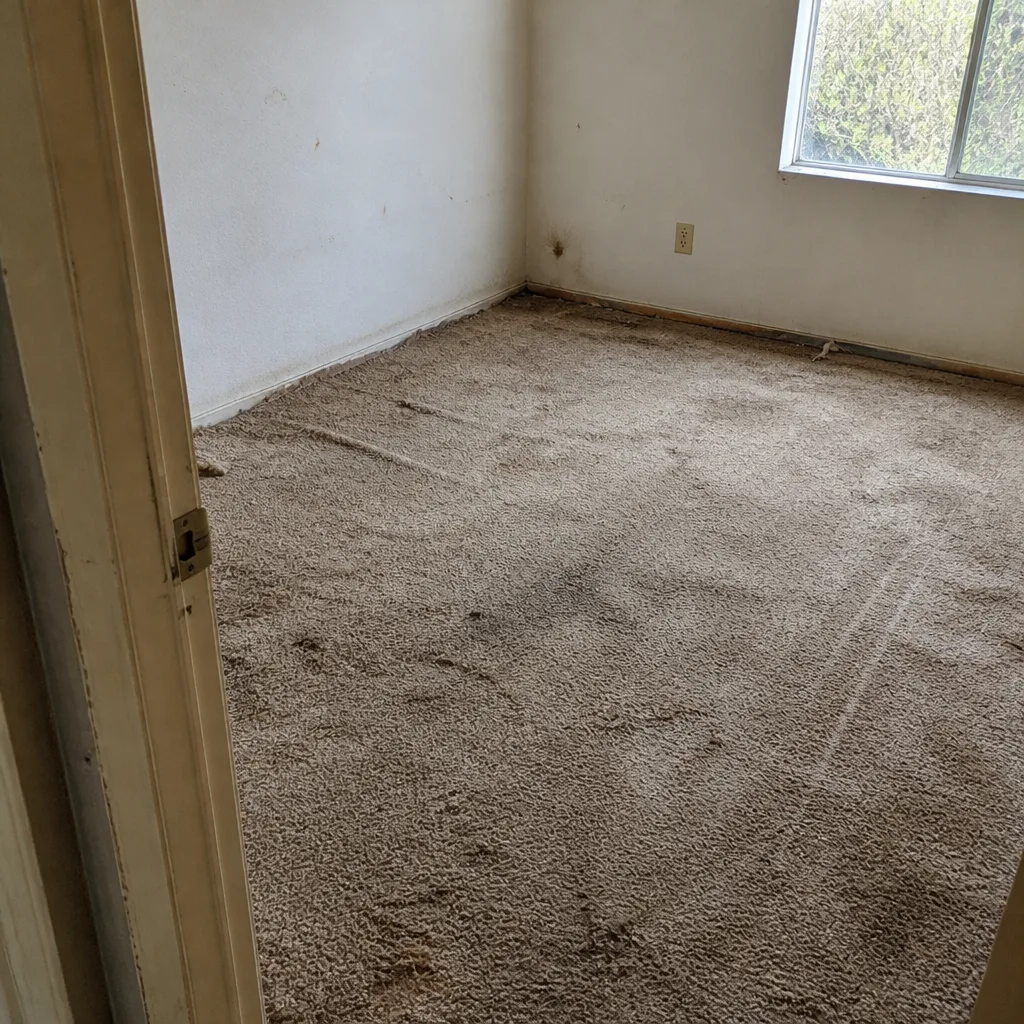 Before
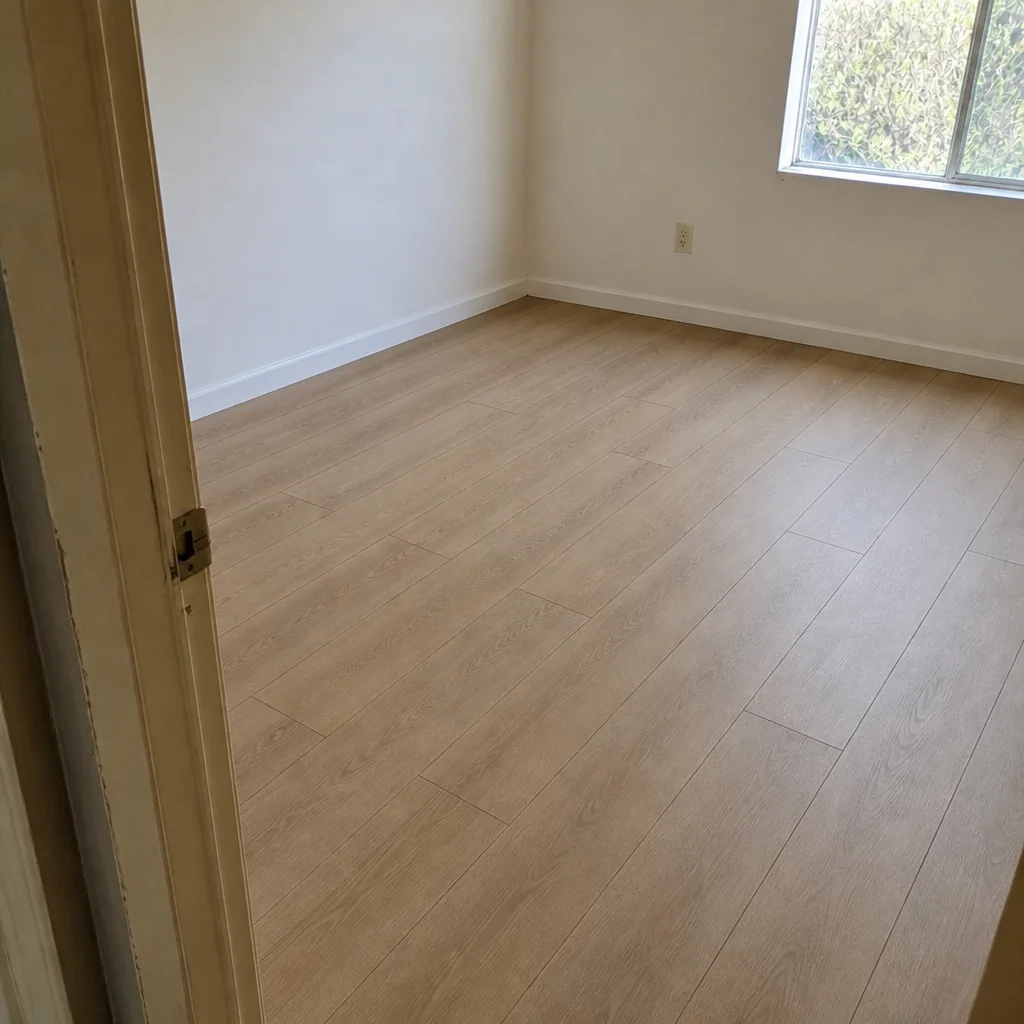 After
When to Call a Professional
Some flooring questions are quick to answer with a phone call or a visit; others need a full estimate. If you’re planning a carpet, tile, or hardwood refinishing project across one room or the whole home, an in-home estimate is the sensible first step. If your slab is older, if you’ve had water events, if you’re working with original hardwood, or if you’re a landlord planning flooring replacement across multiple units on a defined budget, that visit will save you real money and headaches. Flooring Installation Spring Valley offers free estimates in Spring Valley – call (844) 797-4453. You’ll get a written quote with line items you can actually read, and you can book the install when you’re ready.
Frequently Asked Questions
Yes. The in-home estimate is free and comes with a written quote, with no obligation to book. We visit your Spring Valley home, take the measurements, check moisture and flatness, and send you an itemized price. Call (844) 797-4453 to schedule yours.
A thorough estimate for a single room usually takes about an hour, and whole-home visits run longer depending on how many rooms are involved. The time reflects the five checks: moisture, flatness, transitions, stairs, and door clearance. If an estimator finishes in 20 minutes without those checks, the resulting number is a guess, not an estimate.
Have rough square footage by room, the existing floor type, any known water events, your must-have vs. flexible product preferences, and a rough budget range. You don’t need to move furniture or pull up old flooring – we work around both.
Flooring pricing in Spring Valley depends on the product, the room size, subfloor prep, and transition work, so we quote per job in writing rather than giving a per-square-foot number over the phone. The written estimate sets the final price, and the estimate itself is free. Call (844) 797-4453 for an exact quote.
Yes. In most cases we can estimate the new floor without removing anything, though if the old flooring is hiding subfloor issues, the potential cost of addressing those will be noted on the quote. Removal and disposal are typically itemized separately.
We install nine industry-leading brands across carpet, tile, laminate, and luxury vinyl, including Mannington, Armstrong, Daltile, and Karndean, along with Shaw, Mohawk, COREtec, Pergo, and LifeProof. The brand isn’t the whole answer – the right floor for the room depends on moisture, traffic, and use-case, and that’s what the estimate visit is for. Call (844) 797-4453 to schedule.
The Bottom Line
A free in-home flooring estimate is the technical visit that makes every later number mean something. The estimator should check slab moisture, subfloor flatness, existing transitions, stair configuration, and door clearance – five things a showroom quote can’t see. Come prepared with square footage, water history, and a rough budget, and read the written quote for line items, not just a total. Ask the questions that reveal whether the installer has actually done the product they’re quoting. And use the visit to verify license, insurance, and brand relationships before you commit. That’s how a free visit turns into a project that finishes the way it started.
We install carpet, install tile flooring, and refinish hardwood floors, and we can put together a written estimate for your Spring Valley home. Call (844) 797-4453 for a free estimate. We answer 24/7, with fast dispatch from 7am to 7pm, Sunday through Friday.
Written by the team at Flooring Installation Spring Valley.