
Last updated November 17, 2026
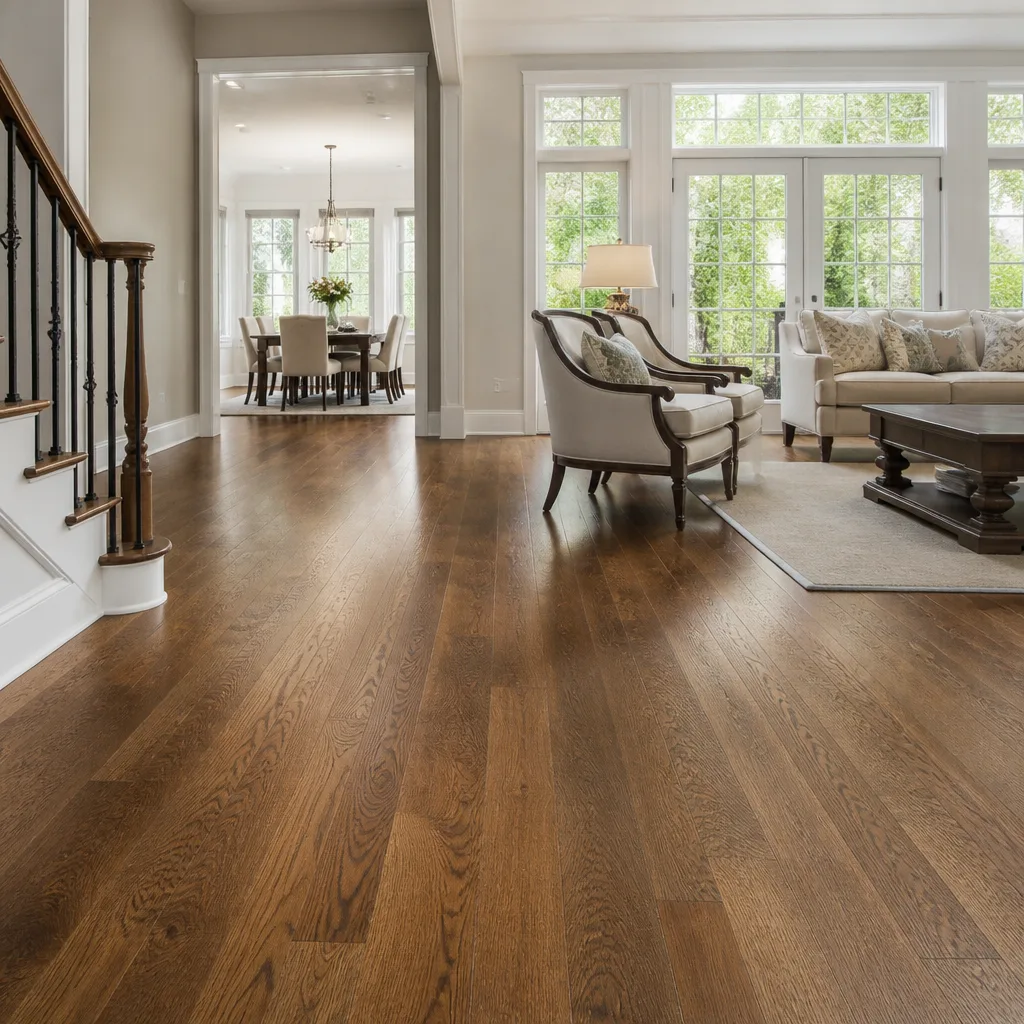 Hardwood
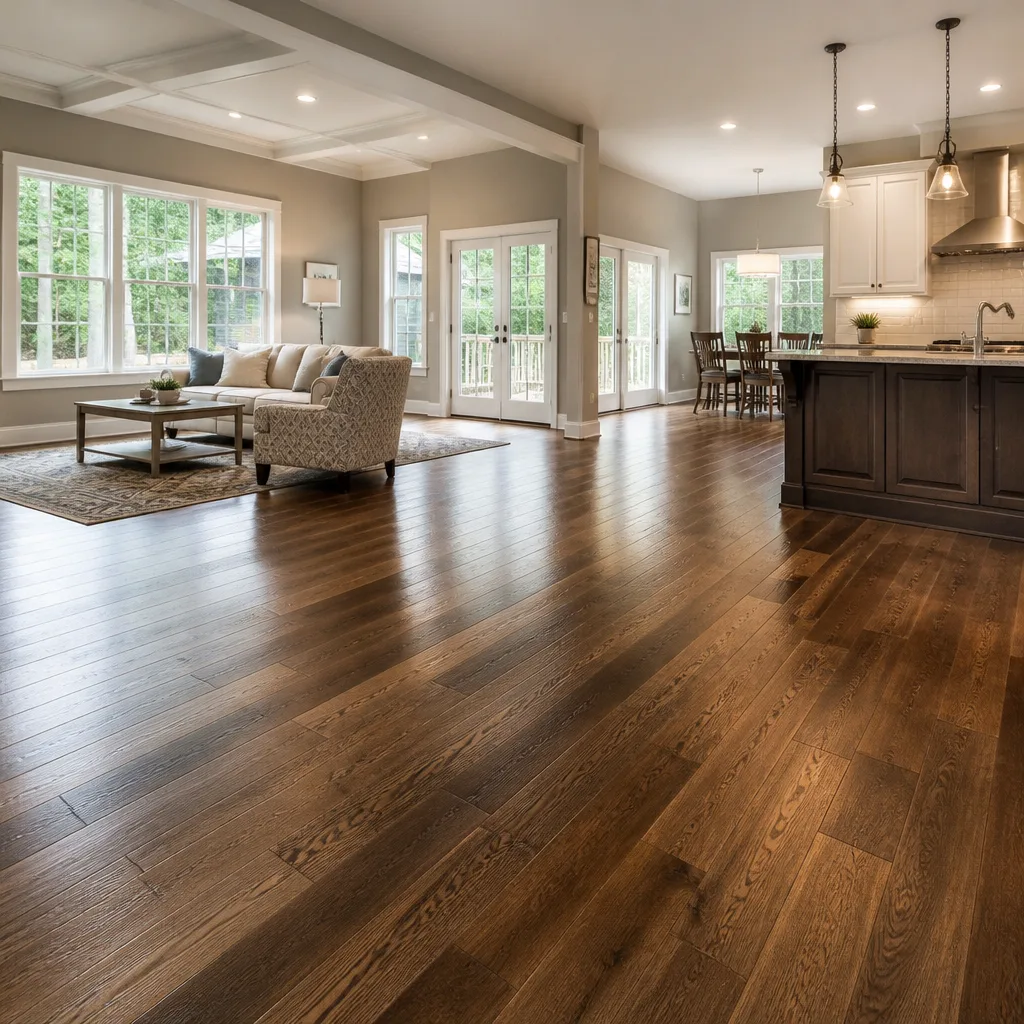 Engineered hardwood
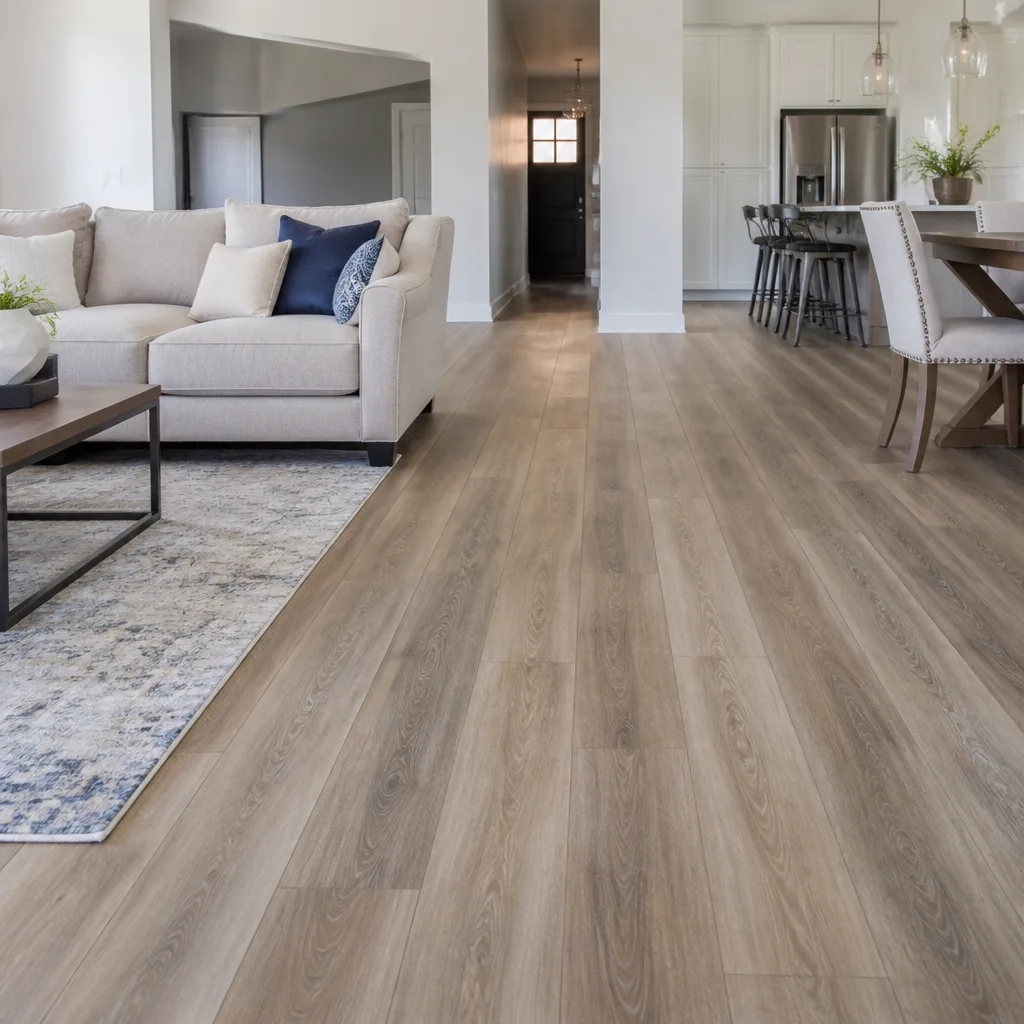 Luxury vinyl plank
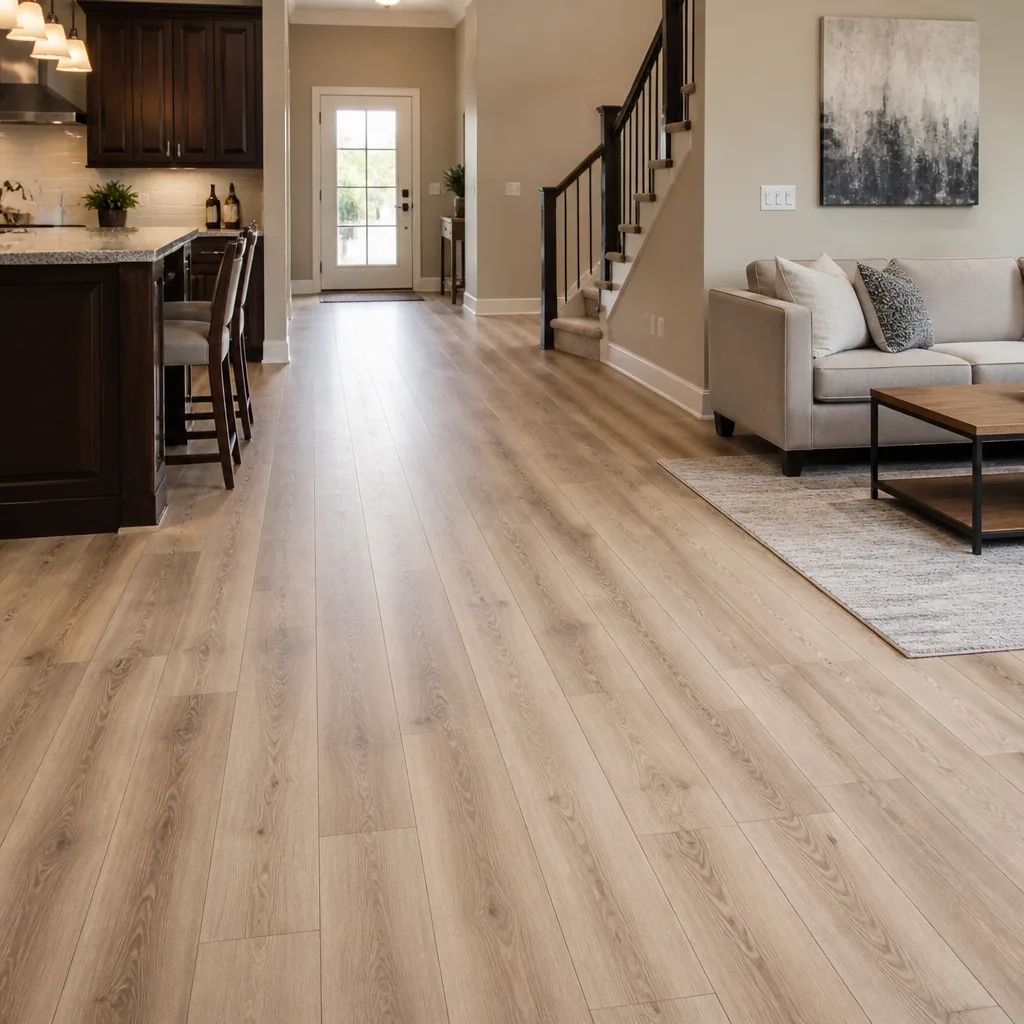 Laminate
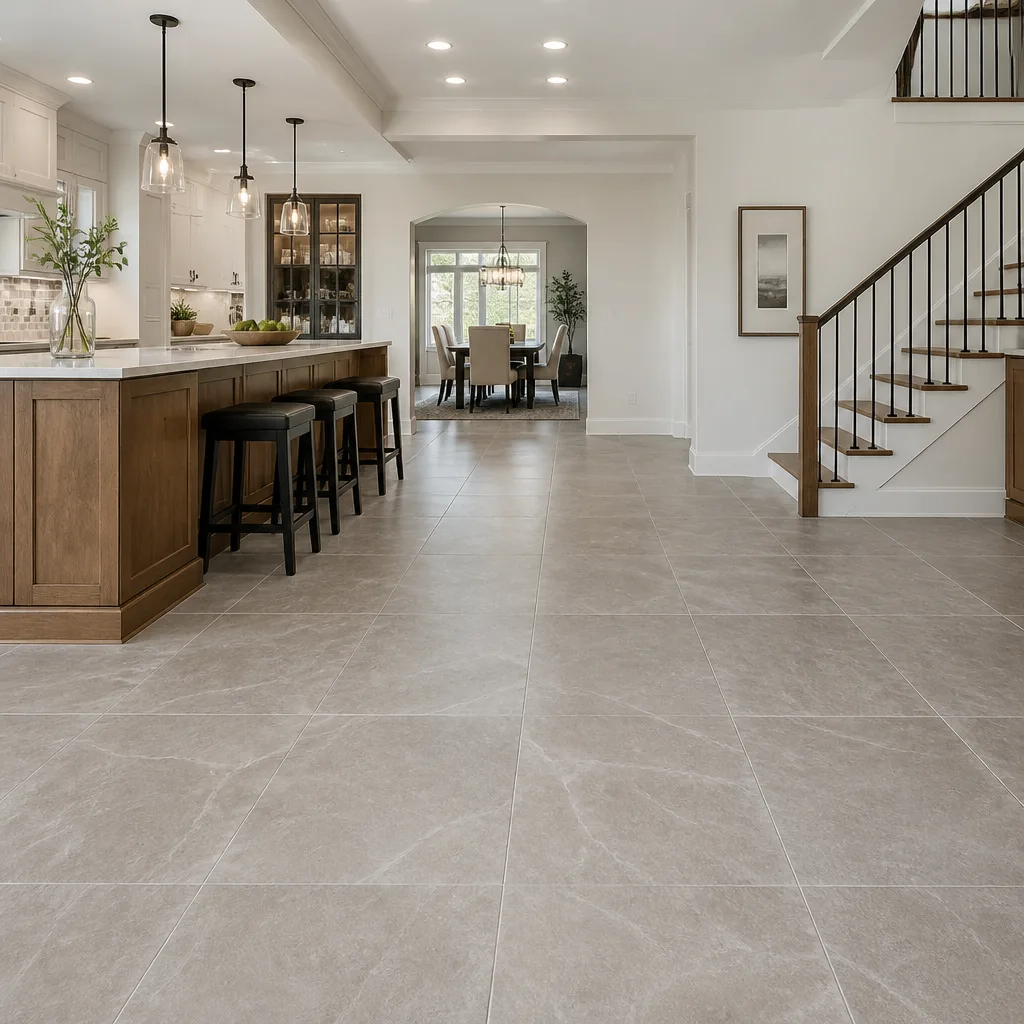 Porcelain tile
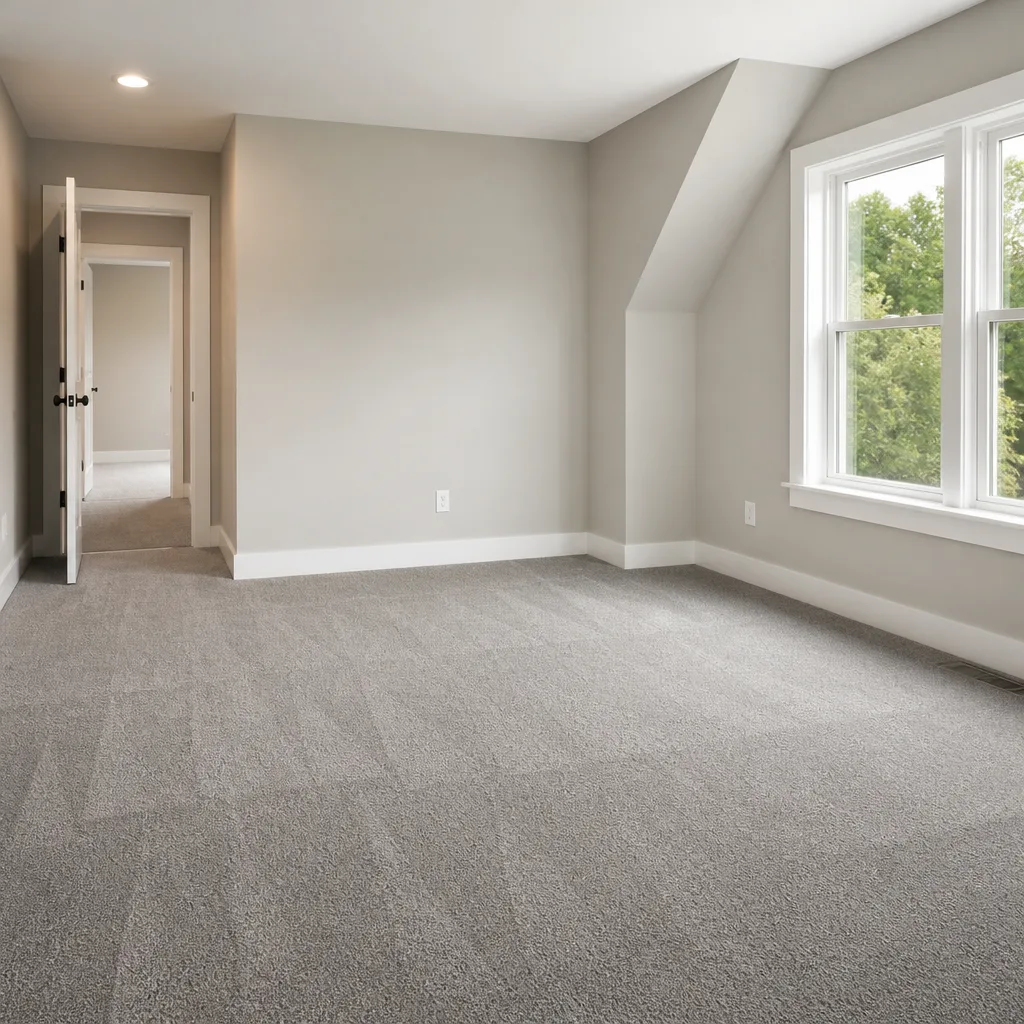 Carpet
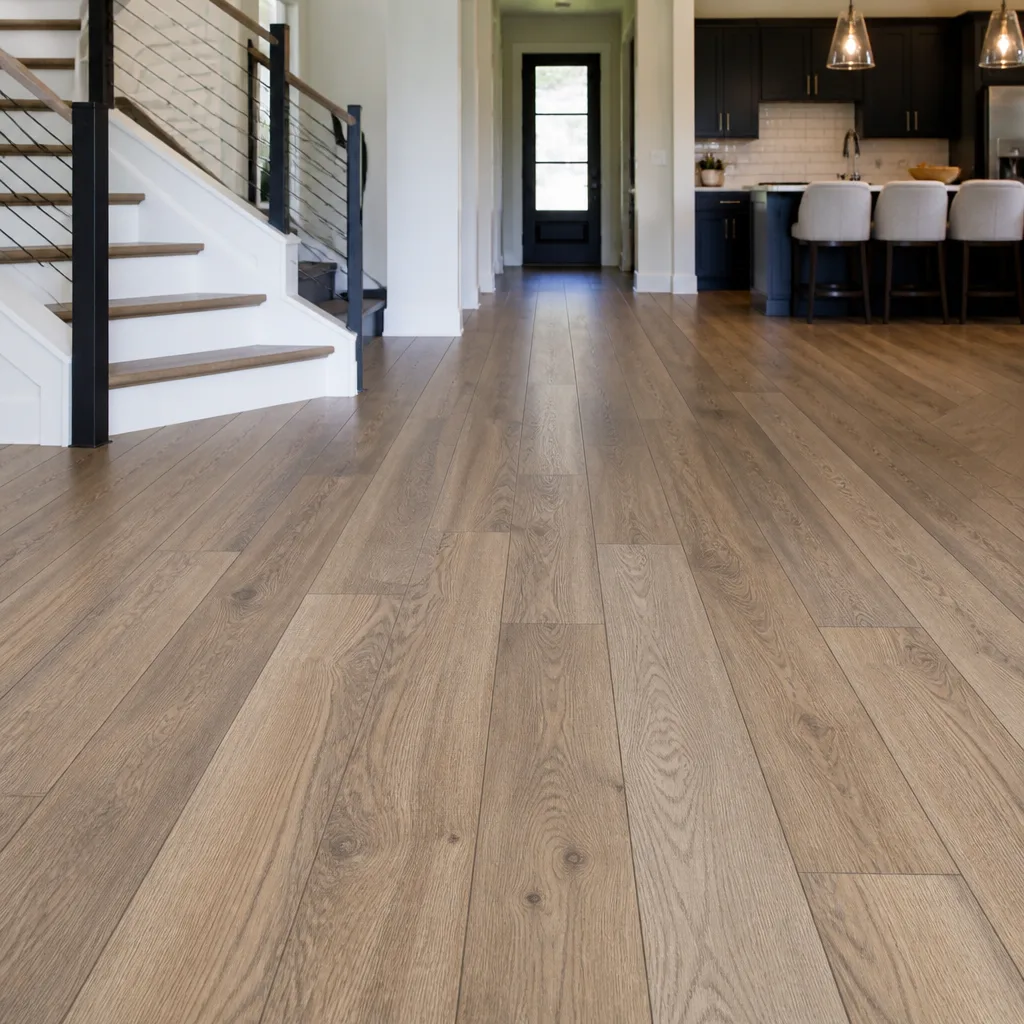 Shaw
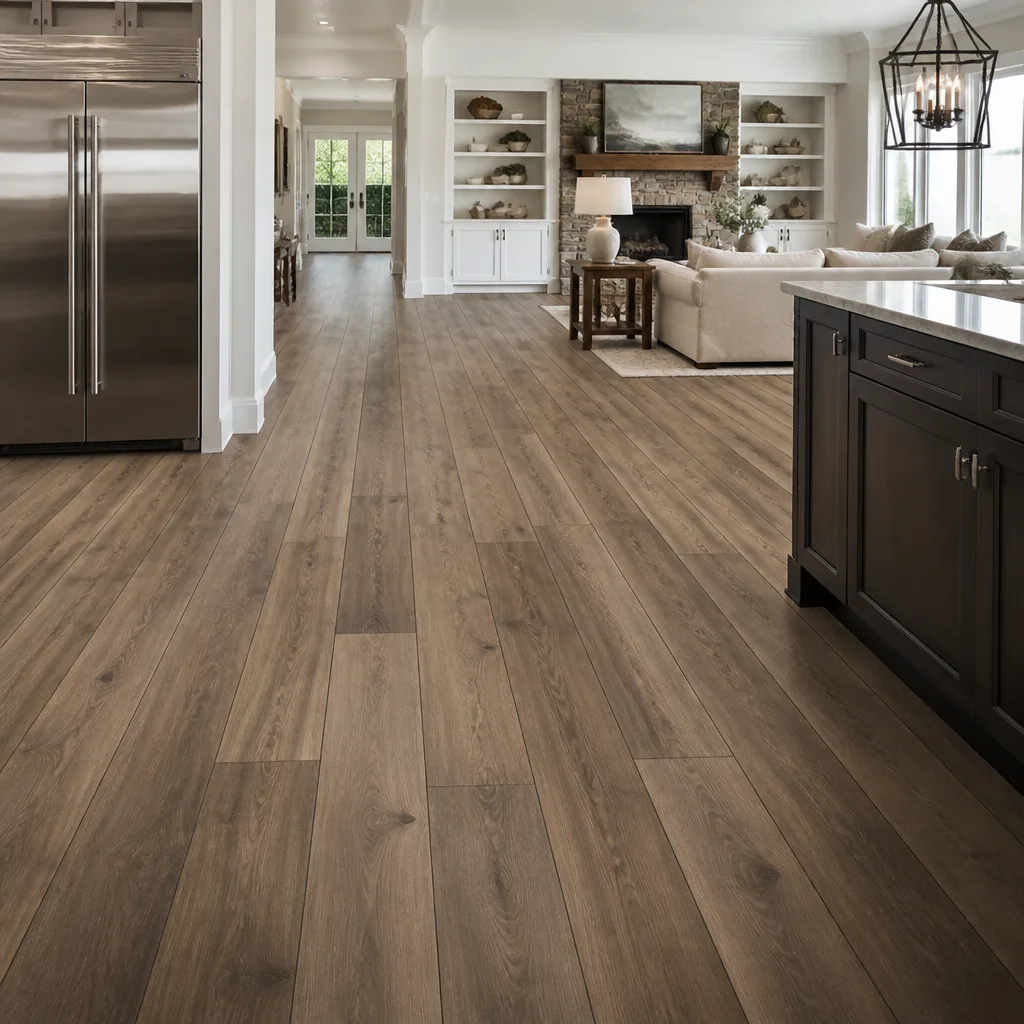 Mohawk
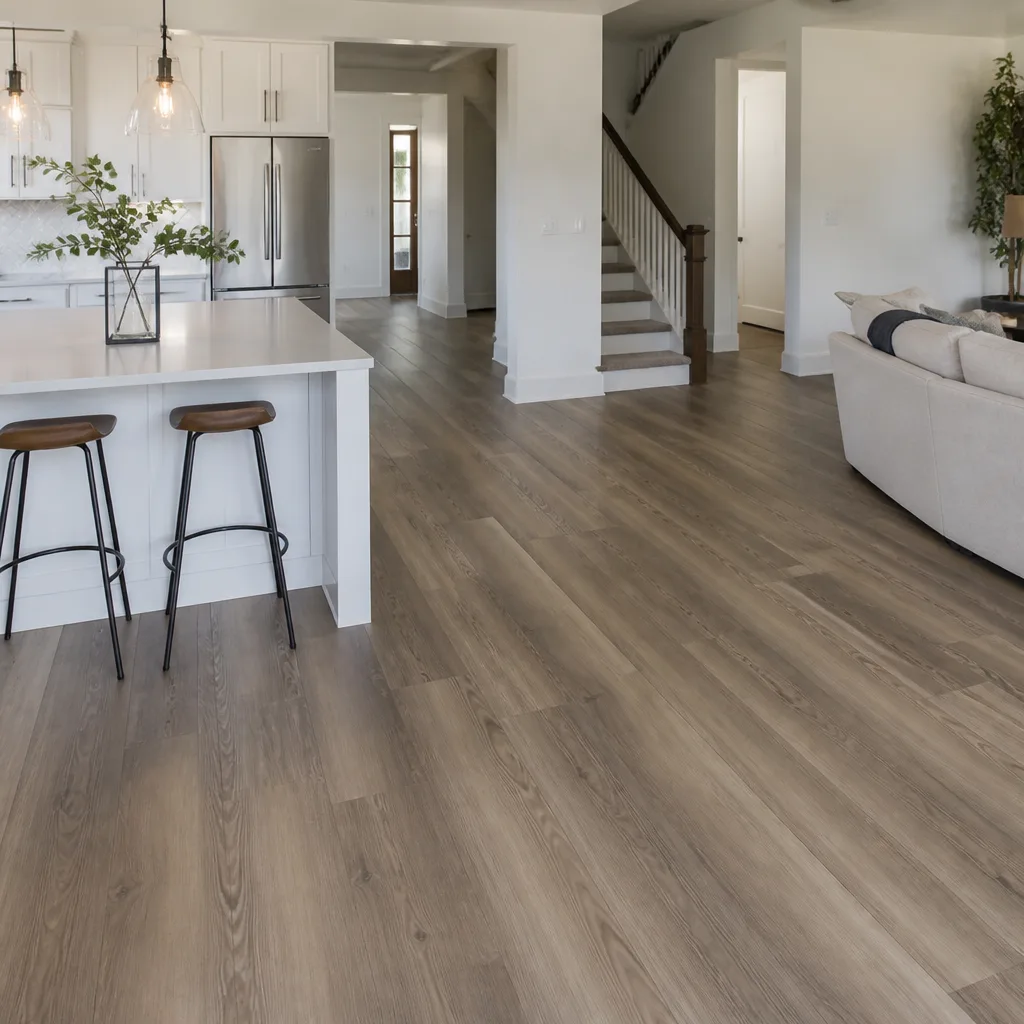 COREtec
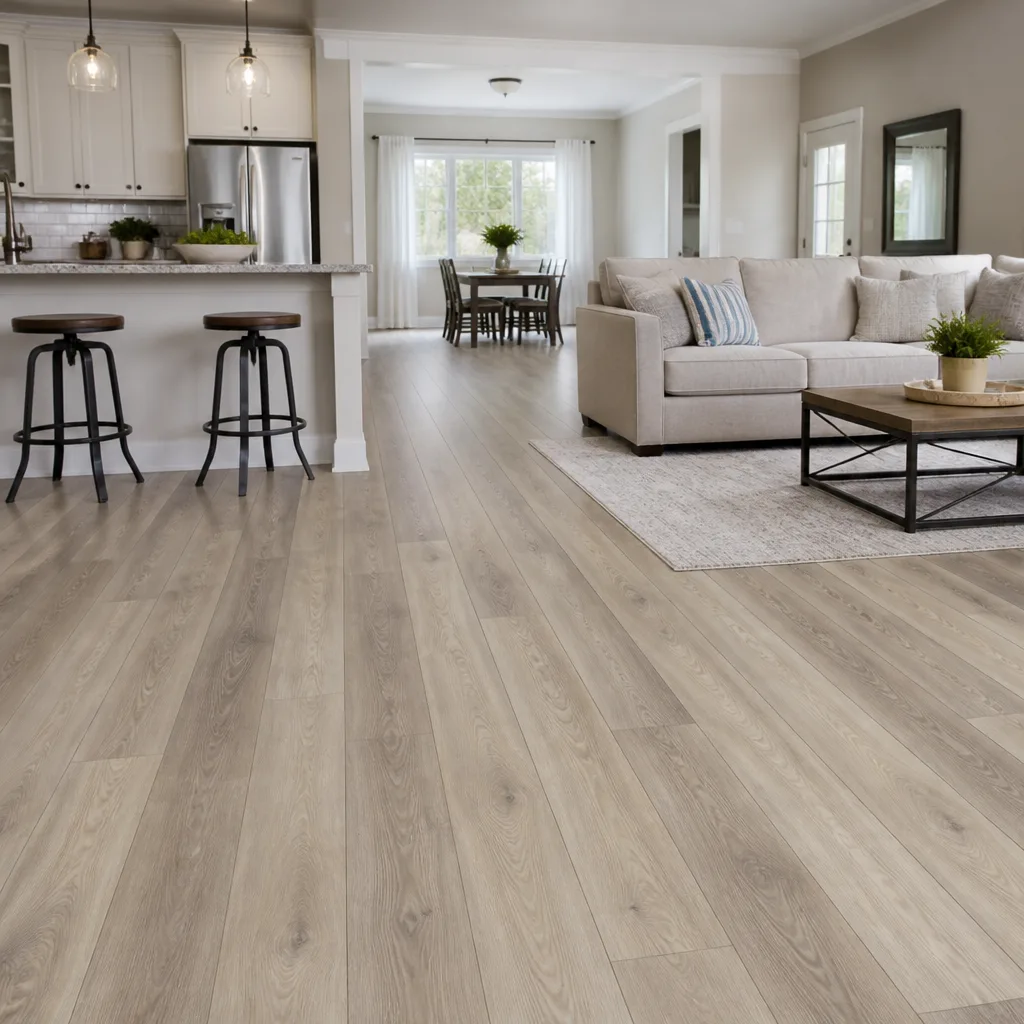 Pergo
Free in-home measure and written estimate: Shaw, Mohawk, COREtec and Pergo lines compared on your own rooms, with carpet, tile, vinyl plank, laminate and hardwood laid out side by side
Get your free estimateFlooring Cost Breakdown: The Spring Valley Homeowner’s Reference for 2026
Three quotes for the same floor can land 2.5 times apart and still be honest. The gap usually isn’t hidden fees or a bad contractor. It’s the pricing format itself. One bid gives a single all-in number per square foot, another separates material from labor, and a third quotes a low base and stacks add-ons below it. All three can describe identical work. Until you convert them to the same format, comparing them is guesswork. This reference walks through each format, the 2026 material ranges by floor type, and the Spring Valley conditions that create line items online calculators never show. By the end you’ll be able to put any two quotes side by side on equal terms.
Quick Answer
Flooring installation in Spring Valley typically runs about $3 to $12 per square foot installed, depending on the floor type, the product tier, and how much prep the subfloor needs. Carpet sits at the low end, laminate and luxury vinyl in the middle, and tile and hardwood at the top. The written estimate – not a per-square-foot average – sets the final price, and a free in-home measure is the only way to get an accurate number for your rooms.
Styles & brands we work with
- Hardwood
- Engineered hardwood
- Luxury vinyl plank
- Laminate
- Porcelain tile
- Carpet
- Shaw
- Mohawk
- COREtec
- Pergo
Table of Contents
- The three pricing formats contractors use
- How to convert any quote to a true apples-to-apples number
- 2026 material cost ranges by floor type
- Spring Valley add-ons: slab prep, moisture, stairs and transitions
- What “free installation” and “free materials” actually cost you
- Red flags in a low bid
- A step-by-step look at what drives the final number
- How to choose between quotes
The three pricing formats contractors use
Every flooring quote you receive in Spring Valley is built in one of three formats, and each one is designed to answer a different buyer’s question. Knowing which you’re holding is the first step to comparing it fairly.
1. All-in per square foot
A single number covers material, labor, and standard prep. It’s the easiest to read and the easiest to compare – as long as you confirm what “standard prep” includes. Ask whether removal of the old floor, haul-away, and a moisture check are inside the number or billed later. An all-in quote with demo excluded isn’t all-in.
2. Material plus labor split
Two separate figures: a product cost per square foot and an installation cost per square foot. This format lets you see where a quote is spending money. A premium carpet installation might show a higher material line and a lower labor line than a builder-grade option. The split is transparent, but you’ll need to add the two numbers plus prep to compare it against an all-in bid.
3. Base price plus add-ons
The lowest headline number, and the one that trips up most homeowners. A base per-square-foot rate is quoted, then line items appear below it: tear-out, disposal, slab prep, moisture barrier, stair nosing, transition strips, furniture moving. The base can look dramatically cheap. The total after add-ons is often close to the other two formats.
How to convert any quote to a true apples-to-apples number
You don’t need the contractors to change how they quote. You need one worksheet that normalizes all three. Here’s the sequence we recommend to every homeowner comparing bids in Spring Valley.
- Measure the actual square footage. Don’t rely on the number printed on a quote alone. A room’s purchased square footage and installed square footage differ once waste from cuts is factored in. Ask what waste factor each bid uses.
- List every service in writing. Removal of the existing floor, haul-away, subfloor evaluation, furniture moving, appliance disconnection, and baseboard handling. Mark which quotes include each.
- Separate material from labor. Even if a bid is all-in, ask for the split. A contractor who can’t produce it is either bundling a very expensive product or hiding margin.
- Add the excluded prep. If a bid says “subfloor prep as needed,” price that as an unknown. Two bids on the same slab are only equal if both include a slab evaluation at the estimate.
- Divide the true total by installed square footage. This is your real per-square-foot number for every quote on the table.
- Check the product tier on each. A quote for COREtec or LifeProof and a quote for a builder-grade laminate aren’t the same job at any dollar figure. Match the products first, then the price.
2026 material cost ranges by floor type
Material pricing in 2026 separates cleanly into tiers: builder-grade, mid-grade, and premium. The ranges below are typical for Spring Valley, quoted as estimates and not exact. Mid-grade is the honest reference point – builder-grade is real, but it’s the floor you’ll replace first, and premium is worth discussing only when the room calls for it.
| Floor type | Builder-grade | Mid-grade | Premium |
|---|---|---|---|
| Carpet (installed) | $3.00 – $4.50 / sq ft | $4.50 – $7.00 / sq ft | $7.00 – $11.00 / sq ft |
| Laminate (Pergo, Armstrong) | $3.50 – $5.00 / sq ft | $5.00 – $7.50 / sq ft | $7.50 – $10.00 / sq ft |
| Luxury vinyl plank (COREtec, LifeProof) | $4.00 – $5.50 / sq ft | $5.50 – $8.00 / sq ft | $8.00 – $12.00 / sq ft |
| Tile (Daltile) | $6.00 – $8.00 / sq ft | $8.00 – $12.00 / sq ft | $12.00 – $18.00 / sq ft |
| Hardwood installation | $6.00 – $9.00 / sq ft | $9.00 – $14.00 / sq ft | $14.00 – $20.00 / sq ft |
| Hardwood refinishing | $3.50 – $6.00 / sq ft | Depends on wood condition | |
These ranges hold for Spring Valley because the labor market here tracks the wider valley. Slab-on-grade is the dominant construction style, which makes moisture and slab prep real line items on nearly every bid. A 400-square-foot room priced at $6 per square foot and one priced at $11 per square foot could both be honest – the difference is product tier and prep. For layout-specific work like tile, the prep and layout complexity can shift the number more than the tile itself, which is why tile flooring installation is best quoted after a measure.
Spring Valley add-ons: slab prep, moisture, stairs and transitions
Most online flooring calculators assume a flat, dry subfloor and a simple rectangular room. Spring Valley doesn’t always deliver either. These four add-ons appear on quotes here because the homes and the construction style call for them.
Concrete slab prep
Slab-on-grade is common across Spring Valley, and a slab that isn’t flat or isn’t clean makes any floor above it telegraph or fail early. Prep can mean grinding high spots, patching low ones, and cleaning residue from the previous flooring’s adhesive. It’s quoted by the square foot or as a fixed flat pre-rate. A bid with no slab line item is either assuming the slab is perfect or hiding the charge.
Moisture barrier requirements
Concrete slab and desert climate combine in ways that matter for flooring. Slab moisture wicks up from below, and a floor installed directly on a slab without the proper moisture control can blister, cup, or lift. Moisture barrier requirements depend on the product – the product instructions and your estimate set the specific requirement. Ask directly: “Is a moisture barrier included, and what does the product require?” If the answer is vague, treat it as an unknown cost.
Stair nosing
Stairs are priced per step, not per square foot, because the cuts and finish work are different. Whether you’re looking at carpet, laminate, or LVP, a stair quote should be a separate line. A bid that folds stairs into the square footage is likely undercounting labor.
Transition strips in open floor plans
Spring Valley homes often have open floor plans where a family room, hallway, and kitchen meet without doors. Every flooring change is a transition – T-moldings at same-height floors, reducers where height changes, and thresholds at exterior doors. Each transition is a line item. A bid that doesn’t list transitions will either add them later or install a cheaper solution.
Understanding these add-ons is where the nine-brand portfolio matters. Materials like COREtec and LifeProof carry specific installation requirements, and the product you choose dictates which prep, barrier, and transition charges apply. When you call us at (844) 797-4453, we can walk through which add-ons your room actually needs before you commit to anything.
What “free installation” and “free materials” actually cost you
A “free installation” or “free materials” promotion is a pricing format, not a discount. Something is being paid for – the only question is what changed to pay for it.
In a free-installation promotion, the cost of labor is typically recovered through a higher product price, a narrower product selection, or add-on charges for prep and haul-away. In a free-materials promotion, the product quality usually shifts to a builder-grade line with a shorter useful life, meaning you replace the floor sooner. Either way, the number on the page doesn’t disappear – it moves.
Here’s how to read one:
- Ask for the material and labor split even on a promotional quote. If it can’t be split, you can’t audit it.
- Name the product tier. Free materials on a specific product tier is a different offer than free materials on any product we sell. Ask which brand and which line appears in the number.
- Check the add-on list. Promotions often exclude tear-out, disposal, and slab prep. Those arrive on a separate invoice.
- Compare at the exact tier. Line up the promotional material against a mid-grade Pergo or Armstrong option and see what the “free” amount pays for. Often it’s the gap in product quality.
The point isn’t that promotions are dishonest. It’s that a promotion is one more pricing format, and once you can convert it to the true total, you can compare it to a straight quote without any anxiety about missing something.
Red flags in a low bid
The low bid isn’t automatically the wrong choice. It is automatically worth questioning. These are the specific warning signs that push a low number below the real cost.
- No demo or haul-away line. Two real costs are missing entirely. Ask who removes the old floor and where it goes. In Spring Valley, disposal fees are real and they need a line.
- No subfloor evaluation. A bid without any mention of the subfloor assumes it’s perfect. Ask when the subfloor gets checked. If the answer is “during install,” any surprise is on your invoice.
- “Moisture mitigation as needed.” “As needed” is not a price. It’s a blank check. Ask for a moisture check at the estimate and an itemized cost for a barrier if it’s required.
- No transition or stair line. If your home has multiple flooring changes or stairs, the quote should show them. Missing them means they’re either free (unlikely) or added later.
- Product not named. “Laminate” or “LVP” as a line item tells you nothing. A named brand and line is a comparable bid; a generic category is not.
- Waste factor below 5 percent. On a simple rectangle, it could be fine. On an open floor plan with angles, it’s undercounted and you’ll buy more material mid-job.
Any single red flag can be cleared up with a question. Two or three together usually mean the number isn’t finished yet, even if it looks complete on paper.
A step-by-step look at what drives the final number
Cost structure follows the sequence of the job. Understanding the order in which charges arise makes it easier to see why prep, not product, often moves the total.
- The free in-home measure. We look at square footage, room layout, transitions, and the condition of the existing floor. This is where most of the real cost gets identified.
- Subfloor evaluation. Flatness, moisture, and cleanliness of the slab or wood subfloor are assessed. Prep items are added based on what we find, not on a flat assumption.
- Product selection. Your chosen floor determines much of the install method. Carpet, laminate, LVP, tile, and hardwood each bring their own prep and installation steps. We match the product to the room – moisture, traffic, kids or pets – and the customer chooses.
- Tear-out and disposal. Removal of the old floor and haul-away is quoted as a line. If it isn’t in your bid, ask.
- Prep work. Slab grinding, patching, moisture barriers, and adhesive residue removal are performed to the requirements the product specifies.
- Installation. Board layout, tile spacing, stair work, and transition installation. This is the visible work, but it’s often less of the total than homeowners expect.
- Final walk and the written estimate. The written estimate sets the final number. Any change to scope should be re-quoted in writing before work continues.
Hardwood refinishing changes the math on step four. If the wood floor in your home is structurally sound, refinishing restores it rather than replacing it, and the cost of refinishing sits well below the cost of a new installation in most scenarios. Whether a given floor can be refinished depends on the thickness of the wood and its condition, both checked at the estimate visit – so it’s worth asking before you assume replacement.
If you’re weighing a whole-home installation rather than a single room, start with the overview at flooring installation Spring Valley to see how the services fit together. Three trades – soft flooring, hard tile, and hardwood refinishing – handled under one contractor relationship is also how coordination costs disappear: one measure, one estimate, one install schedule.
How to choose between quotes
Once every quote is converted to a true total, choosing gets simpler. Price is one factor; what’s behind the price is the other. Here’s the shortlist of things worth checking on any bid.
- Licensed and insured. Confirm it before the measure visit, not the day of install.
- Written, itemized estimate. Every line accounted for: material, labor, prep, tear-out, disposal, transitions, stairs.
- Named products. A specific brand and line gives you a real comparison. Generic categories don’t.
- Subfloor evaluation included at the estimate. Not during install. Not “as needed.”
- Moisture requirements called out. Product-specific, and in writing.
- One accountable contractor across trades. A single relationship for carpet, tile, and hardwood refinishing removes the coordination risk of separate crews.
Our technicians have up to 13 years of experience and every estimate is free. We’ll show you the line items, name the products, and give you a written number you can compare directly against the other quotes on your table. Nine brands, one installer – and one accountable quote.
Common Mistakes to Avoid
- Comparing a base rate to an all-in total. If one quote has a low per-square-foot base with six add-ons, it isn’t cheaper – it’s formatted differently. Normalize every quote to a true total first.
- Skipping the waste factor question. Ask what waste percentage each bid uses. An open plan needs more; a simple rectangle needs less. The number should match the room.
- Assuming every slab is ready. Spring Valley’s concrete slabs often need grinding or patching before any floor goes down. A bid with no prep line is guessing, and you’re paying the guess.
- Choosing a product by price tier alone. A builder-grade floor in a high-traffic kitchen isn’t a savings if it’s the floor you replace first. Match the product to moisture, traffic, kids, or pets.
- Treating “free installation” as free. The cost shifts to product price or a narrower selection. Ask for the split and compare at the same material tier.
- Not asking about transitions and stairs. Every flooring change and each stair step is a separate charge. An open floor plan in Spring Valley can carry four or five transitions in a single room run.
- Missing the moisture requirement. The product dictates whether a barrier is required over a slab. Not asking is the single most expensive question to skip.
See the difference
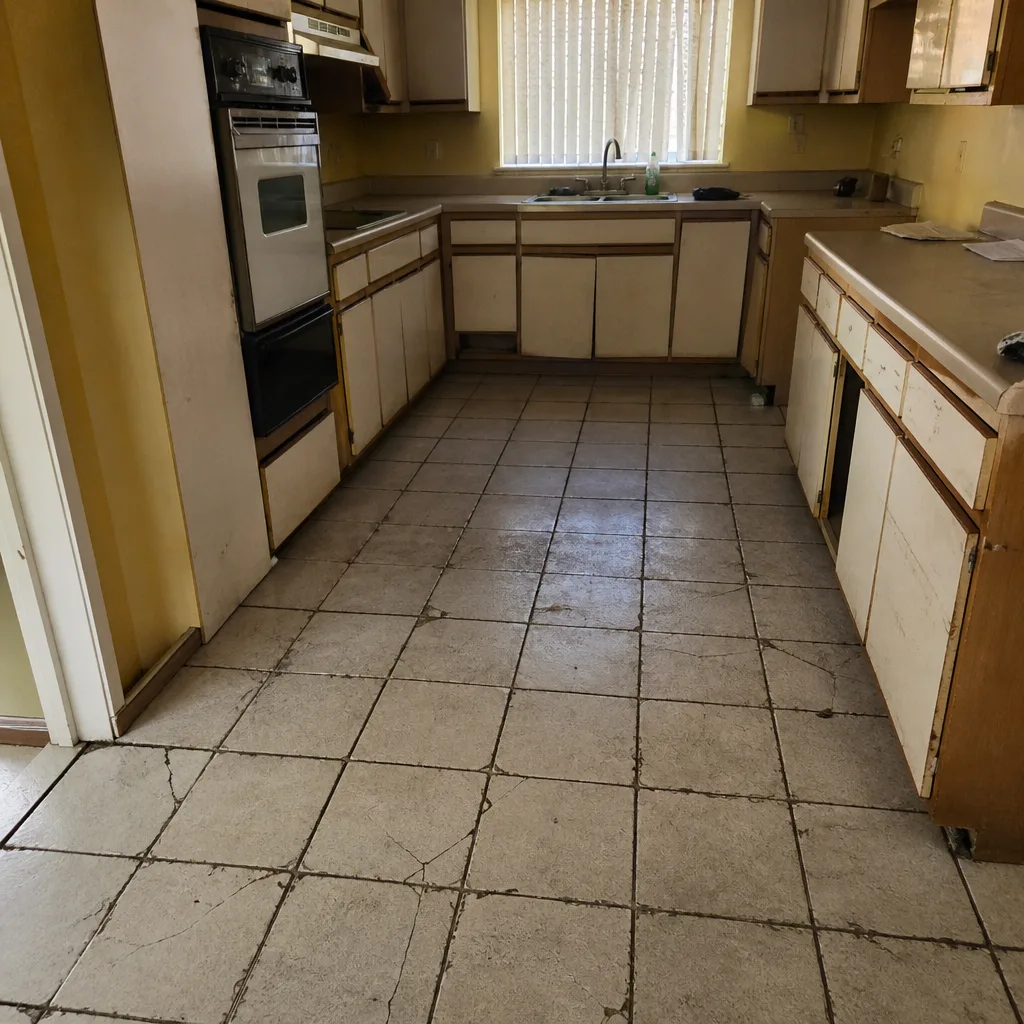 Before
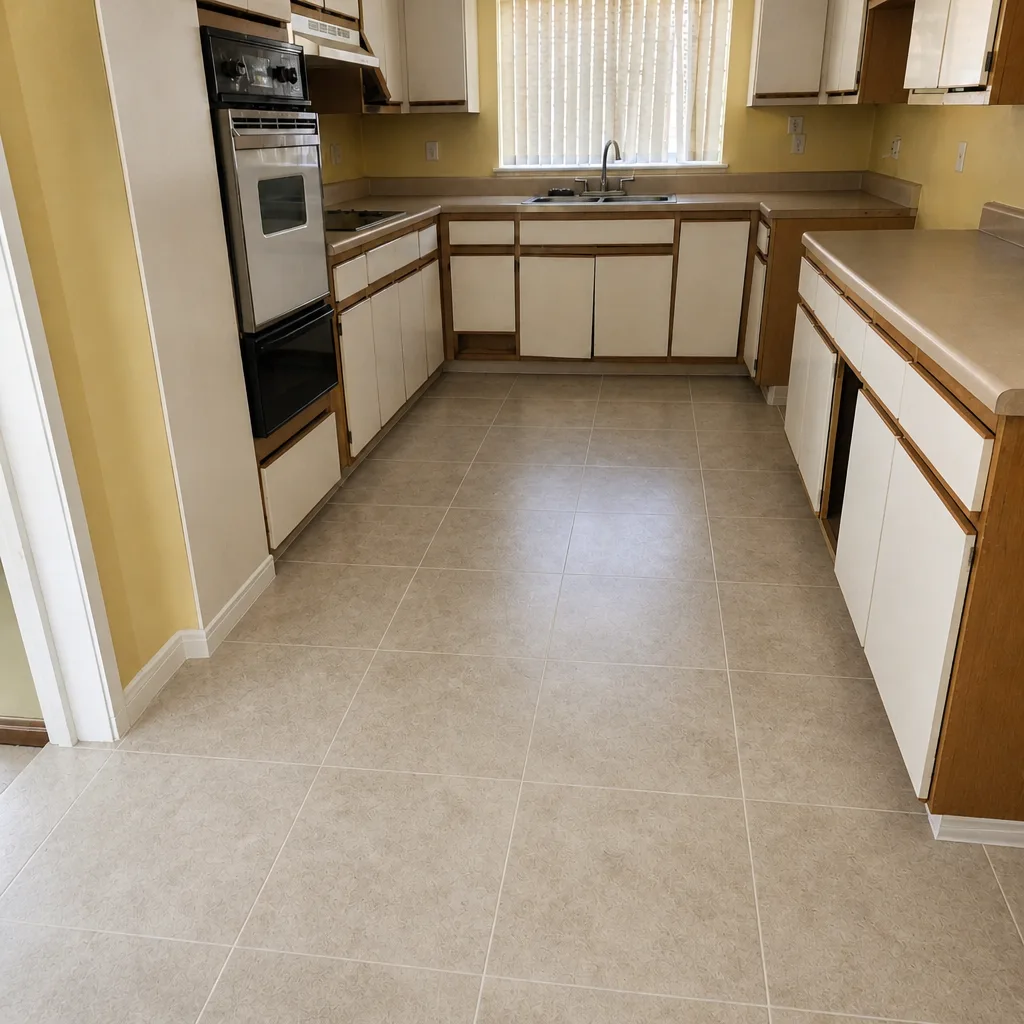 After
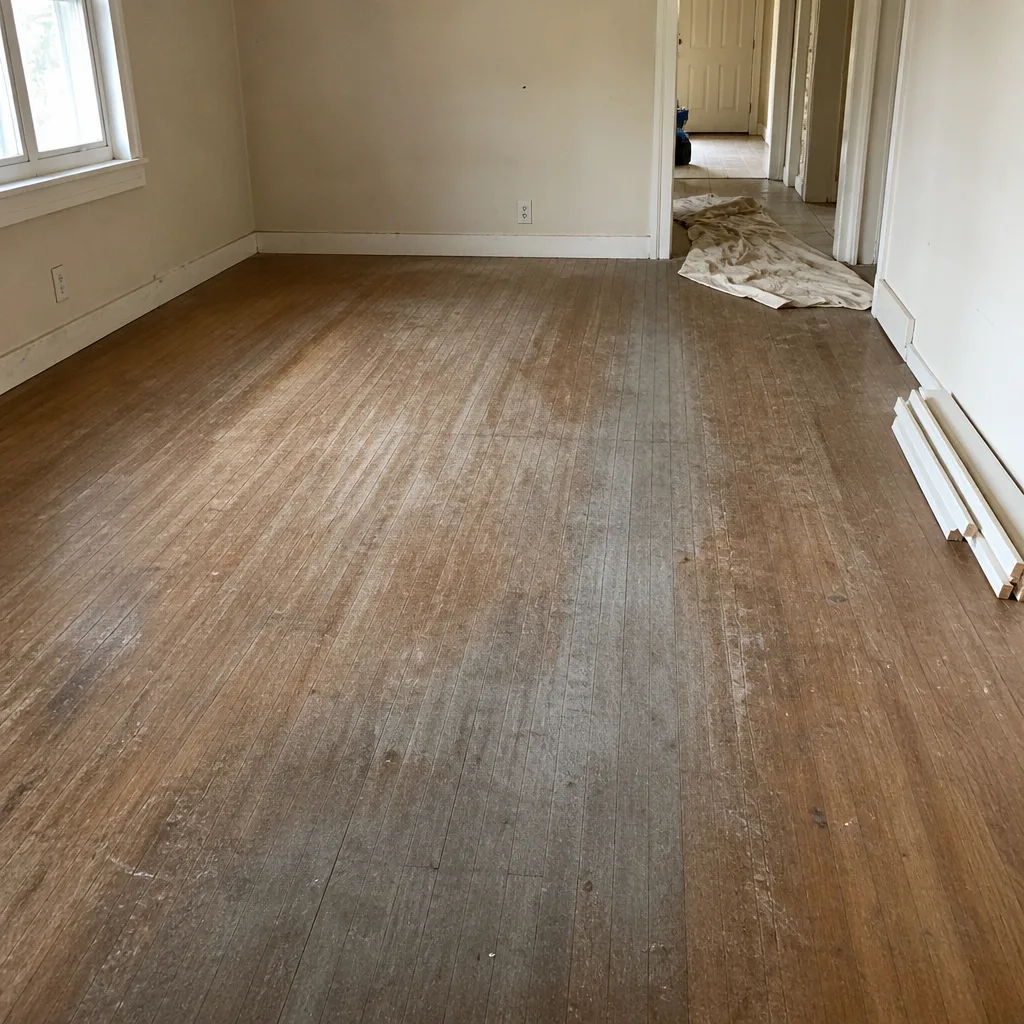 Before
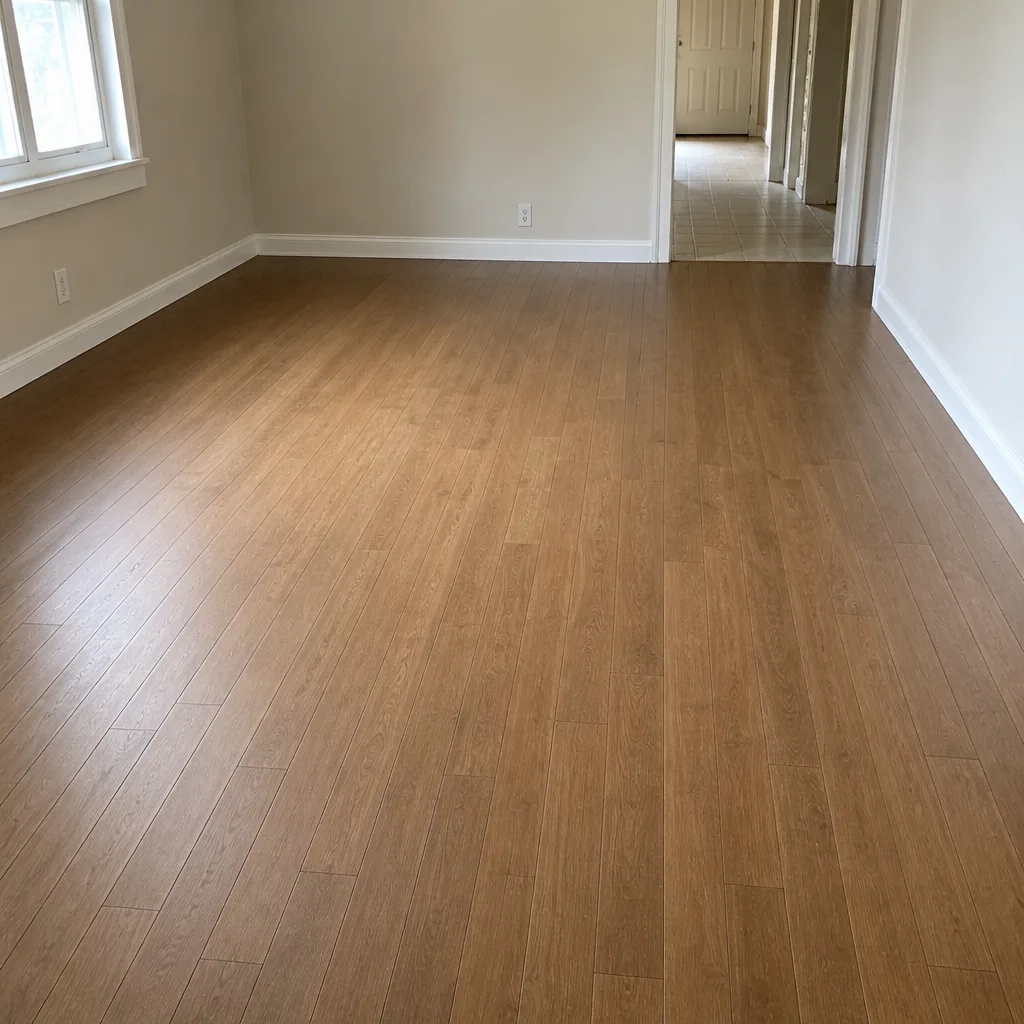 After
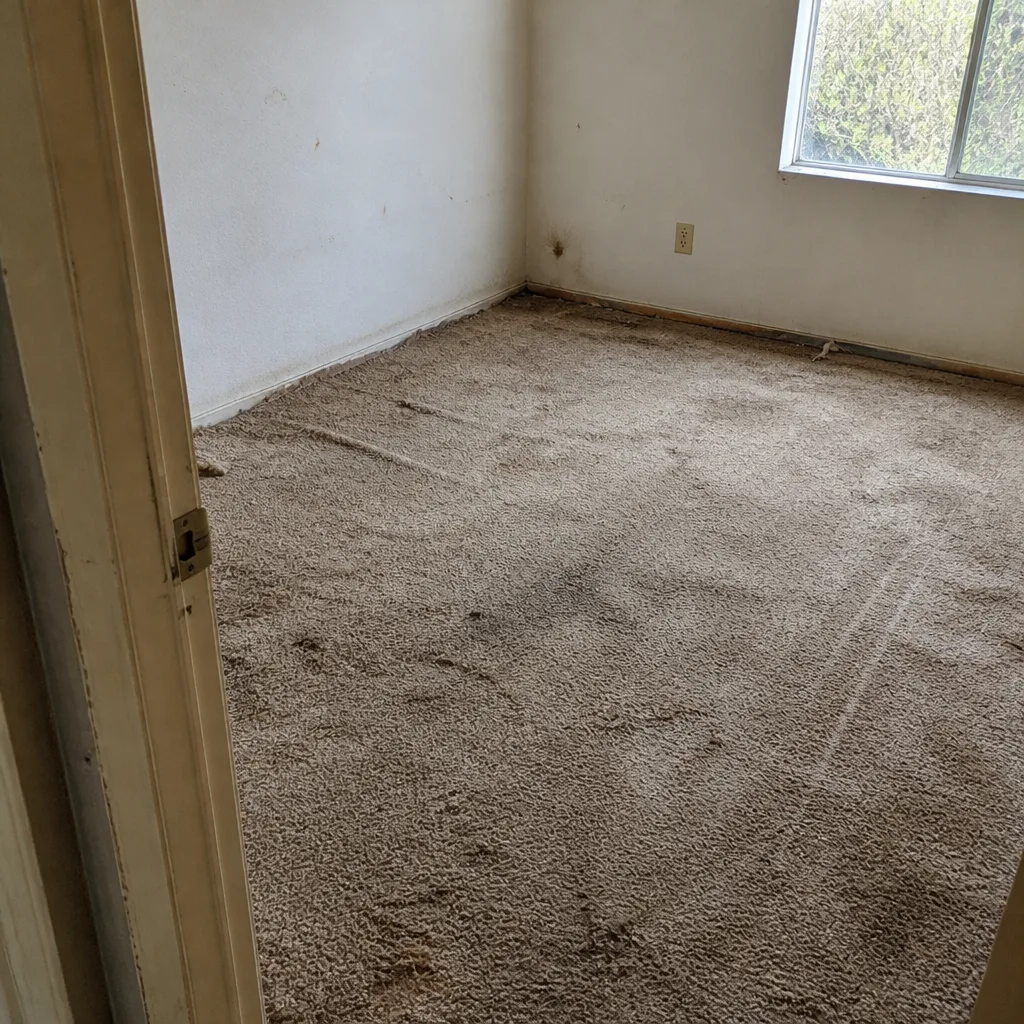 Before
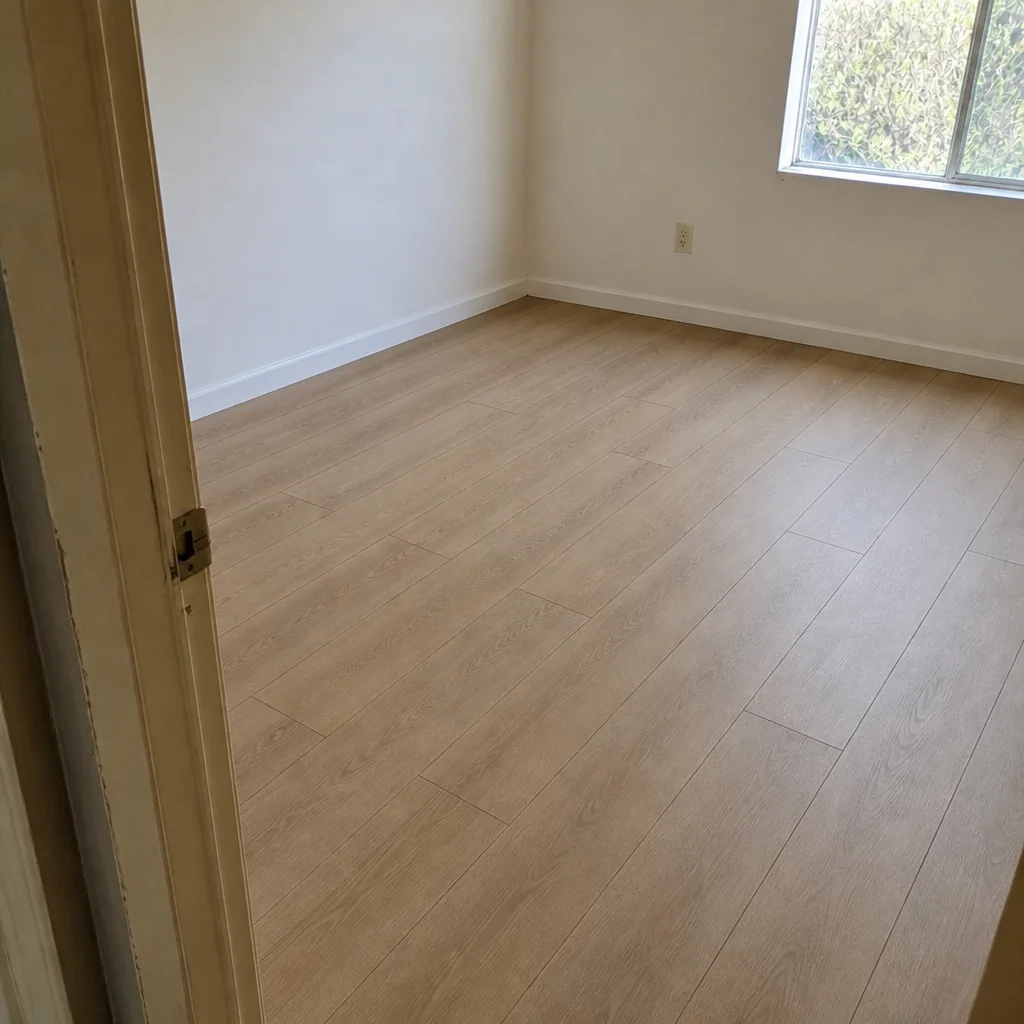 After
When to Call a Professional
Some guidance extends only so far, and a flooring investment deserves a real measure. Call when you’re comparing more than two quotes and want to know which line items matter. Call when your subfloor is suspect – soft spots, cracked tile, cupping, or a slab you’ve never had checked for moisture. Call when the existing hardwood may still be refinishable rather than replaceable; that one question can change the budget substantially. Call when a room serves multiple purposes and the product choice hinges on moisture, traffic, or pets, and you want a straight recommendation rather than a sales pitch. And call when a project spans carpet, tile, and hardwood in one home and you want one contractor accountable for all three. Flooring Installation Spring Valley offers free estimates in Spring Valley – call (844) 797-4453 to schedule yours.
Frequently Asked Questions
Typical installed pricing in Spring Valley runs about $3 to $12 per square foot depending on floor type and product tier. Carpet sits at the low end, laminate and LVP in the middle, and tile and hardwood at the top. The written estimate sets the final price – call (844) 797-4453 for an exact quote, and the estimate is free.
Yes. The in-home measure and written estimate cost nothing, and there’s no obligation to book the job afterward. The estimate gives you a line-by-line number you can compare against other bids. Call (844) 797-4453 to schedule it.
Because quotes use different formats – all-in, material-plus-labor, or base-plus-add-ons – and only the third format exposes every cost separately. The same scope can produce three very different headline numbers that converge once you add material, labor, prep, and disposal. Convert all three to the same format before comparing. Call (844) 797-4453 to walk through the difference on your rooms.
The schedule is set at the estimate. Flooring is a booked job: a free in-home measure first, then a written price, then a booked install day. The length depends on square footage, floor type, and prep – which is exactly what the estimate visit clarifies. Call (844) 797-4453 to book the measure.
Expect concrete slab prep, moisture barrier requirements, stair nosing, and transition strips – those four appear on most local quotes because slab-on-grade construction and open floor plans are common here. A bid without them is either assuming a perfect slab or adding them later. Call (844) 797-4453 and we’ll itemize yours before you commit.
Usually yes, when the wood is structurally sound and thick enough to refinish. Hardwood refinishing typically runs $3.50 to $6.00 per square foot, well below installing new hardwood. Whether your floor qualifies depends on its thickness and condition, both checked at the estimate. Call (844) 797-4453 to find out before you plan a replacement.
The Bottom Line
Flooring quotes confuse homeowners because the industry gives three different ways to present the same number, and Spring Valley adds real line items – slab prep, moisture control, stairs, and transitions – that online calculators never show. The fix is mechanical, not complicated: convert every quote to a true total with material, labor, prep, and disposal in one column, then divide by installed square footage. Match the products first, then the price. When a quote is itemized, written, and product-named, the comparison takes ten minutes and the number is honest. If you’re in Spring Valley and want a written estimate you can put on the table next to the others, we’d be glad to do the measure – and we answer 24/7. Call (844) 797-4453. We answer 24/7. Fast dispatch from 7am to 7pm, Sunday through Friday.
Written by the team at Flooring Installation Spring Valley.